Guidelines for Developing Digital Leadership of School Administrators under Maha Sarakham Primary Educational Service Area Office 3
Keywords:
Development guidelines; , Digital leadership;, School administratorsAbstract
This study aimed to: 1) examine the current situation, desirable condition, and priority needs of digital leadership among school administrators, and 2) propose development guidelines for enhancing digital leadership of school administrators under Maha Sarakham Primary Educational Service Area Office 3. The research was conducted in two phases using an exploratory sequential mixed-methods design. The sample consisted of 293 participants, including school administrators and teachers. Research instruments included a five-point rating scale questionnaire and a semi-structured interview. Quantitative data were analyzed using descriptive statistics and the Modified Priority Needs Index (PNI Modified), while qualitative data were analyzed through content analysis.
The research findings revealed that:
1. The overall level of digital leadership among school administrators was high, with digital professionalism receiving the highest mean score. The desirable condition was rated at the highest level, and the most critical priority need was building digital learning networks (PNI Modified = 0.208).
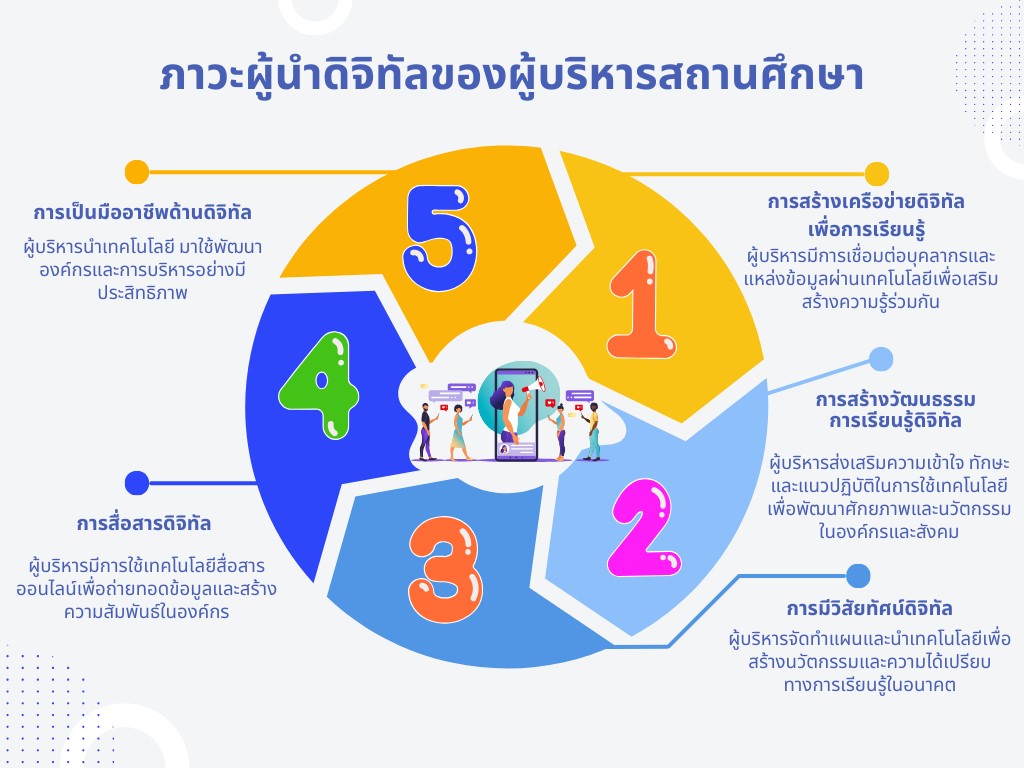
2. The proposed development guidelines emphasize establishing digital networks that support collaborative learning, fostering an open and creative learning culture, and defining a clear digital vision to effectively and sustainably drive organizational development in the digital era.
References
กนกอร สมปราชญ์. (2562). ภาวะผู้นำกับคุณภาพการศึกษา. ขอนแก่น: คณะศึกษาศาสตร์ มหาวิทยาลัยขอนแก่น.
กรณัฏฐ์ ตาแปง. (2563). บทบาทภาวะผู้นำทางการศึกษาของผู้บริหารยุคดิจิทัลในโรงเรียนขยายโอกาสทางการศึกษา กลุ่มเครือข่ายพัฒนาการศึกษาแม่สลองในสังกัดสำนักงานเขตพื้นที่การศึกษาประถมศึกษาเชียงราย เขต 3. (วิทยานิพนธ์ศึกษาศาสตรมหาบัณฑิต). พะเยา: มหาวิทยาลัยพะเยา.
กระทรวงศึกษาธิการ. (2546). พระราชบัญญัติการศึกษาแห่งชาติ พุทธศักราช 2542 แก้ไขเพิ่มเติม (ฉบับที่ 2) พุทธศักราช 2545. กรุงเทพฯ: คุรุสภา.
กอบสุข คงมนัส. (2561). เครื่องมือดิจิทัลเพื่อการเรียนรู้ : วิถีแห่งการศึกษายุคดิจิทัล. วารสารศึกษาศาสตร์ มหาวิทยาลัยนเรศวร, 20(4), 279-290.
จิรพล สังข์โพธิ์. (2560). ภาวะผู้นำในการบริหารยุคดิจิทัล: องค์การ IT และองค์การที่เกี่ยวข้องกับ IT ในเขตกรุงเทพมหานครและปริมณฑล. กรุงเทพฯ: วิทยาลัยนวัตกรรม มหาวิทยาลัยธรรมศาสตร์.
ทินกร บัวชู. (2562). ภาวะผู้นำดิจิทัลของผู้บริหารสถานศึกษา. วารสารครุศาสตร์สาร, 13(2), 285-294.
สงบ อินทรมณี. (2545). การบริหารสถานศึกษาในยุคดิจิทัล. วารสารวิชาการมหาวิทยาลัยการจัดการและเทคโนโลยีอีสเทิร์น, 16(1), 353-360. https://so06.tci-thaijo.org/index.php/umt-poly/article/view/192507/137999
สุวิมล ว่องวานิช. (2562). การวิจัยและสถิติทางสังคมศาสตร์. กรุงเทพฯ: จุฬาลงกรณ์มหาวิทยาลัย.
Yamane, T. (1973). Statistics: An introductory analysis (3rd ed.). New York, NY: Harper & Row.