Innovative Leadership Components of School Administrators Responding to Changes in the BANI World Era under Khon Kaen Primary Educational Service Area Office 4
Keywords:
Innovative leadership components;, School administrators; , BANI World eraAbstract
The objectives of this research were to 1) analyze the components of innovative leadership of school administrators responding to changes in the BANI World era and 2) confirm the factor structure of innovative leadership of school administrators responding to changes in the BANI World era under Khon Kaen Primary Educational Service Area Office 4. This study employed a descriptive research design. The sample consisted of 500 school administrators and teachers selected through stratified random sampling. The research instruments included a 5-point rating scale questionnaire with content validity indices ranging from 0.67 to 1.00 and a reliability coefficient of 0.974, as well as a semi-structured interview. Data were analyzed using frequency, percentage, exploratory factor analysis (EFA), and confirmatory factor analysis (CFA).
The research findings revealed that:
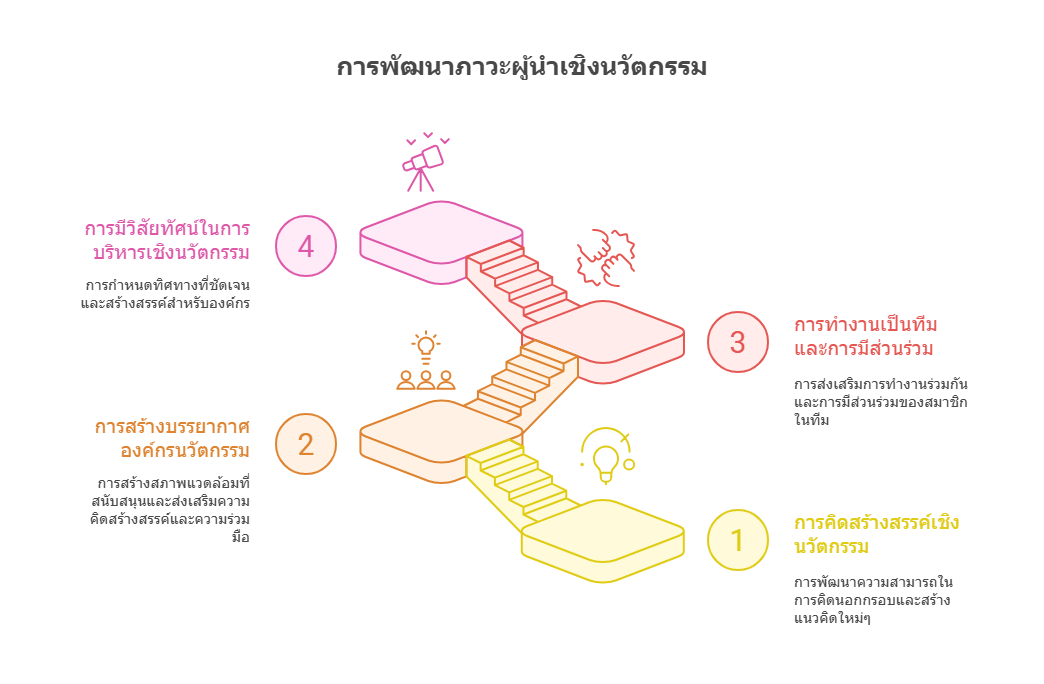
1. The exploratory factor analysis identified four components of innovative leadership, ranked by factor loadings as follows: creating an innovative organizational climate, teamwork and participation, innovative creativity, and visionary innovative management.
2. The confirmatory factor analysis indicated that the measurement model was well fitted to the empirical data, with χ² = 51.621, p-value = 0.172, SRMR = 0.009, RMSEA = 0.020, CFI = 0.999, and TLI = 0.998, all meeting the acceptable criteria. These findings confirm that the innovative leadership component model is appropriate for explaining innovative leadership of school administrators in the BANI World era at the .01 level of statistical significance.
References
เจริญ ภูวิจิตร์. (2565). ภาวะผู้นำทางการศึกษาโลกยุคผันผวน. เข้าถึงได้จาก http://www.nidtep.go.th/2017/publish/doc/20220906-1.pdf
ฐิตินันท์ นันทะศรี, วาโร เพ็งสวัสดิ์, วัลนิกา ฉลากบาง และพรเทพ เสถียรนพเก้า. (2563). การพัฒนาตัวบ่งชี้ภาวะผู้นำเชิงนวัตกรรมของผู้บริหารสถานศึกษาประถมศึกษา ในภาคตะวันออกเฉียงเหนือ. (วิทยานิพนธ์ปรัชญาดุษฎีบัณฑิต). สกลนคร: มหาวิทยาลัยราชภัฏสกลนคร.
นงลักษณ์ วิรัชชัย. (2542). โมเดลริสเรล: สถิติวิเคราะห์สำหรับการวิจัย. (พิมพ์ครั้งที่ 3). กรุงเทพฯ: จุฬาลงกรณ์มหาวิทยาลัย.
น้ำทิพย์ มาลัย, ดวงเดือน จันทร์เจริญ, กฤษดา ตั้งชัยศักดิ์ และชมสุภัค ครุฑกะ. (2566). องค์ประกอบภาวะผู้นำเชิงนวัตกรรมสำหรับผู้นำระดับบริหารทีมในองค์กรธุรกิจเครือข่าย. วารสารรัชต์ภาคย์, 17(52), 541-556. https://so05.tci-thaijo.org/index.php/RJPJ/article/view/265302/178544
สุริยา สรวงศิริ และสิทธิชัย สอนสุภี. (2564). องค์ประกอบของภาวะผู้นำเชิงนวัตกรรมของครู สังกัดสำนักงานเขตพื้นที่การศึกษาประถมศึกษาอุดรธานี เขต 2. (วิทยานิพนธ์ศึกษาศาสตรมหาบัณฑิต). ขอนแก่น: มหาวิทยาลัยขอนแก่น.
อรรถพล สังขวาสี. (2565). ปลัดศธ. ชี้โลกเข้าสู่ยุค BANI World รวมความปั่นป่วนไว้ทั้งหมดกระทบการศึกษาโดยตรง มอบนโยบายรับมือ อุดเรียนรู้ถดถอย. เข้าถึงได้จาก https://www.thaipost.net/education-news/255668/
Comrey, A. L., & Lee, H. B. (1992). A first course in factor analysis. (2nd ed.). Hillsdale, NJ: Lawrence Erlbaum Associates.
Lee, A. (2019). Leadership, creativity and innovation: A meta-analytic review. European Journal of Work and Organizational Psychology, 29(1), 1-35.