An Analysis of Appamāda-Dhamma as a Dynamic Principle of Life in Buddhist Philosophy
Keywords:
Appamāda-Dhamma;, Dynamics; , Way of life; , Buddhist philosophyAbstract
This academic article aims to analyze Appamāda-Dhamma (heedfulness) as a dynamic principle of life within the framework of Buddhist philosophy. The study employs analytical and synthetic methods based on Buddhist canonical sources and relevant academic literature, together with philosophical reasoning to support the analytical findings.
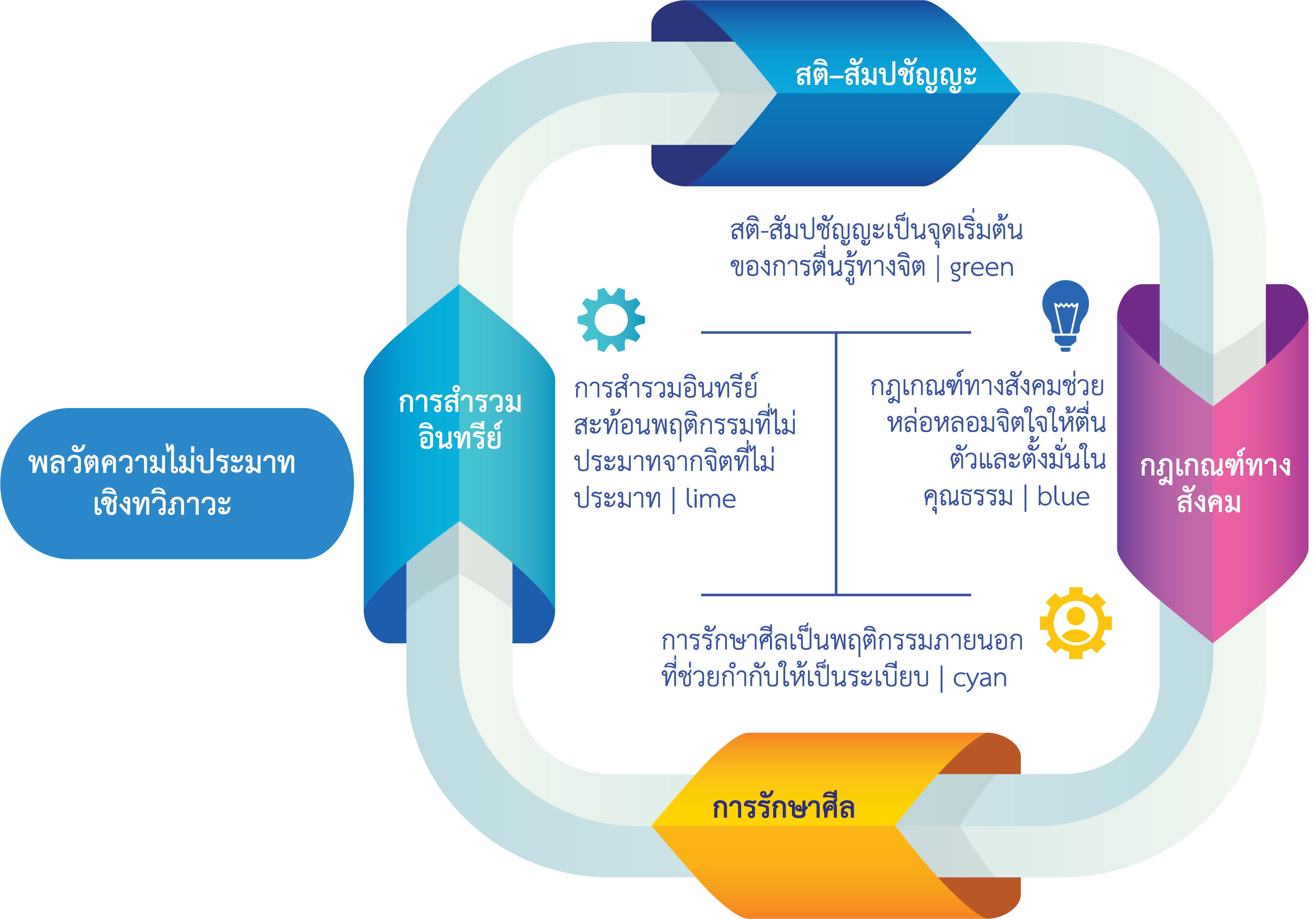
The findings reveal that Appamāda-Dhamma functions both as a guiding principle of life regulation and as a driving force for human development, leading individuals toward the ultimate goal of life and the ideal of sustainable altruistic benefit. It promotes wise reflection (yoniso-manasikāra) and ethical self-regulation, enabling individuals to live with direction, value, and holistic well-being encompassing physical, mental, and social dimensions.
Furthermore, Appamāda-Dhamma extends beyond a passive form of heedfulness expressed through restraint (saṁvara), encompassing a proactive dimension that fosters self-development, social development, and both internal and external learning processes. Appamāda, therefore, constitutes a vital mechanism for regulating and enhancing the quality of life in accordance with the holistic principles of Buddhist philosophy.
References
ชีวจิต. (2566). ความประมาท 5 ประการ ที่ชาวพุทธควรหลีกเลี่ยง. เข้าถึงได้จาก https://cheewajit.com/mind/46651.html.
พระธรรมกิตติวงศ์ (ทองดี สุรเตโช). (2551). พจนานุกรมเพื่อการศึกษาพุทธศาสน์. (พิมพ์ครั้งที่ 3). กรุงเทพฯ: ธรรมสภา.
พระธรรมปิฎก (ประยุทธ์ ปยุตฺโต). (2540). ดำเนินชีวิตด้วยความไม่ประมาท. กรุงเทพฯ: ธรรมสภา.
พระพรหมคุณาภรณ์ (ป.อ. ปยุตฺโต). (2551). พจนานุกรมพุทธศาสน์ ฉบับประมวลธรรม. (พิมพ์ครั้งที่ 16). กรุงเทพฯ: เอส.อาร์.พริ้นติ้ง แมส โปรดักส์ จำกัด.
พระมหาประนอม ธมฺมาลงฺกาโร. (2561). อัปปมาทธรรม. วารสารโพธิยาลัย, 4(43), 3-12.
พระสุภกิจ สุปญฺโญ. (2564). การประยุกต์ใช้สติสัมปชัญญะสำหรับการใช้ชีวิตประจำวัน. วารสารรัฐศาสตร์ มหาวิทยาลัยราชภัฏสวนสุนันทา, 4(2), 99-107.
มหาวิทยาลัยมหาจุฬาลงกรณราชวิทยาลัย. (2539). พระไตรปิฎกภาษาไทย. กรุงเทพฯ: มหาจุฬาลงกรณราชวิทยาลัย.
วรพินธ์ กุศลสมบูรณ์. (2564). อัปปมาทธรรม: ธรรมะป้องกันโรคโควิด-19. วารสารพุทธนวัตกรรมปริทรรศน์, 2(2), 68-80.
สมเด็จพระพุทธโฆษาจารย์ (ป.อ. ปยุตฺโต). (2565). พุทธธรรม ฉบับปรับขยาย. (พิมพ์ครั้งที่ 24 ฉบับข้อมูลคอมพิวเตอร์). กรุงเทพฯ: มูลนิธิพุทธธรรม.
สิริกร สิงหฬ. (2565). อิทธิพลคําสอนเรื่องอัปปมาทธรรมที่มีต่อการเผชิญโรคโควิด-19. วารสารวิชาการสถาบันพัฒนาพระวิทยากร, 5(4), 171-183.