การพัฒนาทักษะด้านการจัดการเรียนรู้เชิงรุกโดยใช้ความท้าทายเป็นฐานของครูโรงเรียนสหราษฎร์อนุกูล สังกัดสำนักงานเขตพื้นที่การศึกษาประถมศึกษาขอนแก่น เขต 3
คำสำคัญ:
การจัดการเรียนรู้เชิงรุก;, ความท้าทายเป็นฐาน;, การพัฒนาครูบทคัดย่อ
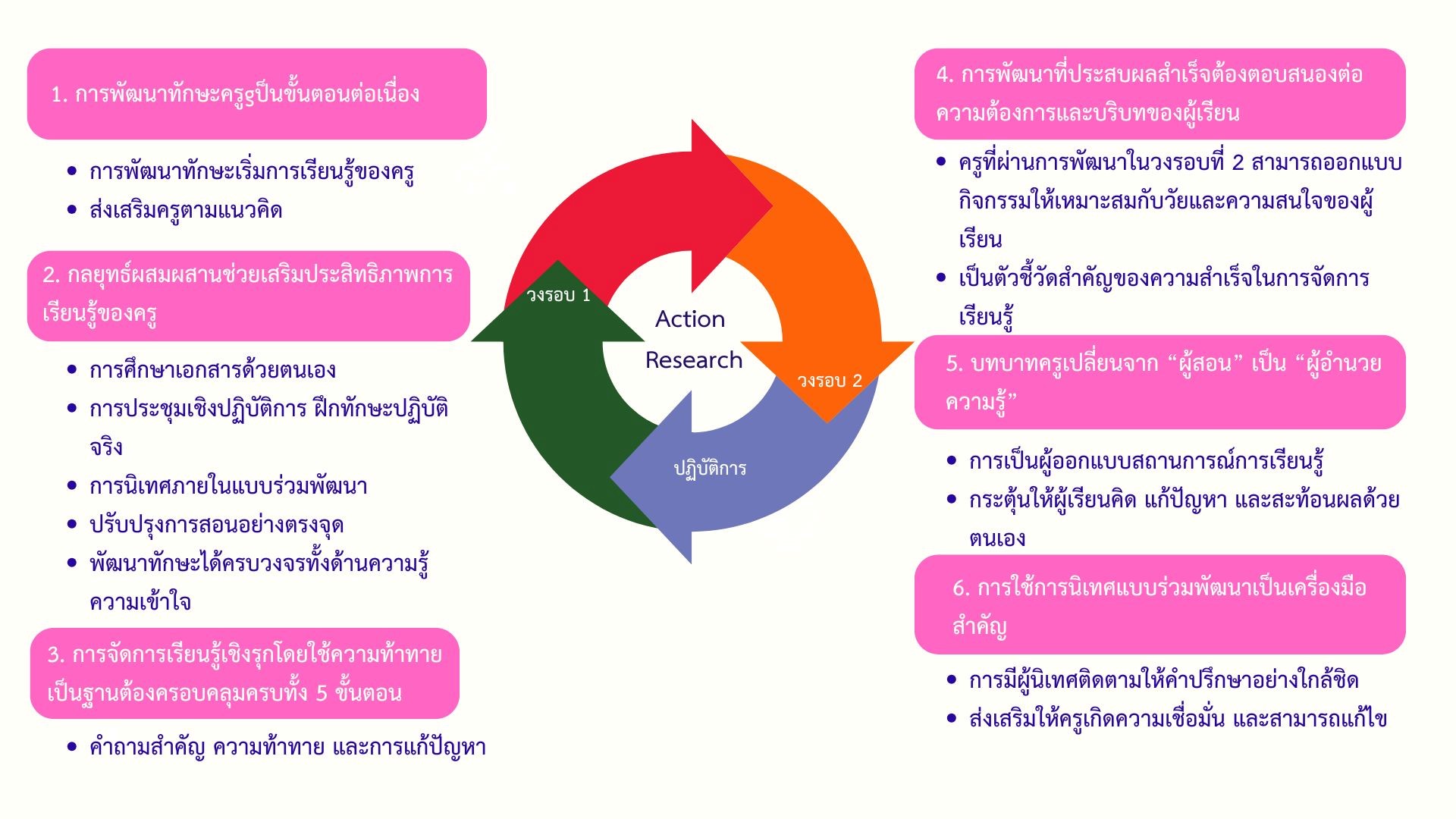
การวิจัยครั้งนี้ มีวัตถุประสงค์เพื่อ 1) พัฒนาครูโรงเรียนสหราษฎร์อนุกูลให้มีความรู้ความเข้าใจเกี่ยวกับการจัดการเรียนรู้เชิงรุกโดยใช้ความท้าทายเป็นฐาน 2) พัฒนาความสามารถในการจัดการเรียนรู้ และ 3) ศึกษาความพึงพอใจของครูต่อการพัฒนาทักษะ เป็นการวิจัยเชิงปฏิบัติการ (Action Research) ตามแนวคิดของ Stephen Kemmis และ Robin McTaggart ประกอบด้วย 2 วงรอบ แต่ละวงรอบมี 4 ขั้นตอน ได้แก่ การวางแผน การปฏิบัติ การสังเกต และการสะท้อนผล กลุ่มผู้ร่วมวิจัยคือครูอาสาสมัคร 7 คน จากโรงเรียนสหราษฎร์อนุกูล สังกัดสำนักงานเขตพื้นที่การศึกษาประถมศึกษาขอนแก่น เขต 3 เครื่องมือที่ใช้ ได้แก่ แบบทดสอบ แบบสัมภาษณ์ แบบสังเกต แบบบันทึกการประชุม แบบประเมินทักษะ และแบบสอบถาม กลยุทธ์การพัฒนาประกอบด้วย การศึกษาเอกสารด้วยตนเอง การประชุมเชิงปฏิบัติการ และการนิเทศภายใน วิเคราะห์ข้อมูลโดยใช้สถิติเชิงพรรณนา
ผลการวิจัยพบว่า
1. ด้านความรู้ความเข้าใจ ในวงรอบที่ 1 ครูมีความรู้ความเข้าใจเพิ่มขึ้นจากกลยุทธ์ที่ใช้ แต่ยังมีบางส่วนไม่ชัดเจนในขั้นการกำหนดแนวคิดหลัก ในวงรอบที่ 2 การนิเทศภายในแบบร่วมพัฒนาช่วยให้ครูทุกคนมีความเข้าใจถูกต้องและสามารถนำแนวคิดไปใช้ได้อย่างเหมาะสม
2. ด้านความสามารถในการจัดการเรียนรู้ ในวงรอบที่ 1 ครูสามารถออกแบบและจัดกิจกรรมได้ในระดับหนึ่ง แต่ยังมีข้อจำกัดในขั้นการกำหนดแนวคิดหลักและการประเมินผล ส่งผลให้การจัดกิจกรรมยังไม่ครบกระบวนการ ในวงรอบที่ 2 ครูทุกคนสามารถจัดการเรียนรู้ได้อย่างถูกต้อง ครบถ้วน และเหมาะสม ครอบคลุมทุกขั้นตอน ทำให้ประสิทธิภาพการจัดการเรียนรู้ดีขึ้น
3. ด้านความพึงพอใจ ครูมีความพึงพอใจอยู่ในระดับสูง เห็นว่ากลยุทธ์ที่ใช้ช่วยให้เกิดความรู้ ความเข้าใจ และทักษะอย่างเป็นรูปธรรม และสามารถนำไปประยุกต์ใช้ในการสอนได้อย่างมีประสิทธิภาพ
เอกสารอ้างอิง
ชนกานต์ พิศิษฐวานิช. (2561). การพัฒนาทักษะการแสวงหาความรู้ด้วยตนเองของนักเรียนมัธยมศึกษา. วารสารครุศาสตร์ศึกษา, 29(1), 33-47.
พฤกษา ดอกกุหลาบ, ฐาปนีย์ ธรรมเมธา, เอกนฤน บางท่าไม้ และ ศิวนิต อรรถวุฒิกุล. (2566). การพัฒนารูปแบบการเรียนการสอนแบบห้องเรียนกลับด้านและเทคนิคเกมมิฟิเคชันร่วมกับการเรียนรู้โดยใช้ความท้าทายเป็นฐานเพื่อเสริมสร้างความฉลาดทางอารมณ์ดิจิทัลของนักศึกษาวิชาชีพครู. Journal of Roi Kaensarn Academi, 8(9), 1-18.
โรงเรียนสหราษฎร์อนุกูล. (2566). รายงานประจำปีการศึกษา 2566. ขอนแก่น: โรงเรียนสหราษฎร์อนุกูล.
วรัญญา ศรีเสวก. (2556). การจัดการเรียนรู้ในศตวรรษที่ 21. กรุงเทพฯ: จุฬาลงกรณ์มหาวิทยาลัย.
วิชัย วงษ์ใหญ่. (2551). กระบวนทัศน์ใหม่ในการพัฒนาหลักสูตร. กรุงเทพฯ: จุฬาลงกรณ์มหาวิทยาลัย
วิชิรตา วรธาดาสวัสดิ์. (2566). รูปแบบการนิเทศการศึกษาแบบผสมผสานเพื่อส่งเสริมการจัดการเรียนรู้เชิงรุกของครูโรงเรียนมัธยม. (วิทยานิพนธ์การศึกษาดุษฎีบัณฑิต). พิษณุโลก: มหาวิทยาลัยนเรศวร.
สำนักงานเลขาธิการสภาการศึกษา. (2560). แผนการศึกษาแห่งชาติ พ.ศ. 2560-2579. กรุงเทพฯ: สำนักงานเลขาธิการสภาการศึกษา.
สุวัจนา จริตกาย. (2564). การพัฒนาทักษะครูยุคดิจิทัล. กรุงเทพฯ: มหาวิทยาลัยศรีนครินทรวิโรฒ.
อินทิรา รอบรู้. (2553). ผลการเรียนรู้จากการจัดการเรียนรู้ด้วยตนเองของนักเรียนระดับมัธยมศึกษา. วารสารวิชาการครุศาสตร์, 18(2), 45-57.
Apple. (2010). Challenge-based learning: A classroom guide. Cupertino, CA: Apple Inc.
Garcia, P., & Sidhu, R. (2022). Success factors in implementing challenge-based learning to enhance teacher competencies. Educational Research and Reviews.
Johnson, D. W., Johnson, R. T., & Holubec, E. J. (2009). Circles of learning: Cooperation in the classroom. (6th ed.). Edina, MN: Interaction Book Company.
Kemmis, S., & McTaggart, R. (2000). Participatory action research. In N. K. Denzin & Y. S. Lincoln (Eds.), Handbook of qualitative research (2nd ed., pp. 567-605). Thousand Oaks, CA: Sage Publications.
Nichols, M., Cator, K., & Torres, M. (2016). Challenge-based learner user guide. Washington, DC: Digital Promise.