Participatory Management of Educational Institutions Based on the Four Sangaha-vatthu Principles
Keywords:
Participatory management; school administrators; Fourfold Social ResponsibilityAbstract
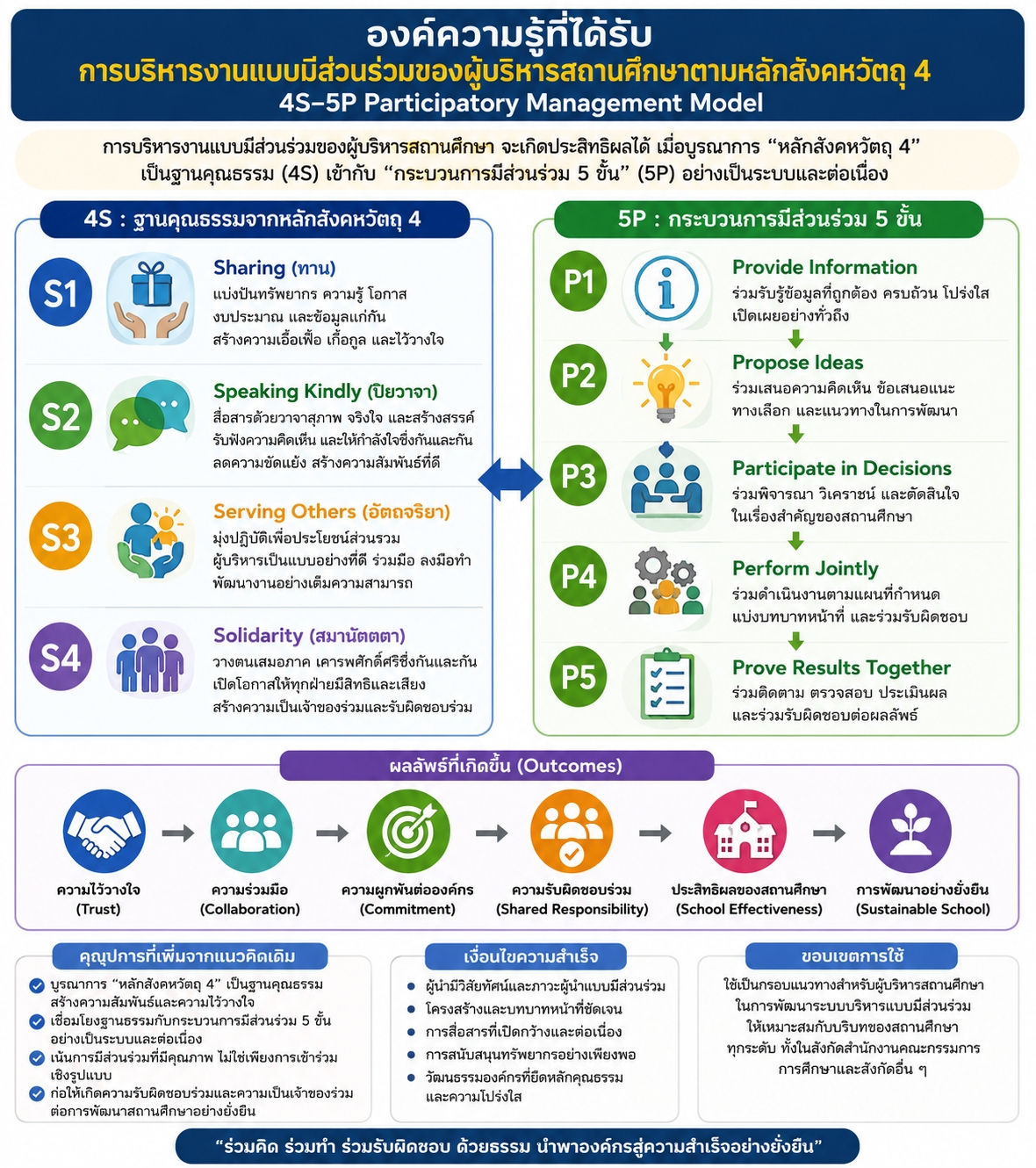
This academic article aims to examine the participatory management of school administrators based on the principles of Sangaha-vatthu and to synthesize a management framework that integrates Buddhist principles with the concept of participatory management. The study employed documentary research by reviewing the Tripitaka, academic books, scholarly articles, research studies, and other relevant documents. The collected data were analyzed through content analysis and synthesized according to key issues concerning participatory management, the principles of Sangaha-vatthu, and their application in educational administration. The findings indicate that participatory management becomes more effective when the four principles of Sangaha-vatthu—Dāna (generosity), Piyavācā (kind speech), Atthacariyā (beneficial conduct), and Samānattatā (impartiality and equality)—are integrated into every stage of stakeholder participation, including information sharing, idea proposing, participatory decision-making, collaborative implementation, and joint monitoring and evaluation. Such integration fosters trust, collaboration, shared responsibility, and the sustainable development of school management. Furthermore, this article proposes a new conceptual framework entitled the 4S–5P Participatory Management Model, which explains the systematic relationship between the ethical foundation of Sangaha-vatthu and the participatory management process. The proposed framework extends the conventional concept of participatory management by moving beyond organizational structures and administrative procedures to incorporate ethical values, moral leadership, and the quality of interpersonal relationships in educational administration.
References
กรมวิชาการ. (2537). ทิศทางการแนะแนวในทศวรรษหน้า. กรุงเทพฯ: กรมวิชาการ.
กระทรวงศึกษาธิการ. (2544). คู่มือการบริหารจัดการแนะแนว. กรุงเทพฯ: คุรุสภาลาดพร้าว.
กระทรวงศึกษาธิการ. (2550). คู่มือการบริหารโรงเรียนที่เป็นนิติบุคคล. กรุงเทพฯ: องค์การรับส่งสินค้า และพัสดุภัณฑ์.
กระทรวงศึกษาธิการ. (2554). แผนแม่บทเทคโนโลยีสารสนเทศและการสื่อสารเพื่อการศึกษาของ กระทรวงศึกษาธิการ พ.ศ. 2554-2556. กรุงเทพฯ: สำนักปลัดกระทรวงศึกษาธิการ.
พนอ อนัญญพร. (2539). การศึกษาสภาพและปัญหาการดำเนินงานแนะแนวของโรงเรียนมัธยมศึกษาขนาดเล็ก สังกัดกรมสามัญศึกษา เขตการศึกษา 12. (วิทยานิพนธ์ครุศาสตรมหาบัณฑิต). กรุงเทพฯ: จุฬาลงกรณ์มหาวิทยาลัย.
พระเทพวรมุนี (ประยุทธ์ ปยุตโต). (2539). ธรรมนูญชีวิต. กรุงเทพฯ: ศรีอนันต์.
พระธรรมโกศาจารย์ (พุทธทาสภิกขุ). (2525). พุทธศาสนากับคนรุ่นใหม่และสังคมไทยในอนาคต. กรุงเทพฯ: สุขภาพใจ.
พระธรรมปิฎก (ป.อ. ปยุตฺโต). (2543). พจนานุกรมพุทธศาสตร์ ฉบับประมวลธรรม. (พิมพ์ครั้งที่ 9). กรุงเทพฯ: มหาจุฬาลงกรณราชวิทยาลัย.
พุทธทาสภิกขุ. (2525). พุทธศาสนากับคนรุ่นใหม่และสังคมไทยในอนาคต. กรุงเทพฯ: สุขภาพใจ.
มหาจุฬาลงกรณราชวิทยาลัย. (2535). พระไตรปิฎกภาษาบาลี ฉบับมหาจุฬาเตปิฏกํ 2500. กรุงเทพฯ: มหาจุฬาลงกรณราชวิทยาลัย.
มหาจุฬาลงกรณราชวิทยาลัย. (2539). พระไตรปิฎกภาษาไทย ฉบับมหาจุฬาลงกรณราชวิทยาลัย. กรุงเทพฯ:มหาจุฬาลงกรณราชวิทยาลัย.
สงบ ลักษณะ. (2545). แนวคิดเกี่ยวกับการใช้เทคโนโลยีช่วยการเรียนรู้. ใน การประชุมใหญ่สามัญประจำปี 2545 และประชุมวิชาการห้องสมุดยุคใหม่: ผู้นำแห่งการเรียนรู้ (หน้า 31-34). กรุงเทพฯ: สมาคมห้องสมุดแห่งประเทศไทย.
สมเด็จพระมหาวีรวงศ์ (พิมพ์ ธมฺมธโร). (2541). ธรรมะสร้างเยาวชน. กรุงเทพฯ: มหามกุฏราชวิทยาลัย.
สมเด็จพระอริยวงศาคตญาณ (วาศน์ วาสโน). (2538). สังคหวัตถุ 4. กรุงเทพฯ: มหามกุฏราชวิทยาลัย.
สวัสดิ์ สุวรรณอักษร. (2542). บนเส้นทางพัฒนาการศึกษาชาติ. กรุงเทพฯ: คุรุสภา ลาดพร้าว.
สุนี จั้นสกุล. (2538). การสำรวจสภาพปัญหาของนักเรียนชั้นมัธยมศึกษาตอนต้น โรงเรียนในโครงการขยายโอกาสทางการศึกษาขั้นพื้นฐาน สังกัดสำนักงานการประถมศึกษา จังหวัดระนอง. (วิทยานิพนธ์ศิลปศาสตรมหาบัณฑิต). กรุงเทพฯ: มหาวิทยาลัยเกษตรศาสตร์.
Buddee. U. (2007). Problems and Guidelines for Solving Problem of the Guidance Administration in School. Prachinburi Educational Service Area Office. (Thesis of Master of Education). Graduate School: Burapha University.
Chulalongkorn University. (2010). Guidance Training Program to Enhance the Teacher Qualification through the Whole System. Bangkok: Chulalongkorn University.
Jeenawath, O. (2010). The Training Program for a Development of the Quality’s Guidance Teacher through the Whole System under “the Strength of Thailand” Scheme. Bangkok: Faculty of Education, Chulalongkorn University.
Ministry of Education. (2008). The Basic Education Core Curriculum B.E. 2551 (A.D. 2008). Bangkok: The Agricultural Cooperative Federation of Thailand.
The Guidance Association of Thailand. (2007). The Guidance Curriculum for the Guidance Teacher. Bangkok: The Guidance and Vocational Education Center. The Guidance Association of Thailand.