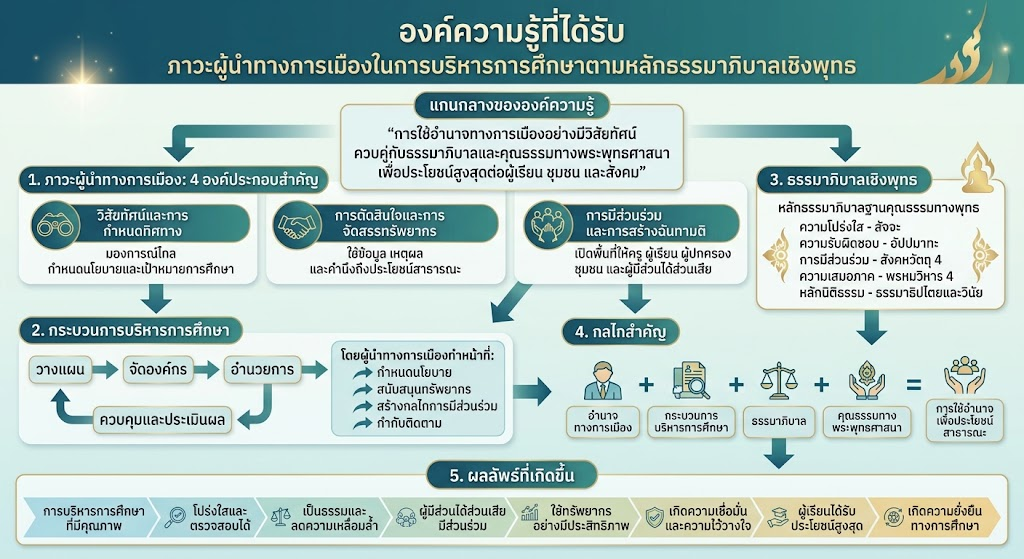
Political Leadership in Educational Administration Based on Buddhist Good Governance
Keywords:
Political Leadership; Educational Administration; Good Governance PrinciplesAbstract
This academic article entitled “Political Leadership Based on Educational Administration under Buddhist-Oriented Good Governance Principles” aims to examine and explain the role of political leadership in the development of educational administration within contemporary society. The study highlights the integration of political leadership with the principles of Buddhist-oriented good governance, which emphasize transparency, accountability, participation, equity, and the rule of law. Effective educational administration requires leaders who are capable of setting directions, formulating policies, and implementing strategies, particularly political leaders who determine the allocation of resources and provide systemic support for education. From the Buddhist perspective, political leadership grounded in good governance goes beyond structural management and encompasses the cultivation of moral virtues such as compassion, honesty, integrity, and selflessness for the common good. Such leadership fosters quality, transparency, and sustainability in educational administration. This article argues that when political leaders apply Buddhist-oriented good governance principles, they enhance the standards of educational administration, strengthen public trust, and promote balanced development in terms of wisdom, morality, and peaceful coexistence within educational communities in the long term.