The Lifestyle According to Theravada Buddhist Philosophy of Retired Educational Personnel in Roi Et Province
Keywords:
Lifestyle Model;, Theravāda Buddhist Philosophy; , Retired PersonnelAbstract
The objectives of this study were to: (1) examine the lifestyle of retired educational personnel in Roi Et Province, (2) identify appropriate Theravāda Buddhist philosophical principles for post-retirement living, (3) develop a quality-of-life lifestyle model based on Theravāda Buddhist philosophy, and (4) synthesize knowledge related to such lifestyles. This study employed a qualitative research approach using in-depth interviews and document analysis. The key informants consisted of 20 participants selected through purposive sampling, including experts and retired educational personnel. Data were analyzed using content analysis and descriptive synthesis, and credibility was ensured through triangulation.
The findings revealed that:
1. The lifestyle of retired educational personnel was characterized by simplicity and moderation, with a focus on family life, caregiving roles, and participation in religious and social activities.
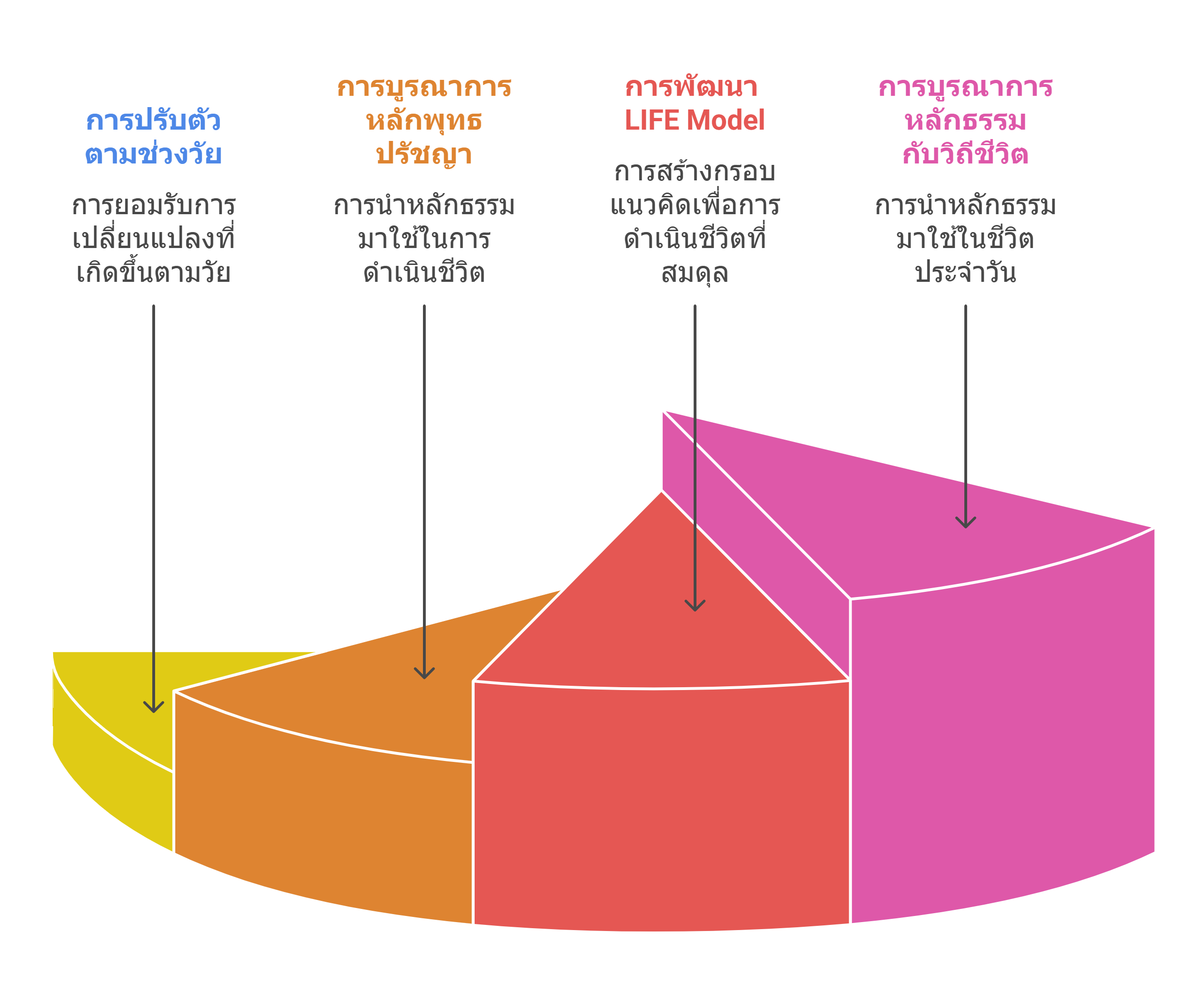
2. Appropriate Theravāda Buddhist principles included the Three Characteristics (Tilakkhaṇa), the Four Noble Truths, the Five Principles for Longevity, and Diṭṭhadhammikatthaprayojana, which supported adaptation, acceptance of change, and balanced living.
3. A quality-of-life lifestyle model emerged through the systematic integration of these Buddhist principles, resulting in balance across psychological, social, and economic dimensions.
4. The synthesized knowledge was conceptualized as the LIFE Model, representing four dimensions: wisdom, mental well-being, social engagement, and economic stability, contributing to sustainable quality of life among retirees.
References
กระทรวงศึกษาธิการ. (2566). รายงานสถานการณ์หนี้สินครูและบุคลากรทางการศึกษา. เข้าถึงได้จาก https://www.moe.go.th
เดชา บุญมาสุข. (2559). การบูรณาการหลักพุทธธรรมเพื่อพัฒนาคุณภาพชีวิตที่ยั่งยืน. (วิทยานิพนธ์พุทธศาสตรดุษฎีบัณฑิต). พระนครศรีอยุธยา: มหาวิทยาลัยมหาจุฬาลงกรณราชวิทยาลัย.
ทิพย์วดี เหลืองกระจ่าง. (2550). การพัฒนารูปแบบการเรียนรู้ตามแนวพุทธศาสตร์เพื่อพัฒนาผู้สูงอายุ. (วิทยานิพนธ์ครุศาสตรดุษฎีบัณฑิต). กรุงเทพฯ: จุฬลงกรณ์มหาวิทยาลัย.
พระทองคำ กตปุณโญ (บาลี), อุรสา พรหมทา และจำเนียร พลหาญ. (2565). รูปแบบการพัฒนาคุณภาพชีวิตผู้สูงอายุตามแนวพุทธศาสนา. วารสารสถาบันวิจัยและพัฒนา มหาวิทยาลัยราชภัฏมหาสารคาม, 9(1), 299-324.
ภิรมย์ เจริญผล. (2553). ศึกษาวิเคราะห์หลักพุทธธรรมที่ใช้ในการดำเนินชีวิตของผู้สูงอายุ: กรณีศึกษา ผู้สูงอายุในสถานสงเคราะห์ จังหวัดนครปฐม. (วิทยานิพนธ์พุทธศาสตรมหาบัณฑิต). พระนครศรีอยุธยา: มหาวิทยาลัยมหาจุฬาลงกรณราชวิทยาลัย.
สุรางค์ โคว้ตระกูล. (2536). ปัญหาผู้สูงอายุ. กรุงเทพฯ: สภาสังคมสงเคราะห์แห่งประเทศไทยในพระบรมราชูปถัมภ์.
แสนคำนึง ตรีฤกษ์ฤทธิ์ และคณะ. (2562). คุณภาพชีวิตและการเตรียมความพร้อมก่อนการเกษียณอายุของข้าราชการครูจังหวัดชลบุรี. เข้าถึงได้จาก http://www.thaiscience.info/ journals/Article/TKJS/10960975.pdf
อภิรัตน์ พูลสวัสดิ์. (2562). การเปลี่ยนแปลงของผู้สูงอายุ. เข้าถึงได้จาก http://www.gi.mahidol.ac.th/th/wp-content/uploads/conference/2560/change.pdf
อัจฉราวรรณ กันจินะ. (2561). พุทธบูรณาการในการดำเนินชีวิตอย่างมีคุณภาพของผู้เกษียณอายุราชการ. (ดุษฎีนิพนธ์พุทธศาสตรดุษฎีบัณฑิต). พระนครศรีอยุธยา: มหาวิทยาลัยมหาจุฬาลงกรณราชวิทยาลัย.
Robert J. Havighurst. (1961). Successful aging. The Gerontologist, 1(1), 8-13. https://doi.org/10.1093/geront/1.1.8