The Development of Teachers in Cooperative Learning Management Using Jigsaw Techniques at Bannontoonsamugkeesuksa School under Khon Kaen Primary Educational Service Area Office 1
Keywords:
Cooperative Learning;, Jigsaw Technique;, Teacher DevelopmentAbstract
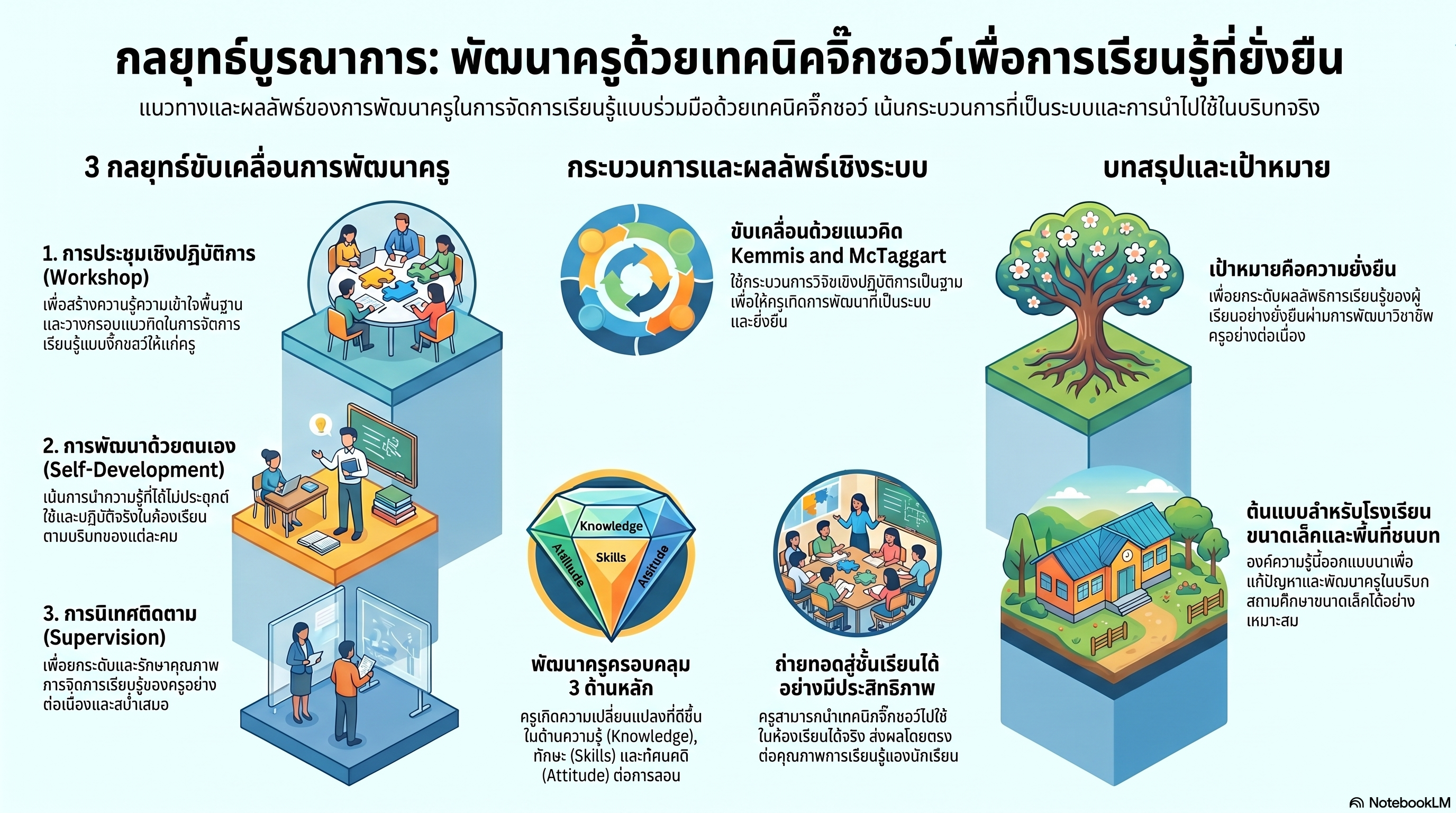
This research aimed to: (1) develop teachers’ knowledge and understanding of cooperative learning using the Jigsaw technique; (2) enhance teachers’ skills in lesson plan writing and instructional management; (3) examine teachers’ satisfaction toward the development process; and (4) investigate students’ satisfaction toward the instructional management. The study employed an Action Research approach based on the concept of Kemmis and McTaggart, conducted in two cycles. Each cycle consisted of four stages: planning, action, observation, and reflection. The participants and informants consisted of 28 individuals, including 6 primary school teachers (Grades 1–6) selected through purposive sampling, and 22 additional informants comprising educational supervisors, school administrators, and students. The research instruments included achievement tests, interviews, evaluation forms, observation forms, and satisfaction questionnaires.
The findings revealed that:
1. Teachers’ knowledge and understanding of cooperative learning using the Jigsaw technique significantly improved, with greater accuracy and confidence observed in the second cycle.
2. Teachers were able to design lesson plans accurately, comprehensively, and in alignment with learning objectives, with overall performance at a high level, and were able to systematically implement the plans in actual classroom settings.
3. Teachers’ overall satisfaction with the development process was at a high level, particularly in terms of content and practical application.
4. Students reported a high level of satisfaction toward the instructional management, demonstrating increased enthusiasm and active participation in learning.
References
กรมวิชาการ. (2545). การปฏิรูปการเรียนรู้ที่เน้นผู้เรียนเป็นสำคัญที่สุด: แนวทางสู่การปฏิบัติ. กรุงเทพฯ: คุรุสภาลาดพร้าว.
กุญชลี ค้าขาย. (2545). พฤติกรรมมนุษย์กับการพัฒนาตน. กรุงเทพฯ: สถาบันราชภัฏสวนสุนันทา.
ทิศนา แขมมณี. (2545). ศาสตร์การสอน: องค์ความรู้เพื่อการจัดกระบวนการเรียนรู้ที่มีประสิทธิภาพ. กรุงเทพฯ: จุฬาลงกรณ์มหาวิทยาลัย.
ธนานุวัจน์ พงษ์เดชาตระกูล, บังอร เสรีรัตน์, สุรัฐ ศิลปะอนันต์ และทนงศักดิ์ คุ้มไข่น้ำ. (2560). การพัฒนาสมรรถนะการปฏิบัติงานโดยใช้รูปแบบชุมชนการเรียนรู้ทางวิชาชีพของครู และบุคลากรการศึกษานอกระบบและการศึกษาตามอัธยาศัยจังหวัดชัยภูมิ. วารสารบริหารการศึกษา มหาวิทยาลัยขอนแก่น, 13(1), 113-121.
โรงเรียนบ้านโนนตุ่นสามัคคีศึกษา. (2567). รายงานการประเมินตนเองระดับการศึกษาขั้นพื้นฐาน ปีการศึกษา 2567. ขอนแก่น: โรงเรียนบ้านโนนตุ่นสามัคคีศึกษา.
วัฒนาพร ระงับทุกข์. (2542). แผนการสอนที่เน้นผู้เรียนเป็นศูนย์กลาง. (พิมพ์ครั้งที่ 2). กรุงเทพฯ: แอล ที เพรส.
วิจารณ์ พานิช. (2560). วิถีสร้างการเรียนรู้เพื่อศิษย์ในศตวรรษที่ 21. กรุงเทพฯ: มูลนิธิสดศรี.
วีระพงษ์ เทียมวงษ์. (2563). การพัฒนารูปแบบการจัดการความรู้ด้านการนิเทศติดตามและประเมินผลการจัดการศึกษาของสำนักงานเขตพื้นที่การศึกษาประถมศึกษา. (วิทยานิพนธ์การศึกษาดุษฎีบัณฑิต). มหาสารคาม: มหาวิทยาลัยมหาสารคาม.
สำนักงานคณะกรรมการการศึกษาแห่งชาติ. (2543). รายงานสภาวะการศึกษาไทยปี 2543-2544. กรุงเทพฯ: สำนักงานคณะกรรมการการศึกษาแห่งชาติ.
สำนักทดสอบทางการศึกษา. (2553). การเสริมสร้างประสิทธิภาพการจัดการเรียนการสอนเพื่อพัฒนาการเรียนรู้ของผู้เรียน เล่ม 3. กรุงเทพฯ: สำนักทดสอบทางการศึกษา.
Kemmis, S., & McTaggart, R. (1988). The Action Research Planner. Geelong, VIC: Deakin University Press.