การสืบสานพุทธวัฒนธรรมภูมิปัญญาท้องถิ่นผ้าขาวม้าทอมือบ้านแห้ว ตำบลบ้านโนน อำเภอซำสูง จังหวัดขอนแก่น
คำสำคัญ:
การสืบสาน; , พุทธวัฒนธรรม; , ภูมิปัญญาท้องถิ่น; , ผ้าขาวม้าทอมือบทคัดย่อ
การวิจัยครั้งนี้ มีวัตถุประสงค์เพื่อ 1) ศึกษาสภาพปัจจุบัน ปัญหา อุปสรรค การสืบสานภูมิปัญญาท้องถิ่นสินค้าชุมชนผ้าขาวม้าทอมือ 2) ศึกษากระบวนการพัฒนาสืบสานภูมิปัญญาท้องถิ่นสินค้าชุมชนผ้าขาวม้าทอมือเชิงพุทธบูรณาการ และ 3) ขับเคลื่อนการพัฒนาภูมิปัญญาท้องถิ่นสินค้าชุมชนผ้าขาวม้าทอมือเชิงพุทธบูรณาการ บ้านแห้ว ตำบลบ้านโนน อำเภอซำสูง จังหวัดขอนแก่น เป็นการวิจัยเชิงคุณภาพ โดยใช้การวิจัยเชิงปฏิบัติการแบบมีส่วนร่วม คณะผู้วิจัยได้กำหนด ประชากร กลุ่มตัวอย่าง และผู้ให้ข้อมูลสำคัญ คือ กลุ่มสตรีทอผ้าขาวม้าทอมือบ้านแห้ว ปราชญ์ชุมชน ผู้นำ หมู่ 9 จำนวน 30 คน และ นักออกแบบผลิตภัณฑ์ นักวิชาการด้านวัฒนธรรมสร้างสรรค์ ผู้ประกอบการธุรกิจท่องเที่ยว จำนวนกลุ่มละ 2 คน โดยเลือกแบบเจาะจง เครื่องมือที่ใช้ในการวิจัย ได้แก่ แบบสัมภาษณ์แบบกึ่งมีโครงสร้าง แบบบันทึกการสนทนากลุ่ม การวิเคราะห์ข้อมูลโดยการวิเคราะห์เนื้อหาและพรรณนาความ ทำการบันทึกรายละเอียดพัฒนาการการสืบทอดการทอผ้าขาวม้าของภูมิปัญญา และจัดทำเป็นฐานข้อมูลสารสนเทศภูมิปัญญาท้องถิ่นชุมชนบ้านแห้วในรูปแบบของเอกสารสื่อสิ่งพิมพ์
ผลการวิจัยพบว่า
1. สภาพปัจจุบัน ยังคงรักษาและสืบสานวิถีชีวิตแบบดั้งเดิมไว้ได้อย่างเหนียวแน่น สิ่งที่สะท้อนถึงวิถีชีวิตเหล่านี้อย่างเด่นชัด คือ การใช้ผ้าขาวม้าทอมือที่ถูกทอในชีวิตประจำวัน ปัญหา อุปสรรค คือ การขาดแคลนคนรุ่นใหม่ที่จะมาเรียนรู้ การขาดการสนับสนุนจากครอบครัว ความท้าทายด้านเศรษฐกิจ การขาดการสนับสนุนจากหน่วยงานภาครัฐอย่างเป็นทางการ การบริหารจัดการ และผลกระทบจากธรรมชาติต่อการสืบสานภูมิปัญญาท้องถิ่นสินค้าชุมชนผ้าขาวม้าทอมือ
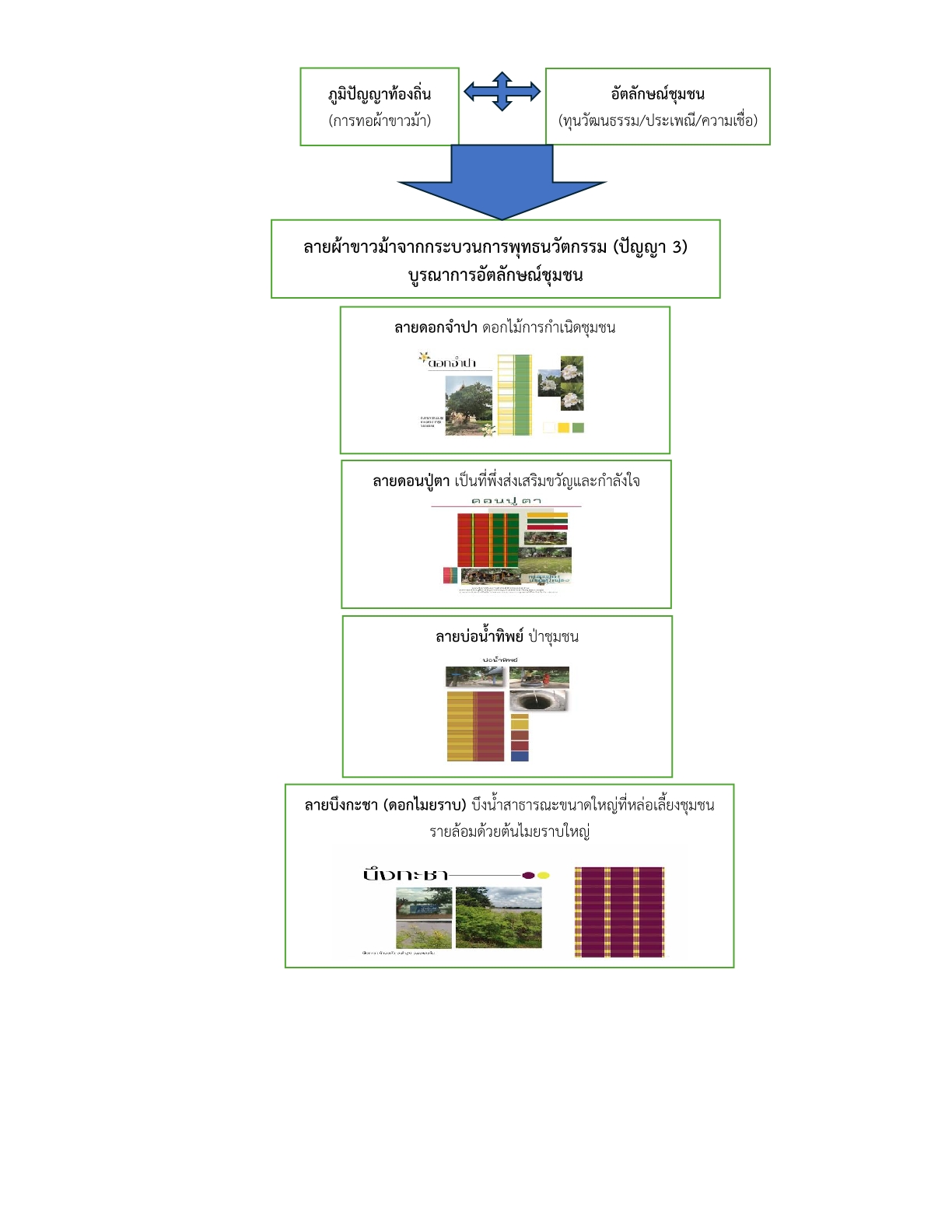
2. กระบวนการพัฒนาสืบสานภูมิปัญญาท้องถิ่นสินค้าชุมชนผ้าขาวม้าทอมือเชิงพุทธบูรณาการ บ้านแห้ว ตำบลบ้านโนน อำเภอซำสูง จังหวัดขอนแก่น แบ่งเป็น 6 ระยะ
3. การขับเคลื่อนการพัฒนาภูมิปัญญาท้องถิ่นสินค้าชุมชนผ้าขาวม้าทอมือเชิงพุทธบูรณาการ บ้านแห้ว ตำบลบ้านโนน อำเภอซำสูง จังหวัดขอนแก่น มีเป้าหมายของการขับเคลื่อน 5 ด้าน
เอกสารอ้างอิง
ชนาธิป พรมมี. (2560). คุณค่าผ้าไหมกับวิถีชีวิตของชาติพันธุ์ชาวกวย กรณีศึกษา: บ้านตาตา หมู่ที่ 1 ตำบลโพธิ์กระสังข์ อำเภอขุนหาญ จังหวัดศรีสะเกษ. (รายงานการวิจัย). กรุงเทพฯ: สาขาวิชาบัณฑิตอาสาสมัคร วิทยาลัยพัฒนศาสตร์ ป๋วย อึ๊งภากรณ์ มหาวิทยาลัยธรรมศาสตร์.
ณรงค์ฤทธิ์ มะสุใส และคณะ. (2561). การออกแบบลายผ้าทอมือ สาหรับสร้างสรรค์แฟชั่นร่วมสมัยจากภูมิปัญญากลุ่มวิสาหกิจชุมชนตาบลกุดหว้า ด้วยโปรแกรมคอมพิวเตอร์. (รายงานการวิจัย). กาฬสินธุ์: สำนักงานกองทุนสนับสนุนการวิจัยและมหาวิทยาลัยกาฬสินธุ์.
พัดชา อุทิศวรรณกุล และคณะ. (2564). นวัตกรรมอุตสาหกรรมผลิตภัณฑ์ไลฟ์สไตล์จากจังหวัดน่านสู่สากลเพื่อการท่องเที่ยวเชิงสร้างสรรค์. ภายใต้โครงการสร้างเสริมพลังจุฬาฯ ก้าวสู่ศตวรรษที่ 2 ช่วงที่ 2: หน่วยปฏิบัติการวิจัยแฟชั่นและนฤมิตศิลป์คณะศิลปกรรมศาสตร์ จุฬาลงกรณ์มหาวิทยาลัย. กรุงเทพฯ: จุฬาลงกรณ์มหาวิทยาลัย.
พิชชากานต์ ช่วงชัย. (2567). Soft Power วัฒนธรรม กับการพัฒนาเศรษฐกิจสร้างสรรค์ของไทย. (หลักสูตรการจัดการวัฒนธรรมและอุตสาหกรรมสร้างสรรค์ วิทยาลัยนวัตกรรม มหาวิทยาลัยธรรมศาสตร์). เข้าถึงได้จาก https://www.creativethailand.org/article-read?article_id=33445
รุจ หาเรืองทรง. (2567). วัฒนธรรมไทย. ส 2.1 ม.4-6/5 วิเคราะห์ความจําเป็นที่ต้องมีการปรับปรุงเปลี่ยนแปลงและอนุรักษ์วัฒนธรรมไทยและเลือกรับวัฒนธรรมสากล. เข้าถึงได้จาก https://www.sw2.ac.th/images/user/root/soc31101/7soc.pdf
วินยาภรณ์ พราหมณโชติ. (2563). ผ้าฝ้ายทอมือจอมทองกับแนวทางการสร้างมูลค่าเพิ่มเพื่อการยกระดับผลิตภัณฑ์ในตลาดสมัยใหม่: การวิจัยเชิงคุณภาพ. วารสารมหาวิทยาลัยราชภัฏยะยา, 16(1), 1-10. https://so04.tci-thaijo.org/index.php/yru_human/article/view/237543/171086