
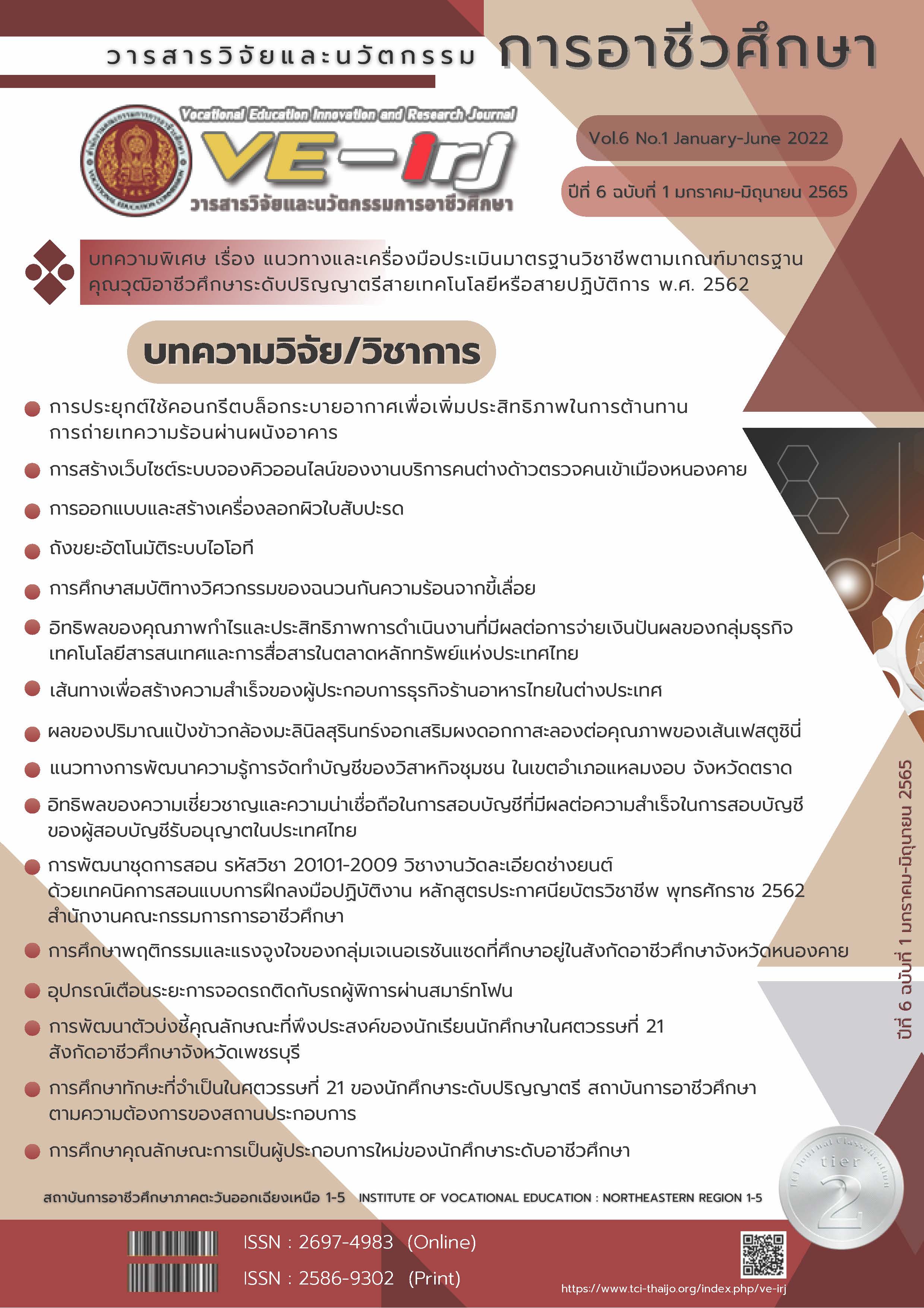
Guidelines for the success of Thai restaurant business entrepreneurs in Thailand and foreign countries
Article Sidebar
Main Article Content
Abstract
This article aimed to guide Thai restaurant business operating in Thailand and foreign countries in order to comply with the high demanded labor force of vocational education in food and hospitality industries. In addition, these workers were able to develop themselves to become new business owners or entrepreneurs. The success of Thai restaurant business owners in Thailand and foreign countries consisted of internal and external factors. Internal factors were factors that entrepreneurs can control, such as food taste, quality standards, raw materials, service, labor capital, labor standards, food items, decoration, location, atmosphere, nutritional value of food, etc. Meanwhile, external factors were factors that may have an impact if not truly studied, such as economy, market and competition, government support and cooperation, transportation and production technology, consumer and consumption behavior, regulations, laws, media and public relations, religion and culture, consumer needs and values.
Article Details

This work is licensed under a Creative Commons Attribution-NonCommercial-NoDerivatives 4.0 International License.
สงวนสิทธิ์ โดย สถาบันการอาชีวศึกษาภาคตะวันออกเฉียงเหนือ 1
306 หมู่ 5 ถนนมิตรภาพ หนองคาย-อุดรธานี ตำบลโพธิ์ชัย อำเภอเมืองหนองคาย จังหวัดหนองคาย 43000
โทร 0-4241-1445,0-4241-1447
ISSN : 3027-6861 (print) ISSN : 3027-687X (online)
References
[2] ฐานเศรษฐกิจ. (2563, กันยายน, 1). กรมส่งเสริมการค้าระหว่างประเทศยกระดับร้านอาหารไทยในต่างประเทศ. [Online]. แหล่งที่มา: https://www.thansettakij.com/content/business/151273, 2560.
[3] วิศรุต สุวรรณา. (2563, กันยายน, 1). “Thai Delicious” ศาสตร์แห่งรสชาติอาหารไทยจากครัวไทยสู่ครัวโลก. [Online]. http://www.nia.or.th/innolinks/page.php?issue=201304§ion=6, 2556.
[4] วิลาวัลย์ อ่อนวงษ์เปรม, ชัยพล หอรุ่งเรือง, พิษณุ สันทรานันท์ และศรายุทธ เล็กผลิผล. “กลยุทธ์การปรับตัวด้านการตลาดที่มีต่อการรับรู้คุณค่าอาหารไทยดั้งเดิม”, วารสารวิทยาลัยดุสิตธาน, ปีที่14 ฉบับที่ 1, มกราคม-เมษายน, หน้า 254-266, 2563.
[5] foodfocusthailand. (2563, ธันวาคม, 25). ร้านอาหาร “ไทย ซีเล็กท์” 18 ประเทศทั่วโลกตบเท้าเข้าศึกษาธุรกิจบริการอาหารไทย ในงาน THAIFEX 2018. [Online]. แหล่งที่มา: www.foodfocusthailand.com/news/ร้านอาหาร-ไทย-ซีเล็กท์, 2561
[6] Thai select. (2564, มกราคม, 8). Thai select. [Online]. แหล่งที่มา: http://www.thaiselect.com/,n.d.
[7] Leach, J., Mercer, H., Stew, G. and Denyer, S. “Improving food hygiene standards: A customer focused approach,” British Food Journal, Vol.103, No.4, pp. 238–252, 2001.
[8] พิมพ์เพ็ญ พรเฉลิมพงศ์ และนิธิยา รัตนาปนนท์. (2563, พฤศจิกายน, 10). คุณภาพอาหาร. [Online]. แหล่งที่มา: http://www.foodnetworksolution.com/wiki/word/3022/food-quality, ม.ป.ป.
[9] สำนักงานกองทุนสนับสนุนการสร้างเสริมสุขภาพ. (2564, มกราคม, 14). ยกระดับร้านอาหาร Clean Food Good Taste Plus. [Online]. แหล่งที่มา: www.thaihealth.or.th/Content/25386-ยกระดับร้านอาหาร%20Clean%20Food%20Good%20Taste%20Plus.html, 2557.
[10] สำนักสุขาภิบาลอาหารและน้ำ กรมอนามัย กระทรวงสาธารณสุข. (2564, มกราคม, 14). Clean Food Good Taste. [Online]. แหล่งที่มา: http://foodsan.anamai.moph.go.th/main.php?filename=CFGT, ม.ป.ป.
[11] Yuanji Zheng. “A Study of Some of the Factors Determining the Choice of International Restaurants by Bangkokians,” The Journal of Service Marketing, Vol. 4 June. 20, pp. 156-167, 2011.
[12] Maleekaew C. “Finding of key factors in creating small business system’s success: The case study in Thai restaurants in Sweden.” M.A. Thesis, Mälardalen University, Sweden, 2008.
[13] Lertputtarak, “The relationship between Destination Image, Food Image, and Revisiting Pattaya, Thailand”, International Journal of Business and Management, Vol.7, No.5, pp. 111-122, 2012.
[14] ศูนย์วิจัยกสิกรไทย. (2563, สิงหาคม, 30). ร้านอาหารไทยในต่างแดนสร้างอาชีพพ่อ/แม่ครัวไทย. [Online]. แหล่งที่มา:www.kasikornresearch.com/TH/K-EconAnalysis/Pages/ViewSummary.aspx?docid=3327, 2545.
[15] Aksoydan, E. “Hygiene factors influencing customers’ choice of dining-out units: findings from a study of university academic staff,” Journal of Food Safety, Vol.27, pp. 300-316, 2007.
[16] ปรัชญา เหินสว่าง และชาญชัย จิวจินดา. “ปัจจัยความสําเร็จของการประกอบธุรกิจร้านอาหารไทยในประเทศสหรัฐอเมริกา,” วารสารนวัตกรรมการบริหารและการจัดการ, ปีที่ 8 ฉบับที่ 3, กันยายน –ธันวาคม, หน้า 106-115, 2563.
[17] ทวีศักดิ์ เทพพิทักษ์. “ความปกติรูปแบบใหม่หรือวิถีชีวิตปกติแบบใหม่ภายหลังโรคอุบัติใหม่ โควิด-19 : ธุรกิจออนไลน์ ธุรกิจค้าปลีก และธุรกิจร้านอาหาร กับทิศทางการเปลี่ยนแปลงของอุตสาหกรรมขนส่งและโลจิสติกส์ไทย,” วารสารมหาวิทยาลัยนราธิวาสราชนครินทร์ สาขามนุษยศาสตร์และสังคมศาสตร์, ปีที่ 8 ฉบับที่ 1,มกราคม–มิถุนายน, หน้า 246-274, 2564.
[18] สิริพันธุ์ จุลกรังคะ, โภชนาศาสตร์เบื้องต้น, สำนักพิมพ์มหาวิทยาลัยกษตรศาสตร์, พ.ศ. 2558
[19] Gulasirima, R. and Yambunjong, P. Thai Food Business Model in ASEAN Markets: A Case Study of Thailand, Lao People’s Democratic Republic and Socialist Kingdom of Cambodia,” Program & Abstracts, Commission on Higher Education Congress IV, University Staff Development Consortium, p. 276, 2011.
[20] ณรงค์ สมพงษ์, กลยุทธ์การประชามสัมพันธ์เชิงรุกครัวไทยสู่ครัวโลก, Thailand Restaurant New, พ.ศ. 2550, หน้า 80.
[21] พรเทพ อนุสสรนิติสาร จิโรจ บุญจนาถบพิธ และสุวิทย์ เริงวิทย์, “โครงการจัดทำระบบสารสนเทศแบบเว็บ เพื่อการจัดวัตถุดิบเครื่องปรุง เครื่องใช้และอุปกรณ์ตกแต่ง สำหรับร้านอาหารไทยในต่างประเทศ”, รายงานวิจัย, คณะวิศวกรรมศาสตร์, มหาวิทยาลัยเกษตรศาสตร์, 2548.
[22] อนัญญา กรรณสูตร และวรวรรณ องค์ครุฑรักษา, “การศึกษาเรื่องการรับรู้ทางประสาทสัมผัสต่อร้านอาหารไทยของผู้บริโภคชาวสิงคโปร์ และความสัมพันธ์กับปัจจัยภูมิหลัง”. วารสารการประชาสัมพันธ์และการโฆษณา, ปีที่ 6 ฉบับที่ 1, มกราคม-มิถุนายน, หน้า 65-82, 2556.
[23] ปาริชาติ เบ็ญฤทธิ์ และน้ำทิพย์ ตระกูลเมฆี, “ศึกษาความสัมพันธ์ระหว่างปัจจัยด้านคุณภาพของอาหารคุณภาพการบริการ สภาพแวดล้อมทางกายภาพของร้านอาหารและความพึงพอใจของลูกค้าร้านอาหารไทยในประเทศมาเลเซีย,” วารสารวิทยาการจัดการ, ปีที่ 3 ฉบับที่ 1, หน้า 41-61, 2559.
[24] ธันยมัย เจียรกุล, “มิติทางวัฒนธรรมของชาวจีนที่มีผลต่อความคาดหวังคุณภาพการบริการ ของธุรกิจร้านอาหารไทย”, วารสารธุรกิจปริทัศน์, ปีที่ 11 ฉบับที่ 1, มกราคม – มิถุนายน, หน้า 196-212, 2562.
[25] Nguyen Thi Kim Chau, ภารดี มหาขันธ์ และ ภาณุพงศ์ อุดมศิลป์, “ร้านอาหารไทยในนครโฮจิมินห์: ทุนความเป็นไทยการดำรงอยู่และแนวโน้ม”, วารสารวิชาการมนุษยศาสตร์และสังคมศาสตร์ มหาวิทยาลัยบูรพา, ปีที่ 27 ฉบับที่ 55, กันยายน – ธันวาคม, หน้า 256-275, 2562.
[26] เปรมฤทัย แย้มบรรจง, พวงเพ็ชร์ นิธยานนท์ และอัครพันธ์ รัตสุข, “สถานการณ์ปัจจุบัน และแนวทางการประกอบธุรกิจภัตตาคาร/ร้านอาหารไทย ประเทศกัมพูชา”, วารสารปัญญาภิวัฒน์, ปีที่ 9 ฉบับพิเศษ ประจําเดือนกรกฏาคม. หน้า 143-156, 2560.
[27] สุทธิพร บุญมาก, “ร้านอาหารไทยในประเทศออสเตรเลีย:ภาพสะท้อน ‘ความเป็นไทย’ และ ‘การปรับตัว’,”. วารสารศิลปศาสตร์, ปีที่ 5 ฉบับที่ 1, มกราคม-มิถุนายน, หน้า 90-103, 2556.
[28] Athena H.N. Mak, Margaret Lumbers, Anita Eves and Richard C.Y. “Factors Influencing Tourist Food Consumption,” International Journal of Hospitality Management. Vol. 44 January, pp. 1-25, 2014.
[29] Pannakarn L. “A Model of Consumer Decision-Making for the Adoption of Thai Food in Victoria , Australia,” Department of Hospitality, Tourism and Marketing Faculty of Business and Law, Victorie university, 2007.
