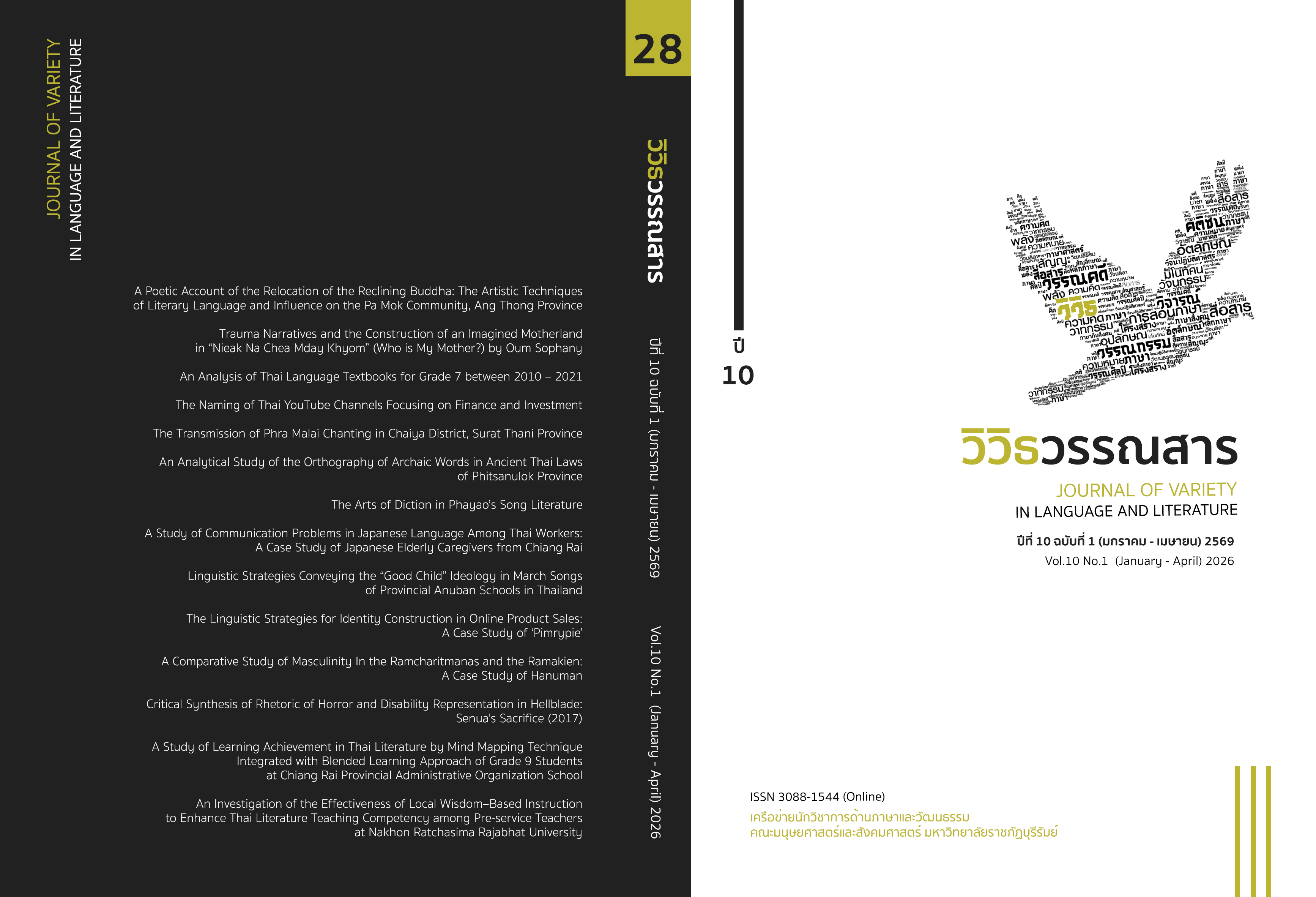
A Comparative Study of Masculinity in the Ramcharitmanas and the Ramakien: A Case Study of Hanuman
Article Sidebar
Main Article Content
Abstract
This comparative study examines the construction and representation of masculinity through the character of Hanuman in two literary works from South Asia and Southeast Asia: the Ramcharitmanas of Goswami Tulsidas (1574 CE) and the Ramakien, composed under the royal authorship of King Rama I (1797 CE). This study applies R.W. Connell's concept of hegemonic masculinity as a theoretical framework for analysis, investigating how Hanuman's masculine identity is constructed through four dimensions: physical expression, sexuality and desire, devotional identity, and the exercise of social power. The analytical findings reveal that the Ramcharitmanas constructs Hanuman's masculinity through the perspective of Hindu devotional theology (bhakti), emphasizing service and spiritual fortitude as primary characteristics. In contrast, the Ramakien adapts these attributes to align with the Thai Buddhist cosmological framework, incorporating elements of the devaraja concept and Theravada Buddhist ethics. The study demonstrates that masculine ideals undergo adaptation and transformation according to cultural contexts across geographical and religious boundaries, while maintaining the archetypal structure of the epic. This reflects approaches to heroic masculinity rooted in the philosophical traditions of South Asia and Southeast Asia.
Article Details

This work is licensed under a Creative Commons Attribution-NonCommercial-NoDerivatives 4.0 International License.
Copyright is that of the journal any reproduction must be permitted by the editor of journal
References
Connell, R. W. (2005). Masculinities (2nd ed.). University of California Press.
Doniger, W. (2009). The Hindus: An alternative history. Penguin Press.
Goldman, R. P. (1993). Transsexualism, gender, and anxiety in traditional India. Journal of the American Oriental Society, 113 (3), 374-401.
King Rama I. (2014). Ramakien (Vols.1–4).Fine Arts Department. (Original work composed 1782–1809). (In Thai)
Lutgendorf, P. (2007). Hanuman's tale: The messages of a divine monkey. Oxford University Press.
Nagavajara, C. (1982). Comparative literature from a Thai perspective. Chulalongkorn University Press.
Penth, H. (2004). Hanuman in Thailand: From Indian epic hero to Thai folk character. In J. Leslie (Ed.), Authority, anxiety and canon: Essays in Vedic interpretation (pp. 223-248). State University of New York Press.
Rajanubhab, D. (2002). The Ramakien: A prose translation (N. Suebsaeng, Trans.). Orchid Press. (Original work published in 1917)
Reynolds, C. J. (1991). Buddhist cosmography in Thai history, with special reference to nineteenth-century culture change. Journal of Asian Studies, 35 (2), 203-220.
Richman, P. (Ed.). (1991). Many Ramayanas: The diversity of a narrative tradition in South Asia. University of California
Press.Richman, P. (Ed.). (2001). Questioning Ramayanas: A South Asian tradition. University of California Press.
Tulsidas. (1968). Shri Ramcharitmanas. (R. C. Prasad, Trans.). Motilal Banarsidass. (Original work composed ca. 1574-1577)
Van Esterik, P. (2000). Materializing Thailand. Berg Publishers.
Wenk, K. (1968). The restoration of Thailand under Rama I, 1782-1809. University of Arizona Press.
White, D. G. (1996). The alchemical body: Siddha traditions in medieval India. University of Chicago Press. Tulsidas, G. (n.d.). Ramacaritamasa. Gita Press. (In Hindi).
