
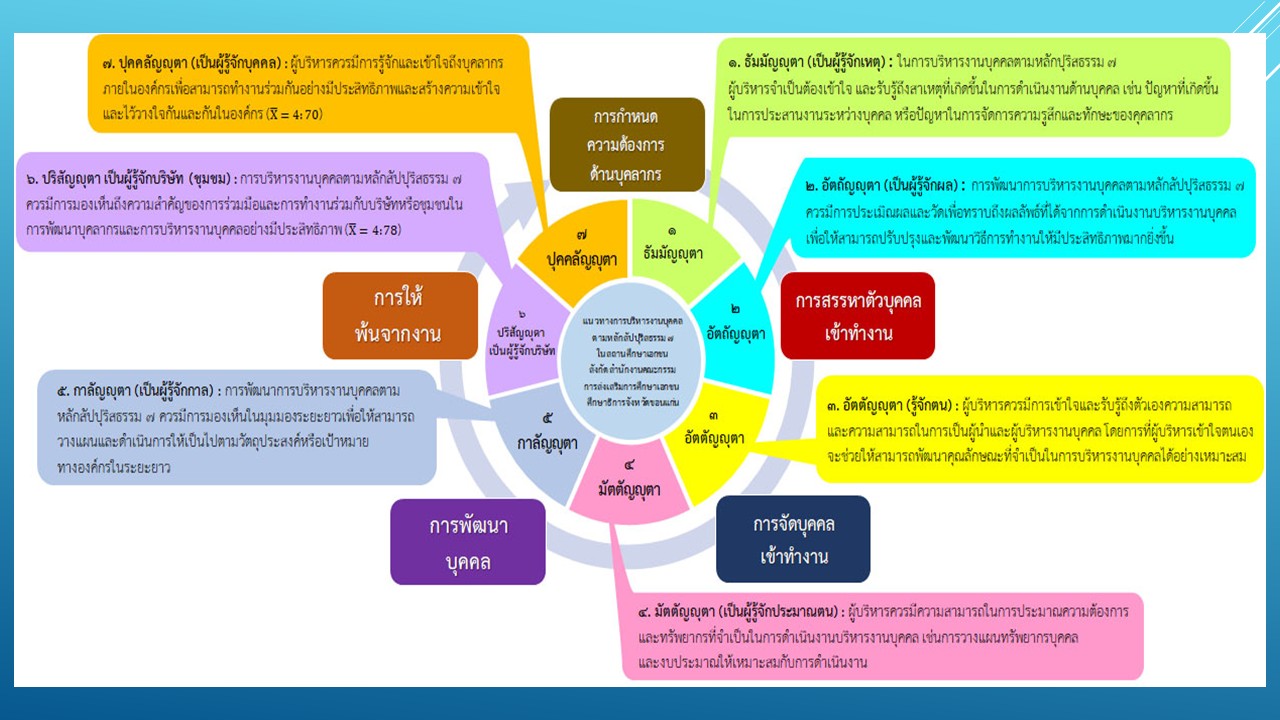
แนวทางการบริหารงานบุคคลตามหลักสัปปุริสธรรม 7 ในสถานศึกษาเอกชน สังกัดสำนักงานคณะกรรมการส่งเสริมการศึกษาเอกชน ศึกษาธิการจังหวัดขอนแก่น
Article Sidebar
Main Article Content
บทคัดย่อ
การวิจัยครั้งนี้มีวัตถุประสงค์เพื่อศึกษาเปรียบเทียบการบริหารงานบุคคลตามหลักสัปปุริสธรรม 7 และศึกษาแนวทางพัฒนาการบริหารงานบุคคลตามหลักสัปปุริสธรรม 7 ในสถานศึกษาเอกชน สังกัดสำนักงานคณะกรรมการส่งเสริมการศึกษาเอกชน ศึกษาธิการจังหวัดขอนแก่น โดยการแบบผสมผสานวิธี กลุ่มตัวอย่างในการวิจัยเชิงปริมาณ คือ ผู้บริหารโรงเรียนเอกชนในจังหวัดขอนแก่น 339 คน เครื่องมือที่ใช้ในการวิจัยเป็นแบบสอบถาม วิเคราะห์ข้อมูลโดยใช้สถิติพื้นฐาน และสถิติทดสอบเอฟ ผู้ให้ข้อมูลสำคัญ 3 คน โดยแบบสัมภาษณ์ วิเคราะห์ข้อมูลด้วยวิธีวิเคราะห์เนื้อหา ผลการวิจัยพบว่า 1) สภาพการบริหารงานบุคคลตามหลักสัปปุริสธรรม 7 ในสถานศึกษาเอกชน สังกัดสำนักงานคณะกรรมการส่งเสริมการศึกษาเอกชน อยู่ในระดับมากที่สุด โดยด้านที่มีการปฏิบัติในระดับสูงสุด คือ ปริสัญญุตา เป็นผู้รู้จักบริษัท (ชุมชน) รองลงมาคือ ปุคคลัญญุตา (เป็นผู้รู้จักบุคคล)และระดับน้อยที่สุด คือ มัตตัญญุตา (เป็นผู้รู้จักประมาณ) 2) ผลการเปรียบเทียบความคิดเห็นต่อสภาพการบริหารงานบุคคลตามหลักสัปปุริสธรรม 7 ระดับการศึกษาโดยรวม ไม่แตกต่างกัน ในขณะที่จำแนกตามประสบการณ์ในการทำงานแตกต่างกันอย่างมีนัยสำคัญทางสถิติ 3) แนวทางการพัฒนาบริหารงานบุคคลตามหลักสัปปุริสธรรม 7 ในสถานศึกษาเอกชน พบว่า ผู้บริหารจำเป็นต้องเข้าใจและรับรู้ถึงสาเหตุที่เกิดขึ้นในการดำเนินงานทางด้านบุคคล มีการประเมินผลเพื่อทราบถึงผลลัพธ์ที่ได้จากการบริหารงานบุคคล สามารถปรับปรุงและพัฒนาการทำงานให้มีประสิทธิภาพมากยิ่งขึ้น เข้าใจและรับรู้ถึงตัวเอง มีความเป็นผู้นำ มีความสามารถในการประมาณความต้องการในการดำเนินงานบริหารงานบุคคล การมองเห็นในมุมมองระยะยาวเพื่อให้สามารถวางแผนและดำเนินการให้เป็นไปตามเป้าหมายขององค์กร เห็นความสำคัญของการทำงานร่วมกับบริษัทหรือชุมชนในการบริหารงานบุคคลอย่างมีประสิทธิภาพ และรู้จักและเข้าใจถึงบุคลากรในองค์กร
คำสำคัญ: การบริหารงานบุคคล, สัปปุริสธรรม 7, สถานศึกษาเอกชน
Article Details

อนุญาตภายใต้เงื่อนไข Creative Commons Attribution-NonCommercial-NoDerivatives 4.0 International License.
เอกสารอ้างอิง
กรมวิชาการ. (2555). แนวทางปฏิรูปการศึกษา พ.ศ. 2555. กรุงเทพฯ: โรงพิมพ์คุรุสภาลาดพร้าว.
กระทรวงศึกษาธิการ. (2550). คู่มือการบริหารโรงเรียนขั้นพื้นฐาน. พิมพ์ครั้งที่ 2. กรุงเทพฯ: โรงพิมพ์คุรุสภา.
กระทรวงศึกษาธิการ. (2554). พระราชบัญญัติข้าราชการครูและบุคลากรทางการศึกษา (ฉบับที่ 3) พ.ศ.2553 สำนักงานการศึกษาขั้นพื้นฐาน. กรุงเทพฯ: โรงพิมพ์คุรุสภาลาดพร้าว.
เตือนใจ คล้ายแก้ว. (2560). แนวทางการบริหารงานบุคคลของโรงเรียนในจังหวัดพิจิตร สังกัดสำนักงานเขตพื้นที่การศึกษามัธยมศึกษา เขต 4. วิทยานิพนธ์ครุศาสตรมหาบัณฑิต. บัณฑิตวิทยาลัย :มหาวิทยาลัยราชภัฏนครสวรรค์.
เทพรัตน์ ดาวเรือง. (2560). การบริหารงานบุคคลของผู้บริหารสถานศึกษาในอำเภอยะหา สังกัดสำนักงานเขตพื้นที่การศึกษาประถมศึกษายะลา เขต 2. วิทยานิพนธ์ปริญญามหาบัณฑิต มหาวิทยาลัยราชภัฏยะลา.
ธีระศักดิ์ บึงมุม. (2560). การพัฒนาบุคลากรตามหลักสัปปุริสธรรม 7 ในสถานศึกษาขั้นพื้นฐาน สำนักงานเขตพื้นที่การศึกษาประถมศึกษาขอนแก่น เขต 4. วิทยานิพนธ์ครุศาสตรมหาบัณฑิต. สาขาวิชาบริหารการศึกษา .บัณฑิตวิทยาลัย : มหาวิทยาลัยกรุงเทพธนบุรี.
พระครูพิศาลปริยัตยานุกุล (อนันต์ วัฑฒโน). (2561). แนวทางการบริหารงานบุคคลตามหลักสัปปุริสธรรม 7 ของผู้บริหารโรงเรียนประถมศึกษาเขตบางขุนเทียน สังกัดกรุงเทพมหานคร. วิทยานิพนธ์ พุทธศาสตรมหาบัณฑิต. สาขาวิชาบริหารการศึกษา. บัณฑิตวิทยาลัย: มหาวิทยาลัยมหาจุหลงกรณราชวิทยาลัย.
พระพรหมคุณาภรณ์ (ป.อ. ปยุตฺโต) (2549). ธรรมนูญชีวิต. พิมพ์ครั้งที่ 3. กรุงเทพฯ: สํานักงาน พระพุทธศาสนาแห่งชาติ.
ภาวิณี วัฒนพรหม. (2565). แนวทางการพัฒนาภาวะผู้นำแบบยั่งยืนตามหลักสัปปุริสธรรม 7 ของผู้บริหารโรงเรียนเอกชน จังหวัดกำแพงเพชร. วารสารวิจัยวิชาการ, 5(3), 179-192.
รุง แกวแดง. (2546). โรงเรียนนิติบุคคล. กรุงเทพฯ: วัฒนาพานิช.
วีระยุทธ์ ชาตะกาญจน์. (2556). เทคนิคการบริหารสำหรับนักบริหารการศึกษามืออาชีพ. กรุงเทพฯ : จุฬาลงกรณ์มหาวิทยาลัย.
สำนักงานคณะกรรมการการศึกษาขั้นพื้นฐาน. (2551). แนวทางการดำเนินการของผู้บริหารในโรงเรียนประถมศึกษา. กรุงเทพฯ: โรงพิมพ์คุรุสภาลาดพร้าว.
Dessler, G. (2007). Human Resource Management. New Jersey: Prentice-Hall.
Krejcie, R.V. and Morgan, D.W. (1970) Determining Sample Size for Research Activities. Educational and Psychological Measurement, 30, 607-610.
Wayne, M.R. and Noe, R.M. (2006). Human Resource Management. New Jersey: Prentice-Hall.
