
รูปแบบการฝึกปฏิบัติเครื่องดนตรีสากลร่วมกับเมโทรนอมเพื่อเสริมสร้างศักยภาพทางจังหวะสำหรับนักเรียนระดับมัธยมศึกษาในจังหวัดสงขลา
Article Sidebar
Main Article Content
บทคัดย่อ
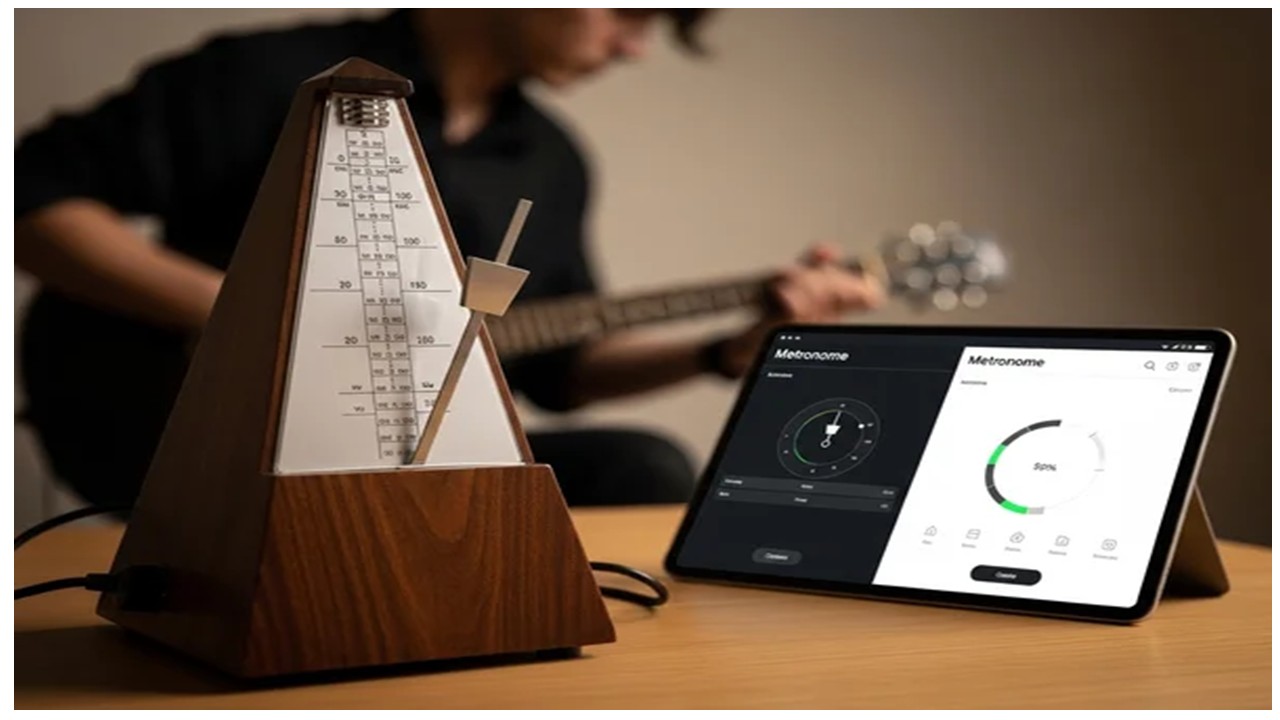
การศึกษาครั้งนี้มีวัตถุประสงค์เพื่อศึกษาวิธีการ เทคนิค และรูปแบบการประยุกต์ใช้เมโทรนอมในการฝึกปฏิบัติเครื่องดนตรีสากลเพื่อพัฒนาทักษะทางจังหวะของนักเรียนระดับมัธยมศึกษาในจังหวัดสงขลา โดยเก็บรวบรวมข้อมูลจากการสัมภาษณ์ครูผู้สอนดนตรีสากล จำนวน 25 ท่าน ด้วยแบบสัมภาษณ์กึ่งโครงสร้าง และวิเคราะห์ข้อมูลเชิงพรรณนา ผลการศึกษาพบว่า เมโทรนอมมีบทบาทสำคัญมากกว่าการเป็นเครื่องกำหนดความเร็วของบทเพลง โดยช่วยพัฒนาการรับรู้จังหวะ ความสม่ำเสมอของ Tempo การแบ่งย่อยจังหวะ และการควบคุมการบรรเลง ครูผู้สอนนิยมให้ผู้เรียนเริ่มฝึกจาก Tempo ช้าควบคู่กับการนับ ร้อง ตบมือ และการเคาะจังหวะ ก่อนพัฒนาไปสู่การบรรเลงบทเพลงจริง นอกจากนี้ยังมีการประยุกต์ใช้การตั้งค่า Click ที่หลากหลายการใช้โทรศัพท์มือถือ หูฟัง และ Backing Track เพื่อสนับสนุนการฝึกซ้อมผลการสังเคราะห์นำไปสู่องค์ความรู้สำคัญ คือ การพัฒนาจากจังหวะภายนอกสู่จังหวะภายใน ผ่านกระบวนการ 1) Metronome 2) Beat Awareness 3) Rhythmic Control 4) Internal Pulse 5) Musical Expression และ6) Ensemble Performance อันเป็นแนวทางที่สามารถนำไปพัฒนารูปแบบการเรียนการสอนดนตรีสำหรับนักเรียนระดับมัธยมศึกษาได้อย่างมีประสิทธิภาพ
คำสำคัญ: เมโทรนอม, ทักษะทางจังหวะ, การฝึกปฏิบัติเครื่องดนตรีสากล, ดนตรีศึกษา, นักเรียนระดับมัธยมศึกษา
Article Details

อนุญาตภายใต้เงื่อนไข Creative Commons Attribution-NonCommercial-NoDerivatives 4.0 International License.
เอกสารอ้างอิง
Baugh, M. K. (2025). The slower the tempo, the harder the music: Strategies for teaching pulse and bow control in slow music. American String Teacher, 75(3), 15–20.
Boyle, J. D., & Radocy, R. E. (1987). Measurement and evaluation of musical experiences. Schirmer Books.
Brinkmann, S., & Kvale, S. (2015). InterViews: Learning the craft of qualitative research interviewing. Sage publications.
Brophy, T. S. (2000). Assessing the developing child musician: A guide for general music teachers. GIA Publications.
Carrer, L. R. J., Pompéia, S., & Miranda, M. C. (2023). Sensorimotor synchronization with music and metronome in school-aged children. Psychology of Music, 51(2). https://doi.org/10.1177/03057356221100286
Creswell, J. W., & Creswell, J. D. (2017). Research design: Qualitative, quantitative, and mixed methods approach. Sage publications.
Duke, R. A., Simmons, A. L., & Cash, C. D. (2009). It's not how much; it's how: Characteristics of practice behavior and retention of performance skills. Journal of Research in Music Education, 56(4), 310-321.
Ericsson, K. A., Krampe, R. T., & Tesch-Römer, C. (1993). The role of deliberate practice in the acquisition of expert performance. Psychological Review, 100(3), 363-406.
Fitts, P. M., & Posner, M. I. (1967). Human performance. Brooks/Cole.
Keele, S. W., Pokorny, R. A., Corcos, D. M., & Ivry, R. (1989). Do perception and motor production share common timing mechanisms: A correlational analysis. Acta Psychologica, 70(3), 263-280.
Klickstein, G. (2009). The musician's way: A guide to practice, performance, and wellness. Oxford University Press.
McPherson, G. E., & Renwick, J. M. (2001). A longitudinal study of self-regulation in children's musical practice. Music Education Research, 3(2), 169-186.
McPherson, G. E., & Zimmerman, B. J. (2011). Self-regulation of musical learning: A social cognitive perspective. In Self-regulated learning and academic achievement (pp. 327-347). Routledge.
Miller, B. A. (2012). Rhythmic instruction from square one: A constructivist teacher and her metronome. General Music Today, 26(1), 19–26. https://doi.org/10.1177/1048371312438134
Utermohl de Queiroz, D., Foletto, C., & López-Íñiguez, G. (2025). Pedagogical approaches to promote self-regulation in musical instrument learning: A PRISMA scoping review. Psychology of Music.
Wesolowski, B. C. (2012). Understanding and developing rubrics for music performance assessment. Music Educators Journal, 98(3), 36-42.
Zhou, Y., et al. (2022). Current state and future directions of technologies for music instrument pedagogy. Frontiers in Psychology.
