
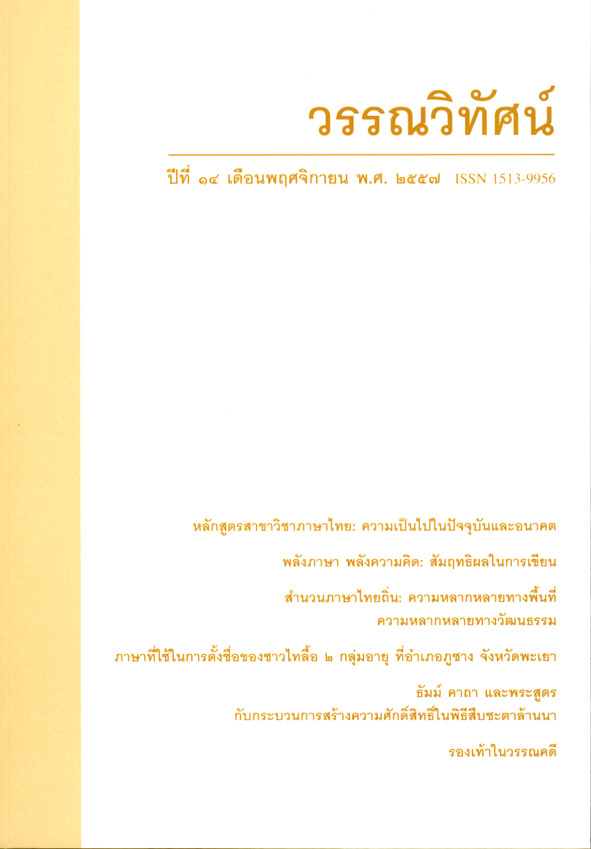
The Curriculum in Bachelor of Arts Program in Thai: Reality and Possibilities
Article Sidebar
Main Article Content
Abstract
This study explores the Beachelor of Arts in Thai curriculum, Thammasat University, by comparing the 2004 and 2009 versions with curricula of other institutions. It also surveys the attitues of lecturers, students, employers and scholars towards the curriculum. The result show that students, while being satisfied with the emphasis on practical sides, suggest more provision of professional grounding, integration of knowledge and up-to-date and assorted teaching materials. Lecturers expected graduates to be strong academically, morally and emotionally; priority should be given to strong academic ability while not putting aside the professional and application abilities for futher careers. Employers expected graduates to have knowledge, sagacity, skills for technologies, integration across disciplines, public consciousness and collaboration at work.
The content fo the previous and current curricula give much emphasis on language and literature while the aptitude-based, practical-based and professional-based subjects are still less accentuated, which share bote similarities and differences with other institutions. The trend of the new Thai curricula focuses more on professional development and an integration of knowledge.
Regarding the policy, the Thai department aims to develop the Bachelor of Arts Programe in Thai according to the Education Act and the National Qualifications Framework for Higher Education and to correspond with the education trends, which focus on an outcome-based curriculum.
Article Details
References
กระทรวงศึกษาธิการ. (๒๕๒๕). พระราชบัญญัติการศึกษาแห่งชาติ พ.ศ. ๒๕๔๒. กรุงเทพฯ: สำนักงานปลัดกระทรวงศึกษาธิการ.
การศึกษาวิทยาศาสตร์และวัฒนธรรมแห่งสหประชาชาต, องค์การ. The United Nations Educational, Scientific and Cultural Organization" สืบค้นเมื่อวันที่ ๑๑ มกราคม ๒๕๕๔, จาก http://www.unesco.org/new/en
ฉวีวรรณ โยคิณ. (๒๕๕๕). การศึกษาแบบเรียนรวม (Inclusive Education). สืบค้นเมื่อวันที่ ๓๑ มกราคม ๒๕๕๕, จาก http://www.kroobannok.com/board_view.php
ธำรง บัวศรี. (๒๕๔๒). ทฤษฎีหลักสูตร: การออกแบบหลักสูตรและพัฒนา (พิมพ์ครั้งที่ ๒). กรุงเทพฯ: ธนรัช.
น้าชาติ. ปฏิญญาจอมเทียน. สืบค้นเมื่อวันที่ ๓๑ พฤษภาคม พ.ศ. ๒๕๕๓, จาก www.khaosod.co.th_view_news/p24
พระราชกฤษฎีกาพระราชบัญญัติการศึกษาแห่งชาติ พ.ศ. ๒๕๔๒. สืบค้นเมื่อวันที่ ๑ ธันวาคม ๒๕๕๓, จาก www.moe.go.th/main2/plan/p-r-b42-01.htm
มหาวิทยาลัยทักษิณ. (๒๕๕๔). หลักสูตรศิลปศาสตรบัณฑิต สาขาวิชาภาษาไทย คณะมนุษยศาสตร์และสังคมศาสตร์. สืบค้นเมื่อวันที่ ๒๑ เมษายน ๒๕๕๔, จาก http://www.tsu.ac.th/tsuco/UserFiles/File/files_data/5_10%20C.pdf
มหาวิทยาลัยธรรมศาสตร์, กองบริการการศึกษา. (๒๕๕๔). ร่างพระราชบัญญัติมหาวิทยาลัยธรรมศาสตร์ในกำกับของรัฐ. สืบค้นเมื่อวันที่ ๔ เมษายน ๒๕๕๔, จาก http://www.tu.ac.th/org/ofrector/person/news/tuact/index.htm
รัฐมนตรีศึกษาแห่งเอเชียตะวันออกเฉียงใต้, องค์การ. (๒๐๑๐). Southeast Asian Ministers of Education Organization (SEAMEO). สืบค้นเมื่อวันที่ ๑๑ มกราคม ๒๕๕๔, จาก http://www.seameo.org/
วารีรัตน์ แก้วอุไร และคณะ. (๒๕๔๗). การพัฒนารูปแบบการปฏิรูปกระบวนการเรียนรู้. วารสารมหาวิทยาลัยนเรศวร, ๑๒, ๔๓-๕๗.
วินัย วีระวัฒนานนท์. (๒๕๔๓). รายงานการวิจัยเอกสารเรื่องหลักเกณฑ์และรูปแบบการพัฒนาหลักสูตรที่พึงประสงค์ในระดับบัณฑิตศึกษา. กรุงเทพฯ: ทบวงมหาวิทยาลัย.
สรุป "แถลงการณ์จอมเทียน" พุ่งเป้าสร้างความเสมอภาค หนุนจัดงบการศึกษาในสถานการณ์ขัดแย้ง. ASTV. ผู้จัดการออนไลน์, สืบค้นเมื่อวันที่ ๒๔ มีนาคม ๒๕๕๔, จาก www.manager.co.th_Qol_ViewNews
สำนักงานคณะกรรมการอุดมศึกษา. (๒๕๕๕). กรอบมาตรฐานคุณวุฒิระดับอุดมศึกษา (TQF: HEd). สืบค้นเมื่อวันที่ ๓๑ มกราคม ๒๕๕๕, จาก http://www.mua.go.th/users/tqf-hed/news/news6.php
