The value of Prasat Phumphon Towards the Lifestyle of Buddhists in Dhom sub-district, Sangkha district, Surin province
Keywords:
Value, Buddhists, Prasat PhumphomAbstract
The objectives of this thesis are: - To study the values of the Prasat Bhumbol towards the lifestyles of Buddhists in Sangha district, Surin province This research is a qualitative research design. Data were collected using documentary study, and in-depth interviews with monks, community leaders, intellectual villagers, and scholars. Finally, to present the analytic descriptive.
The research findings revealed that:
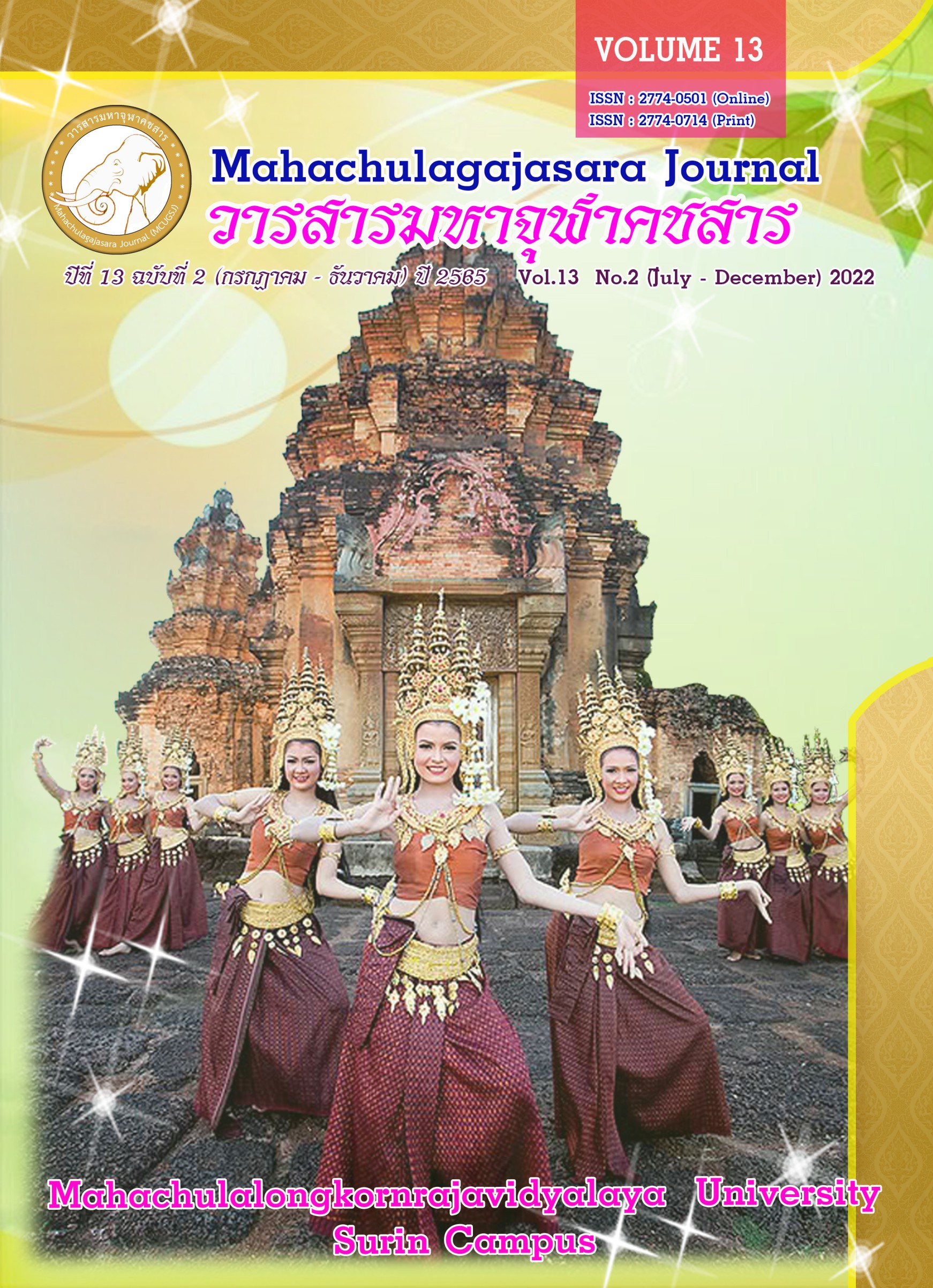
The history of the Prasat Phumphon was born in the ancient Khmer arts era. In the early Jenla period, the 13th-century Buddhist circle was about 1,300 years old. The castle was built according to brahmin-Hinduism. The castle itself is built of bricks and stones to serve as a place for sacred rituals in Brahmin-Hinduism in Shaivism.
The lifestyles of Buddhists in Sangha district, Surin province found that Nowadays, the majority of the population is Buddhist. The lives of people in the community have followed Buddhist beliefs. The community of Dom is a group of Thai Khmer people. The community has four temples and branches. People in the community, in addition to living the principles of Buddhism, also have ancient beliefs about ghosts and Brahminism. You can see the ghostly signs in the Royal Court, located at the back of Prasat. Rituals pay homage to the ghosts of their ancestors in the tenth month. Sensual ceremony to the Pee Ta (the ghosts of forefathers) in Prasat that the Bhumibol’s villagers believe that they keep the villagers in peace.
The values of the Prasat Bhumbol towards the lifestyles of Buddhists in Sangha district, Surin province found that the values in the Buddhism’s aspect are due to the relay of Buddhist teachings from teachers who perform tributes to teach morality. such as Pancasila (the five precepts), loving-kindness, unity, and gratitude. The aesthetic value is due to the beauty of the castle. When a person sees it, they are very comfortable, have peace of mind, and have pleasing emotion. The social value is that Bhumibol castle is a source of cultural learning, traditions, and lifestyles, and the history of the community is psychologically reliant on the community. The economic value is that it attracts tourists to the community. The building of a workforce for making money and distributing income, building careers, and preserving local wisdom that is used to produce products for sale to tourists and people in the community. The cultural value is a hotbed of community arts and culture, such as local legends, religion, language, tradition, dress, and the art of dress.
Downloads
References
การท่องเที่ยวแห่งประเทศไทย.(2554). ปราสาทภูมิโปน: อารยธรรมขอมโบราณในจังหวัดสุรินทร์.https://previous.thailandtourismdirectory.go.th/th/info/attraction/detail/itemid/4960. [7 ธันวาคม2564].
โกสุม สายใจ และคณะ. (2547). สุนทรียะภาพของชีวิต: ปราสาทภูมิโปนอารยธรรมขอม. พิมพ์ครั้งที่ 4. กรุงเทพมหานคร: มหาวิทยาลัยราชภัฎสวนดุสิต.
ทัศภรณ์ แซ่ตั้ง. (2540). “คติความเชื่อเกี่ยวกับการบนบานและการแก้บน: กรณีศึกษาบ้านป่ากั้ง หมู่ที่ 5 ตำบลท่าแฝก อำเภอท่าปลา จังหวัดอุตรดิตถ์”. สารนิพนธ์ประกาศนียบัตร.บัณฑิตวิทยาลัย: มหาวิทยาลัยธรรมศาสตร์.
ชุมชนท่องเที่ยว OTOP ของนวัตวิถีหมู่บ้านภูมิโปน. (2564). ปราสาทภูมิโปน. [ออนไลน์].https://www.thaimiceconnect.com/business/detail/10379[12 กันยายน 2564]
ปักหมุดเมืองไทย. (2564). ปราสาทภูมิโปนเขมรโบราณ.[ออนไลน์]. https://pukmudmuangthai. com/detail/7419 [12 กันยายน 2564].
ไพฑูรย์ มีกุศล. (2534). วัฒนธรรมแม่น้ำมูลเชิงชาติพันธุ์วิทยา และประวัติศาสตร์ชาติไทย กรณีการผสมผสานกลมกลืน ของกลุ่มชาติพันธุ์ กวย เขมร และลาว วัฒนธรรมลุ่มแม่น้ำมูล: กรณี เขมร ลาว ส่วย สุรินทร์. กรุงเทพมหานคร: สารมวลชน.
พระครูสิริ รัตนานุวัตร. (2556). การบนบาน บวงสรวง: แนวคิด หลักการ อิทธิพล ต่อสังคมไทย. บทสังเคราะห์งานวิจัย. มหาวิทยาลัยมหาจุฬาลงกรณราชวิทยาลัย สถาบันวิจัยพุทธศาสตร์.
ราชบัณฑิตยสถาน. (2546). พจนานุกรม ฉบับราชบัณฑิตยสถาน พุทธศักราช 2542. กรุงเทพมหานคร: บริษัท นานมีบุ๊คส์พับลิเคชั่นส์ จำกัด.
วรรณวิภา สุเนต์ตา. (2548). พระเจ้าชัยวรมัน มหาราชองค์สุดท้ายของอาณาจักรกัมพูชาผู้เนรมิตสถาปนาปราสาทบายน และเมืองนครธม. กรุงเทพมหานคร: มติชน.
ราชกิจจานุเบกษา. (2524). ประกาศกรมศิลปากร. เล่มที่ 52 ตอนที่ 75 เมื่อ 8 มีนาคม พ.ศ. 2478 ประกาศ ณ วันที่ 28 เมษายน 2524.
พระพรหมคุณาภรณ์ (ป.อ. ปยุตฺโต). (2547). ธรรมนูญชีวิต. กรุงเทพมหานคร: โรงพิมพ์การศาสนา
สารจากผู้ว่าราชการจังหวัดสุรินทร์. (2556). เส้นทางอารยธรรมมรดกล้ำค่าสุรินทร์. สำนักงานจังหวัดสุรินทร์ ศาลากลางจังหวัดสุรินทร์ อำเภอเมือง จังหวัดสุรินทร์.
สารานุกรมไทยสำหรับเยาวชนโดยพระราชประสงค์ ในสมัยพระบาทสมเด็จพระเจ้าอยู่หัวรัชกาลที่ 9. (2548). เล่ม 30. กรุงเทพมหานคร: ไทยวัฒนาพานิช.
สายันต์ ไพรชาญจิตร์. (2550). การจัดการทรัพยากรโบราณคดีประวัติศาสตร์ในงานพัฒนาชุมชน. กรุงเทพมหานคร: โครงการหนังสือโบราณคดีชุมชน.
สุภัทรดิศ ดิศกุล. (2539). ท่องอารยธรรม: การค้นคว้าเกี่ยวกับโบราณคดีในประเทศไทย. กรุงเทพมหานคร: สำนักพิมพ์ธุรกิจก้าวหน้า.
สัมภาษณ์พิชัย สิงห์ชัย. (2565). ผู้เชี่ยวชาญประวัติศาสตร์และโบราณคดีในจังหวัดสุรินทร์. ตำบลดม อำเภอสังขะ จังหวัดสุรินทร์. 24 กุมภาพันธ์ 2565.
สัมภาษณ์นิราช จำนงรักษ์. (2565). รองประธานสภาองค์การบริหารส่วนตำบลดม. ตำบลดม อำเภอสังขะ จังหวัดสุรินทร์. 24 กุมภาพันธ์ 2565.
สัมภาษณ์มยุรี สุวรรณราช. (2565). ปลัดองค์การบริหารส่วนตำบลดม. ตำบลดม อำเภอสังขะ จังหวัดสุรินทร์. 24 กุมภาพันธ์ 2565.
สัมภาษณ์ล้ำเลิศ พัวพัฒนโชติ. (2565). นายกองค์การบริหารส่วนตำบลดม. ตำบลดม อำเภอสังขะ จังหวัดสุรินทร์. 24 กุมภาพันธ์ 2565.
สัมภาษณ์พระครูสุเทพศีลวิบูล. (2565). เจ้าอาวาสวัดเทพคีรีอุดม. ตำบลดม อำเภอสังขะ จังหวัดสุรินทร์. 24 กุมภาพันธ์ 2565.
Downloads
Published
How to Cite
Issue
Section
License
Copyright (c) 2022 Mahachulagajasara Journal

This work is licensed under a Creative Commons Attribution-NonCommercial-NoDerivatives 4.0 International License.



