
THE NEED FOR HEALTH CARE ASSISTANCE OF FAMILY CAREGIVERS FOR ELDERLY PEOPLE WHO ARE DEPENDENT IN THE COMMUNITY
Article Sidebar
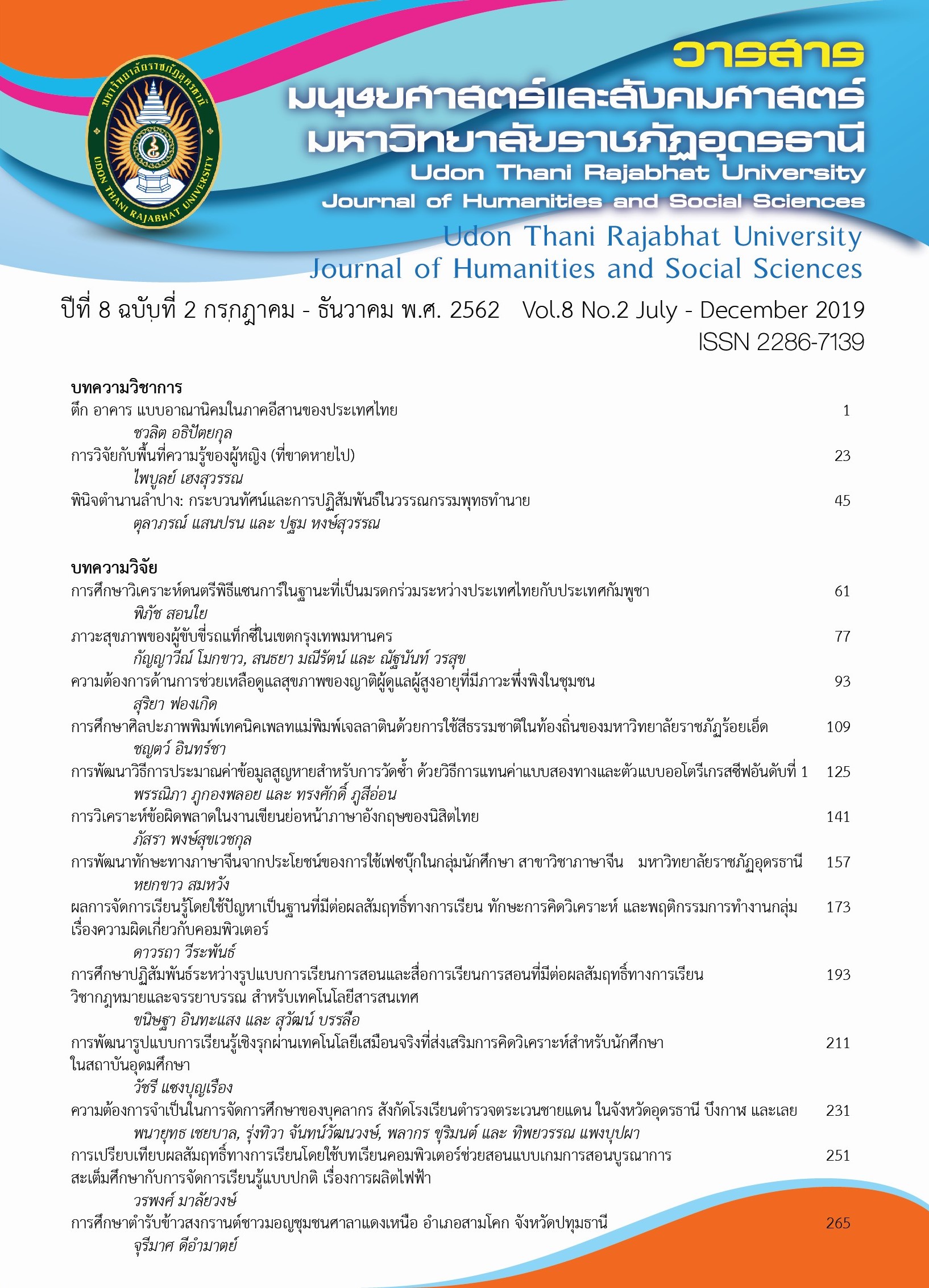
Published:
Dec 27, 2019
Keywords:
Family Caregiver Need Health Care Assistance Dependent Elderly
Main Article Content
Abstract
This qualitative research aimed to investigate the need for health care assistance of family caregivers for elderly people who were dependent in the community. The informants of this study, which were selected with purposive sampling, included 12 caregivers of elderly people who were dependent. The data collection was carried out with in-depth interview, and content analysis.
The findings of this study revealed that the need for health care assistance of family caregivers for elderly people who were dependent in the community be discussed in two aspects to health care. It was found that:
1) Physical health needs included access to health care and health advice and 2) mental health needs included people around understand and encourage.
Article Details
How to Cite
ฟองเกิด ส. (2019). THE NEED FOR HEALTH CARE ASSISTANCE OF FAMILY CAREGIVERS FOR ELDERLY PEOPLE WHO ARE DEPENDENT IN THE COMMUNITY. Udon Thani Rajabhat University Journal of Humanities and Social Science, 8(2), 93–108. retrieved from https://so06.tci-thaijo.org/index.php/hsudru/article/view/209190
Section
Research Article
References
กรมสนับสนุนบริการสุขภาพ กระทรวงสาธารณสุข. (2560). สถิติผู้สูงอายุป่วยติดเตียง. นนทบุรี: กรมสนับสนุนบริการสุขภาพ กระทรวงสาธารณสุข.
Department of Health Service Support Ministry of Public Health. (2017). Statistics for elderly patients with bed ridden. Nonthaburi: Department of Health Service Support Ministry of Public Health. (in Thai).
จันทร์เพ็ญ นพพรพรหม. (2550). เอกสารประกอบการประชุมวิชาการวิจัยระดับชาติ (วช.). กรุงเทพมหานคร: สภาวิจัยแห่งชาติ.
Noppornprom, C. (2007). National Research Conference (NRCT). Bangkok: National Research Council. (in Thai).
เบญจา ยอดดำเนิน-แอ็ตติกจ์ และกาญจนา ตั้งชลทิพย์. (2552). การวิเคราะห์ข้อมูลเชิงคุณภาพ: การจัดการข้อมูล การตีความและการหาความหมาย. นครปฐม: สถาบัน วิจัยประชากรและสังคม มหาวิทยาลัยมหิดล.
Yod Damnoen-Attik, B., and Tangchonthip, K. (2009). Qualitative data analysis: data management Interpretation and finding meaning. Nakhon Pathom: Institute for Population and Social Research Mahidol University. (in Thai).
พวงเพ็ญ เผือกสวัสดิ์, นิสาชล นาคกุล และวิชญา โรจนรักษ์. (2559). สถานการณ์ ปัญหา และความต้องการการดูแลผู้ป่วยเรื้อรังกลุ่มติดบ้านติดเตียงในชุมชนเขตเทศบาลนคร สุราษฎร์ธานี. วารสารพยาบาลกระทรวงสาธารณสุข, 26(2), 54-64.
Penpaikasawat, P., Chonnakun, N., and Rojanarak, W. (2016). Situation, problems and needs for care for chronic patients, bed-attached home groups in the municipality community Surat Thani. Journal of Nursing, Ministry of Public Health, 26 (2), 54-64. (in Thai).
ไพรินทร์ พัสดุ. (2555). ความเครียด การเผชิญความเครียดของญาติผู้ดูแล และการจัดการกับปัญหาพฤติกรรมและอารมณ์ในผู้ป่วยภายหลังบาดเจ็บที่ศีรษะ.วิทยานิพนธ์พยาบาลศาสตรมหาบัณฑิต มหาวิทยาลัยมหิดล.
Parcel, P. (2012). Stress coping of caregivers And management of behavioral and emotional problems in patients after head injuries. Master of Nursing Nursing Thesis, Mahidol University. (in Thai).
โรงพยาบาลส่งเสริมสุขภาพตำบลบางทราย. (2561). รายงานสถิติผู้ป่วยติดเตียง ปีงบประมาณ 2561. ชลบุรี: โรงพยาบาลส่งเสริมสุขภาพตำบลบางทราย สำนักงานสาธารณสุขอำเภอเมืองชลบุรี.
Bang Sai Health Promotion Hospital. (2018). Statistics of elderly patients with bed ridden, fiscal year 2018. Chonburi: Bang Sai Sub-District Health Promotion Hospital Mueang Chon Buri Public Health Office. (in Thai).
สายพิณ เกษมกิจวัฒนา และปิยะภรณ์ ไพรสนธิ์. (2557). ญาติผู้ดูแลผู้ป่วยเรื้อรัง: กลุ่มเสี่ยงที่ไม่ควรมองข้าม. วารสารสภาการพยาบาล, 29(4), 22-31.
Kasemkitwattana, S., and Praisit, P. (2014). Relatives of chronic care patients: risk groups that should not be overlooked. Journal of Nursing Council, 29 (4), 22-31. (in Thai).
สินีนุช ขำดี, มณี อาภานันทิกุล และยุพาพิน ศิรโพธิ์งาม. (2557). การปรับตัวของญาติผู้ดูแลที่มีปัญหาการปรับตัวในการดูแลผู้ป่วยโรคหลอดเลือดสมอง. วารสารสภาการพยาบาล, 29(4), 45-63.
Kamdi, S., Aphanantikun, M., & Sirapho-Ngam, Y. (2014). Adaptation of caregivers with adjustment problems in caring for stroke patients. Journal of Nursing Council, 29(4), 45-63. (in Thai).
สุปรีดา มั่นคง ยุพาพิน ศิรโพธิ์งาม และศุภร วงศ์วทัญญู. (2559). บทบาทของญาติผู้ดูแลผู้ป่วยที่ได้รับการดูแลแบบประคับประคอง: การศึกษาเบื้องต้นเชิงคุณภาพ. วารสารสภาการพยาบาล, 31(4), 104-121.
Kongyupapin, S., Sirapho-Ngam, Y., and wongwatunyou, S. (2016). The role of caregivers of patients receiving palliative care: qualitative preliminary studies. Journal of Nursing Council, 31(4), 104-121. (in Thai).
สุภางค์ จันทวานิช. (2554). วิธีการวิจัยเชิงคุณภาพ. พิมพ์ครั้งที่ 19. กรุงเทพมหานคร: จุฬาลงกรณ์มหาวิทยาลัย.
Chantawanich, S. (2011). Qualitative research methods. 19th ed. Bangkok: Chulalongkorn University. (in Thai).
สมศักดิ์ ชุณหรัศมิ์. (2554). รายงานสถานการณผู้สูงอายไทย พ.ศ. 2552. กรุงเทพฯ: มูลนิธิสถาบันวิจัยและพัฒนาผู้สูงอายุไทย.
Choonharas, S. (2011). Thai Shy Highness Report 2009. Bangkok: Thai Elderly Research and Development Institute Foundation. (in Thai).
สำนักงานหลักประกันสุขภาพแห่งชาติ. (2560). รายงานการสร้างหลักประกันสุขภาพ ประจำปีงบประมาณ 2560. นนทบุรี: สำนักงานหลักประกันสุขภาพแห่งชาติ กระทรวงสาธารณสุข.
National Health Security Office. (2017). Health insurance creation report Fiscal Year 2017. Nonthaburi: National Health Security Office Ministry of Public Health. (in Thai).
สำนักงานสาธารณสุขจังหวัดชลบุรี. (2561). รายงานสถิติผู้สูงอายุติดเตียง. ชลบุรี: สำนัก งานสาธารณสุขจังหวัดชลบุรี.
Chonburi Provincial Health Office. (2018). Statistics of elderly patients with bed ridden. Chon Buri: Chonburi Provincial Health Office. (in Thai).
อรวิธู กาญจนจารี, ยุพาพิน ศิรโพธิ์งาม และสุปรีดา มั่นคง. (2560). บทบาทและความต้องการของผู้ดูแลผู้ป่วยระยะท้ายในสถานบริการที่มีการดูแลแบบประคับประคองโดยเฉพาะ. รามาธิบดีพยาบาลสาร, 23(3), 328-343.
Kanchanajari, O., Sirapho-Ngam, Y., Mankhong, S. (2017). The role and needs of end-patients caregivers in palliative care facilities in particular. Ramathibodi Nursing Journal, 23 (3), 328-343. (in Thai).
Spence, A., Hasson, F., Waldron, M., Kernohan, W., Mclaughlin, D., Cochrane, B., and Watson, B. (2008). Active carers: Living with chronic obstructive pulmonary disease. International journal of palliative nursing, 14(8), 368-72.
Berg, D. (2002). ‘The hidden client’ women caring for husband with COPD: Their experience of quality of life. J Clin Nurs, 11(5), 613-21.
Colaizzi P. (1978). Psychological research as the Phenomenologist views it. In Existential – Phenomenological Alternatives for Psychology (Valle R. & King M. eds), Oxford University Press, London, 48-71.
Grant, J. S. (1996). Home care problems experienced by stroke survivors and their family caregivers. Home Healthcare Nurse. 14, 892–902.
National Health Security Office. (2016). National Health Insurance Fund Management Manual V.3 Management of chronic renal failure patients. Bangkok: Saengchan printing. (in Thai).
Shieh, S. C., Tung, H. S., and Liang, S. Y. (2012). Social support as influencing primary family caregiver burden in Taiwanese patients with colorectal cancer. Journal of Nursing Scholarship, 44(3), 223-31.
United Nations Population Fund: UNFPA. (2017). Ageing in the Twenty-First Century: A Celebration and A Challenge. HelpAge International (online). Page 4-5.
Van Wijngaarden, B., Schene, A. H., & Koeter, M. W. (2004). Family caregiving in depression: Impactoncaregivers’dailylife, distress, and help seeking. Journal of Affective Disorders, 81(3), 211 – 222.
Department of Health Service Support Ministry of Public Health. (2017). Statistics for elderly patients with bed ridden. Nonthaburi: Department of Health Service Support Ministry of Public Health. (in Thai).
จันทร์เพ็ญ นพพรพรหม. (2550). เอกสารประกอบการประชุมวิชาการวิจัยระดับชาติ (วช.). กรุงเทพมหานคร: สภาวิจัยแห่งชาติ.
Noppornprom, C. (2007). National Research Conference (NRCT). Bangkok: National Research Council. (in Thai).
เบญจา ยอดดำเนิน-แอ็ตติกจ์ และกาญจนา ตั้งชลทิพย์. (2552). การวิเคราะห์ข้อมูลเชิงคุณภาพ: การจัดการข้อมูล การตีความและการหาความหมาย. นครปฐม: สถาบัน วิจัยประชากรและสังคม มหาวิทยาลัยมหิดล.
Yod Damnoen-Attik, B., and Tangchonthip, K. (2009). Qualitative data analysis: data management Interpretation and finding meaning. Nakhon Pathom: Institute for Population and Social Research Mahidol University. (in Thai).
พวงเพ็ญ เผือกสวัสดิ์, นิสาชล นาคกุล และวิชญา โรจนรักษ์. (2559). สถานการณ์ ปัญหา และความต้องการการดูแลผู้ป่วยเรื้อรังกลุ่มติดบ้านติดเตียงในชุมชนเขตเทศบาลนคร สุราษฎร์ธานี. วารสารพยาบาลกระทรวงสาธารณสุข, 26(2), 54-64.
Penpaikasawat, P., Chonnakun, N., and Rojanarak, W. (2016). Situation, problems and needs for care for chronic patients, bed-attached home groups in the municipality community Surat Thani. Journal of Nursing, Ministry of Public Health, 26 (2), 54-64. (in Thai).
ไพรินทร์ พัสดุ. (2555). ความเครียด การเผชิญความเครียดของญาติผู้ดูแล และการจัดการกับปัญหาพฤติกรรมและอารมณ์ในผู้ป่วยภายหลังบาดเจ็บที่ศีรษะ.วิทยานิพนธ์พยาบาลศาสตรมหาบัณฑิต มหาวิทยาลัยมหิดล.
Parcel, P. (2012). Stress coping of caregivers And management of behavioral and emotional problems in patients after head injuries. Master of Nursing Nursing Thesis, Mahidol University. (in Thai).
โรงพยาบาลส่งเสริมสุขภาพตำบลบางทราย. (2561). รายงานสถิติผู้ป่วยติดเตียง ปีงบประมาณ 2561. ชลบุรี: โรงพยาบาลส่งเสริมสุขภาพตำบลบางทราย สำนักงานสาธารณสุขอำเภอเมืองชลบุรี.
Bang Sai Health Promotion Hospital. (2018). Statistics of elderly patients with bed ridden, fiscal year 2018. Chonburi: Bang Sai Sub-District Health Promotion Hospital Mueang Chon Buri Public Health Office. (in Thai).
สายพิณ เกษมกิจวัฒนา และปิยะภรณ์ ไพรสนธิ์. (2557). ญาติผู้ดูแลผู้ป่วยเรื้อรัง: กลุ่มเสี่ยงที่ไม่ควรมองข้าม. วารสารสภาการพยาบาล, 29(4), 22-31.
Kasemkitwattana, S., and Praisit, P. (2014). Relatives of chronic care patients: risk groups that should not be overlooked. Journal of Nursing Council, 29 (4), 22-31. (in Thai).
สินีนุช ขำดี, มณี อาภานันทิกุล และยุพาพิน ศิรโพธิ์งาม. (2557). การปรับตัวของญาติผู้ดูแลที่มีปัญหาการปรับตัวในการดูแลผู้ป่วยโรคหลอดเลือดสมอง. วารสารสภาการพยาบาล, 29(4), 45-63.
Kamdi, S., Aphanantikun, M., & Sirapho-Ngam, Y. (2014). Adaptation of caregivers with adjustment problems in caring for stroke patients. Journal of Nursing Council, 29(4), 45-63. (in Thai).
สุปรีดา มั่นคง ยุพาพิน ศิรโพธิ์งาม และศุภร วงศ์วทัญญู. (2559). บทบาทของญาติผู้ดูแลผู้ป่วยที่ได้รับการดูแลแบบประคับประคอง: การศึกษาเบื้องต้นเชิงคุณภาพ. วารสารสภาการพยาบาล, 31(4), 104-121.
Kongyupapin, S., Sirapho-Ngam, Y., and wongwatunyou, S. (2016). The role of caregivers of patients receiving palliative care: qualitative preliminary studies. Journal of Nursing Council, 31(4), 104-121. (in Thai).
สุภางค์ จันทวานิช. (2554). วิธีการวิจัยเชิงคุณภาพ. พิมพ์ครั้งที่ 19. กรุงเทพมหานคร: จุฬาลงกรณ์มหาวิทยาลัย.
Chantawanich, S. (2011). Qualitative research methods. 19th ed. Bangkok: Chulalongkorn University. (in Thai).
สมศักดิ์ ชุณหรัศมิ์. (2554). รายงานสถานการณผู้สูงอายไทย พ.ศ. 2552. กรุงเทพฯ: มูลนิธิสถาบันวิจัยและพัฒนาผู้สูงอายุไทย.
Choonharas, S. (2011). Thai Shy Highness Report 2009. Bangkok: Thai Elderly Research and Development Institute Foundation. (in Thai).
สำนักงานหลักประกันสุขภาพแห่งชาติ. (2560). รายงานการสร้างหลักประกันสุขภาพ ประจำปีงบประมาณ 2560. นนทบุรี: สำนักงานหลักประกันสุขภาพแห่งชาติ กระทรวงสาธารณสุข.
National Health Security Office. (2017). Health insurance creation report Fiscal Year 2017. Nonthaburi: National Health Security Office Ministry of Public Health. (in Thai).
สำนักงานสาธารณสุขจังหวัดชลบุรี. (2561). รายงานสถิติผู้สูงอายุติดเตียง. ชลบุรี: สำนัก งานสาธารณสุขจังหวัดชลบุรี.
Chonburi Provincial Health Office. (2018). Statistics of elderly patients with bed ridden. Chon Buri: Chonburi Provincial Health Office. (in Thai).
อรวิธู กาญจนจารี, ยุพาพิน ศิรโพธิ์งาม และสุปรีดา มั่นคง. (2560). บทบาทและความต้องการของผู้ดูแลผู้ป่วยระยะท้ายในสถานบริการที่มีการดูแลแบบประคับประคองโดยเฉพาะ. รามาธิบดีพยาบาลสาร, 23(3), 328-343.
Kanchanajari, O., Sirapho-Ngam, Y., Mankhong, S. (2017). The role and needs of end-patients caregivers in palliative care facilities in particular. Ramathibodi Nursing Journal, 23 (3), 328-343. (in Thai).
Spence, A., Hasson, F., Waldron, M., Kernohan, W., Mclaughlin, D., Cochrane, B., and Watson, B. (2008). Active carers: Living with chronic obstructive pulmonary disease. International journal of palliative nursing, 14(8), 368-72.
Berg, D. (2002). ‘The hidden client’ women caring for husband with COPD: Their experience of quality of life. J Clin Nurs, 11(5), 613-21.
Colaizzi P. (1978). Psychological research as the Phenomenologist views it. In Existential – Phenomenological Alternatives for Psychology (Valle R. & King M. eds), Oxford University Press, London, 48-71.
Grant, J. S. (1996). Home care problems experienced by stroke survivors and their family caregivers. Home Healthcare Nurse. 14, 892–902.
National Health Security Office. (2016). National Health Insurance Fund Management Manual V.3 Management of chronic renal failure patients. Bangkok: Saengchan printing. (in Thai).
Shieh, S. C., Tung, H. S., and Liang, S. Y. (2012). Social support as influencing primary family caregiver burden in Taiwanese patients with colorectal cancer. Journal of Nursing Scholarship, 44(3), 223-31.
United Nations Population Fund: UNFPA. (2017). Ageing in the Twenty-First Century: A Celebration and A Challenge. HelpAge International (online). Page 4-5.
Van Wijngaarden, B., Schene, A. H., & Koeter, M. W. (2004). Family caregiving in depression: Impactoncaregivers’dailylife, distress, and help seeking. Journal of Affective Disorders, 81(3), 211 – 222.
