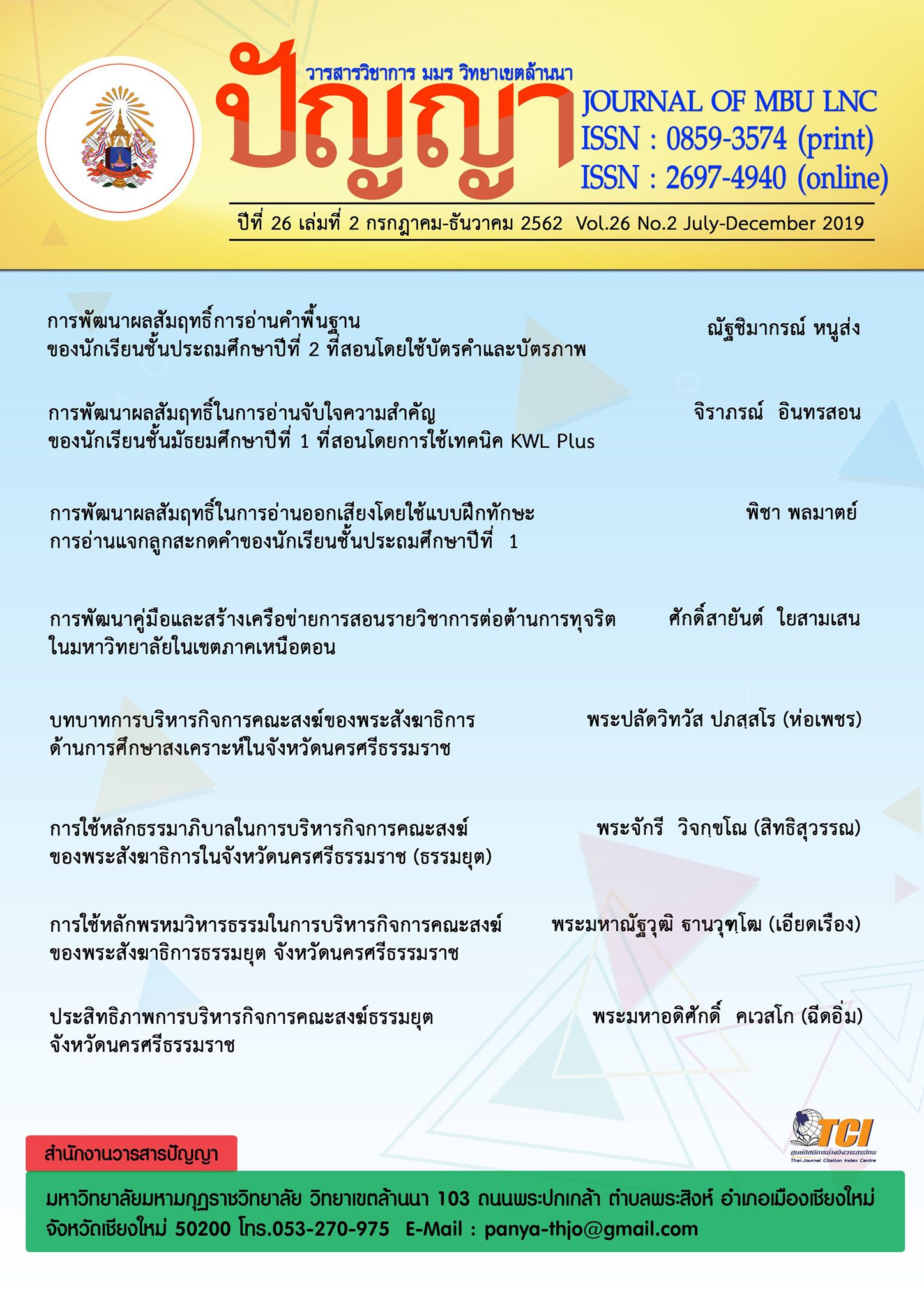
The Developing Achievement in Reading Comprehention of Mathayomsuksa 1 Students by Using KWL Plus Technique
Keywords:
reading comprehension, KWL Plus, achievementAbstract
The purpose of this research was to develop reading comprehension achievement of mathayomsuksa 1 students by using KWL Plus technique. The sample group derived from 34 students by using purposive selection method. The instruments of research were as follows; 1) lesson plan of reading comprehension by using KWL Plus technique that the researcher had created and used as learning media to train the skill of reading comprehension, 2) a test used to measure achievement in reading comprehension as reading for main thesis ascertained by experts and by virtue of objective congruence (IOC) requirements. Initially, the data collected were analyzed by application of descriptive statistics technique, viz., mean ()and standard deviation (SD). Parametric test statistics research utilized was t-test (dependent) in comparing levels of achievement both prior to and after study for testing group.
Findings were as follows; the researcher finally found that achievement levels in reading comprehension of mathayomsuksa 1 students after using KWL Plus technique were higher than before using KWL Plus technique at the statistically significant level of .o5.
References
กระทรวงศึกษาธิการ. (2551). ตัวชี้วัดและสาระการเรียนรู้แกนกลาง กลุ่มสาระการเรียนรู้ภาษาไทย. สืบค้น 5 พฤศจิกายน 2561, จาก https://www.cvk.ac.th/download/.pdf.
ณัฐภัทร ปันปิน. (2559). ผลของการจัดกิจกรรมการสอนอ่านจับใจความโดยใช้เทคนิค KWL Plus ร่วมกับวิธีการอ่านแบบจับคู่ ที่มีต่อทักษะการอ่านจับใจความของนักเรียนชั้นประถมศึกษาปีที่ 3. กรุงเทพฯ: จุฬาลงกรณ์มหาวิทยาลัย.
ไพพรรณ อินทนิล. (2553). เทคนิคการเล่านิทาน. กรุงเทพฯ: สุวีริยาสาส์น.
รินทร์ลภัส เฉลมธรรมวงษ์. (2557). การพัฒนาความสามารถด้านการอ่านจับใจความของนักเรียนชั้นประถมศึกษาปี ที่ 6 ด้วยการจัดการเรียนรู้เทคนิค KWLPlus. กรุงเทพฯ: มหาวิทยาลัยศิลปากร.
เสาวภา ช่วยแก้ว. (2558). การพัฒนาความสามารถในการอ่านจับใจความของนักเรียนชั้นประถมศึกษาปีที่ 3 ด้วยแบบฝึกการอ่านจับใจความโดยใช้เทคนิค KWLH PLUS. กรุงเทพฯ: มหาวิทยาลัยศิลปากร.
Downloads
Published
How to Cite
Issue
Section
License
ผลการวิจัยและความคิดเห็นที่ปรากฏในบทความ ถือเป็นความคิดเห็นและอยู่ในความรับผิดชอบของผู้เขียนบทความ มิใช่ความเห็นหรือความรับผิดชอบของกองบรรณาธิการ หรือมหาวิทยาลัยมหามกุฏราชวิทยาลัย วิทยาเขตล้านนา ทั้งนี้ไม่รวมความผิดพลาดอันเกิดจากการพิมพ์ บทความที่ได้รับการเผยแพร่โดยวารสารปัญญา ถือเป็นสิทธิ์ของวารสารฯ