The Identity of Thai Sikhs in the Southern Gulf of Thailand Region
Keywords:
Thai Sikh Identity; , Gulf of Thailand's Southern RegionAbstract
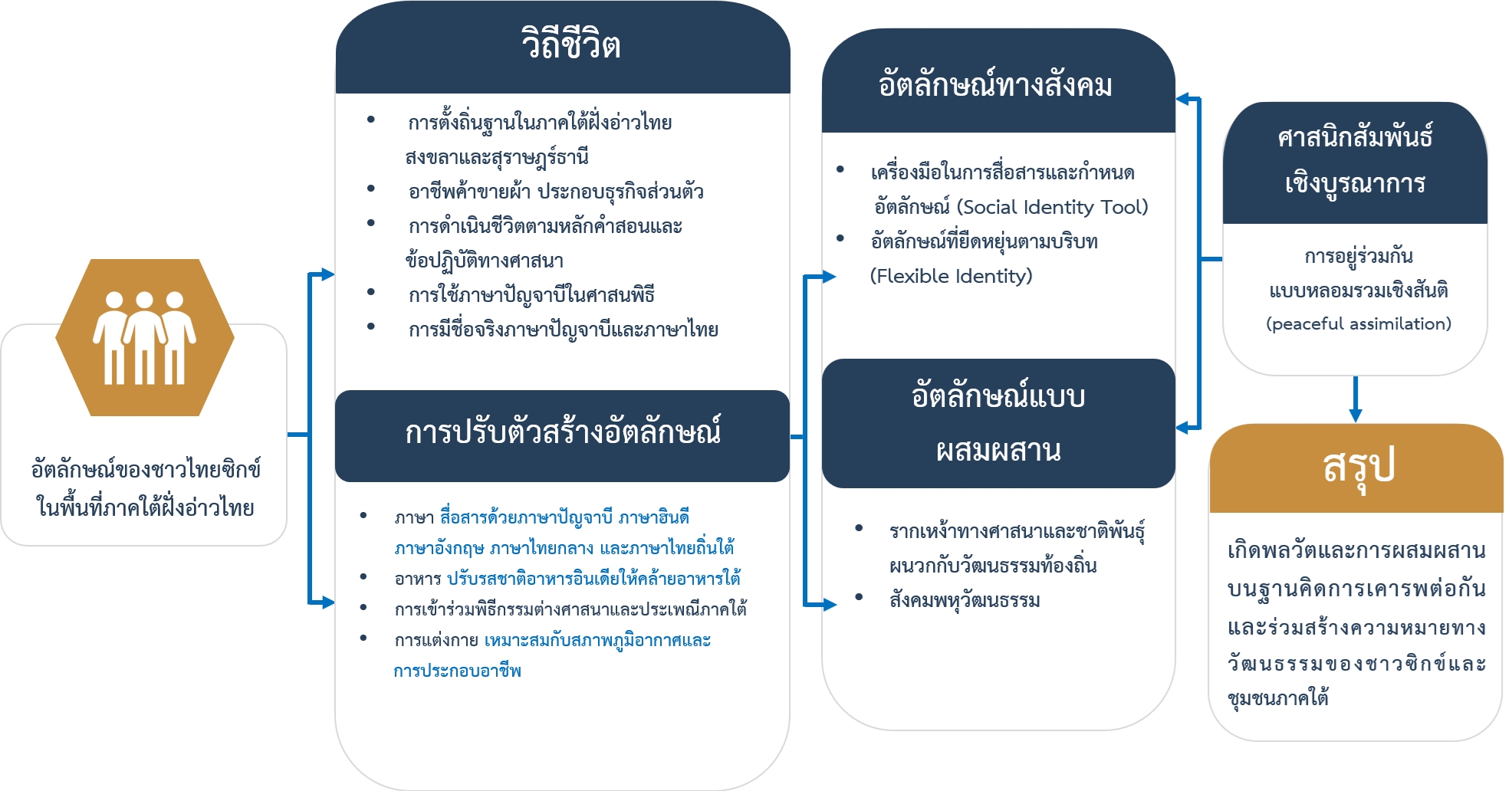
The research aimed to 1) study the lifestyle and adaptation of Thai Sikhs in the southern Gulf of Thailand region; and 2) explore the identity of Thai Sikhs in the southern Gulf of Thailand region. This qualitative research gathered data through in-depth interviews with 20 key informants, including community leaders, religious leaders, and Thai Sikhs in Songkhla and Surat Thani provinces. The collected data was analyzed and presented in a descriptive format.
The results show that:
1. The lifestyle of Thai Sikhs in the southern Gulf of Thailand stems from migration into parts of Songkhla and Surat Thani provinces. The Songkhla group, with long-established roots, mostly engage in the textile trade. In contrast, the Surat Thani group, which settled later, primarily work as tailors. Their lifestyle is also shown through daily religious practices, living according to teachings and practices, and the use of the Punjabi language in religious ceremonies. However, integration with the local community has led to some changes— the Thai Sikhs no longer keep uncut hair or beards and wear turbans only in Sikh temples. Additionally, they often have two official names: a religious Punjabi name and a Thai legal name, making social interaction and business with locals easier.
2. The identity of Thai Sikhs in the southern Gulf of Thailand reflects a blend of Sikh traditions passed down by their ancestors with adaptations to the local southern society. This includes speaking Standard Thai with local dialect endings and using the southern Thai dialect, adjusting the flavor of Indian food to resemble southern Thai cuisine, and dressing appropriately for the climate—some men go shirtless in summer, and more women wear short-sleeved tops. They also take part in interfaith ceremonies and southern Thai traditions to foster harmony in a multicultural society. As a result, Thai Sikhs in this region have a distinct identity from those in other parts of Thailand.
References
กรมการศาสนา. (2567). รายงานข้อมูลพื้นฐานด้านศาสนาซิกข์ในประเทศไทย. เข้าถึงได้จาก https://catalog.dra.go.th/dataset/dra_04_05
คมสัน รัตนะสิมากูล และอัญมณี ภักดีมวลชน. (2566). แนวคิดอัตลักษณ์กับงานวิจัยสื่อสารศึกษาของไทย ปี พ.ศ. 2548-2565. วารสารการสื่อสารและสื่อบูรณาการ คณะการสื่อสารมวลชน มหาวิทยาลัยเชียงใหม่, 11(2), 1-31.
งามพิศ สัตย์สงวน. (2558). การวิจัยเชิงคุณภาพทางมานุษยวิทยา. (พิมพ์ครั้งที่ 7). กรุงเทพฯ: ฟ้าเดียวกัน.
ปิ่นแก้ว เหลืองอร่ามศรี. (2556). อัตลักษณ์ชาติพันธุ์และความเป็นชายขอบ. กรุงเทพฯ: ศูนย์มานุษยวิทยาสิริธร.
พิชชาภัสส์ พงศ์อิทธิเดช. (2562). อัตลักษณ์และความเป็นผู้กระทำการของชาวไทยซิกข์. (รายงานการศึกษาค้นคว้าเฉพาะบุคคลปริญญาบัณฑิต). นครปฐม: มหาวิทยาลัยศิลปากร.
เมตตา วิวัฒนานุกูล. (2559). การสื่อสารระหว่างวัฒนธรรม. (พิมพ์ครั้งที่ 2). กรุงเทพฯ: จุฬาลงกรณ์มหาวิทยาลัย.
ศิวัช ศรีโภคางกุล. (2558). ชาวซิกข์และปฏิบัติการสันติวิธี. วารสารสงขลานครินทร์ ฉบับสังคมศาสตร์และมนุษยศาสตร์, 1(4), 53-93.
สุริยา สมุทคุปติ์ และพัฒนา กิติอาษา. (2554). “ยวนสีคิ้ว” ในชุมทางชาติพันธุ์: เรื่องเล่าความทรงจำและอัตลักษณ์ของกลุ่มชาติพันธุ์ไทยวนในจังหวัดนครราชสีมา. (ปริญญานิพนธ์สังคมวิทยาและมานุษวิทยามหาบัณฑิต). นครราชสีมา: มหาวิทยาลัยเทคโนโลยีสุรนารี.
อภิญญา เฟื่องฟูสกุล. (2546). อัตลักษณ์. กรุงเทพฯ: สำนักงานคณะกรรมการวิจัยแห่งชาติ.
อภิรัฐ คำวัง. (2554). ชาวซิกข์ในสยามและล้านนา ว่าด้วยเรื่องประวัติศาสตร์การตั้งชุมชน ศาสนา และการค้า. วารสารคณะมนุษยศาสตร์และสังคมศาสตร์ มหาวิทยาลัยขอนแก่น, 28(2), 67-94. https://so01.tci-thaijo.org/index.php/HUSO/article/view/6330/5530
_______. (2556). “เซว่า” ใน “ครัวพระศาสดา” กับสังคมวัฒนธรรมของชาวไทยซิกข์ : กรณีศึกษาคุรุดวาราศรีคุรุสิงห์สภา (กรุงเทพมหานคร). วารสารมนุษยศาสตร์และสังคมศาสตร์ มหาวิทยาลัยอุบลราชธานี, 4(2), 1-25.
_______. (2559). ศาสดาในรูปพระมหาคัมภีร์แห่งศาสนาซิกข์: ประวัติศาสตร์ ความหมาย และองค์ประกอบ (อรรถาธิบายเชิงเปรียบเทียบ). วารสารสถาบันวัฒนธรรมและศิลปะ มหาวิทยาลัยศรีนครินทรวิโรฒ, 18(1), 32-42.
_______. (2558). พ่อค้าชาวซิกข์ ณ หัวเมืองอีสาน. วารสารสังคมลุ่มน้ำโขง, 11(2), 113-138.
อมรา พงศาพิชญ์. (2556). ข้ออภิปรายต่อการนำเสนอผลงานของประสิทธิ์ ลีปรีชา เรื่องความรู้และมายาคติเกี่ยวกับชาติพันธุ์ม้ง. กรุงเทพฯ: กระทรวงวัฒนธรรม.
อริย์ธัช เลิศอมรไชยกิจ. (2561). ปรัชญาประเพณีของศาสนาซิกข์ที่มีบทบาทต่อชาวไทยซิกข์. วารสารศึกษาศาสตร์ มมร คณะศึกษาศาสตร์ มหาวิทยาลัยมหามกุฏราชวิทยาลัย, 6(1), 392-401. http://ojs.mbu.ac.th/index.php/edj/article/view/231/166