Cultural Capital Management of Textile Identity of the Tai Phuan Ethnic Group: A Case Study of Ban Pa Daeng Community, Nong Ph
Keywords:
Cultural Capital Management;, Textile Identity;, Thai Phuan Ethnic GroupAbstract
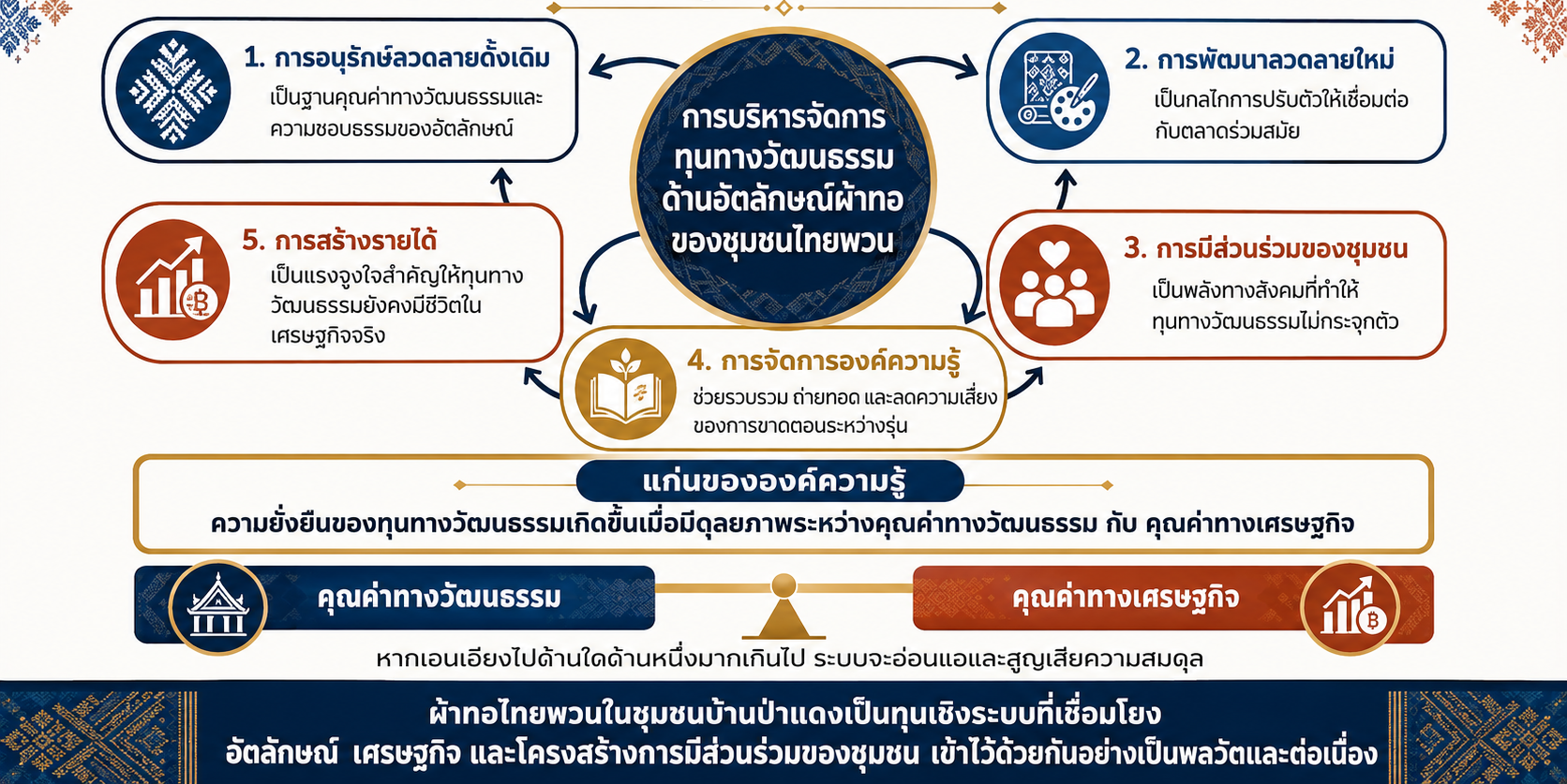
This study aimed to (1) examine the level of cultural capital management concerning textile identity among the Thai Phuan ethnic group; (2) compare personal factors age and monthly income that affect cultural capital management; and (3) explore appropriate management guidelines for sustaining such cultural capital. A mixed methods research design was employed. The quantitative sample consisted of 340 community members, and five key informants were selected purposively based on their roles and experience. Research instruments included a five-point Likert-scale questionnaire and a semi-structured interview. The questionnaire demonstrated acceptable reliability (Cronbach’s alpha = .71). Quantitative data were analyzed using descriptive statistics frequency, percentage, mean, and standard deviation and inferential statistics, including One-Way ANOVA with Tukey’s post hoc test at the .05 significance level. Qualitative data were analyzed through content analysis.
The findings indicated that:
1. The overall level of cultural capital management regarding textile identity was high, as the community was able to preserve traditional identity while promoting creative adaptation in conservation, knowledge transmission, textile pattern development, and economic value creation.
2. Comparisons of age and monthly income showed no statistically significant differences in overall management levels, although differences were found in specific dimensions, namely innovative pattern development, knowledge management, and economic opportunity creation.
3. The recommended guidelines emphasize preserving traditional identity alongside contemporary development, promoting intergenerational participation, strengthening systematic knowledge management, and expanding market channels to achieve sustainable cultural and grassroots economic development.