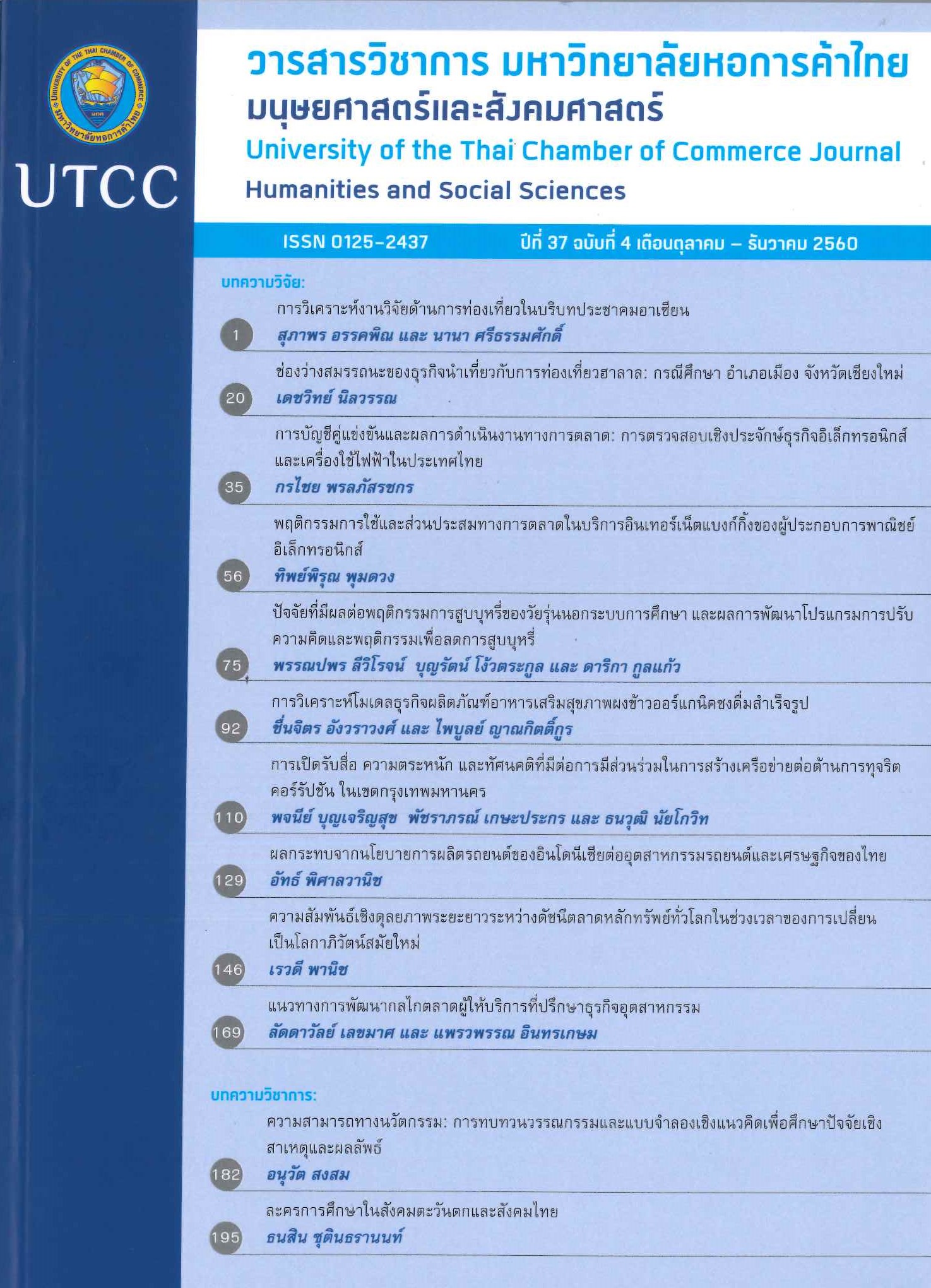
การเปิดรับสื่อ ความตระหนัก และทัศนคติที่มีต่อการมีส่วนร่วมในการสร้างเครือข่ายต่อต้านการทุจริตคอร์รัปชันในเขตกรุงเทพมหานคร
Article Sidebar
Main Article Content
บทคัดย่อ
งานวิจัยนี้มีวัตถุประสงค์เพื่อศึกษาความสัมพันธ์ของพฤติกรรมการเปิดรับสื่อโฆษณารณรงค์ขององค์กรต่อต้านคอร์รัปชันและความตระหนักและทัศนคติต่อต้านคอร์รัปชัน ตลอดจนการพยากรณ์ความตระหนักและทัศนคติที่มีต่อพฤติกรรมการมีส่วนร่วมในการสร้างเครือข่ายต่อต้านคอร์รัปชัน โดยมีการใช้แบบสอบถามเป็นเครื่องมือในการศึกษาบุคลากรที่ทำงานร่วมกับองค์กรต่อต้านคอร์รัปชัน 400 คน และใช้สถิติวิเคราะห์ความแปรปรวนตัวแปรพหุนาม สถิติสัมประสิทธิ์สหสัมพันธ์แบบเพียร์และการวิเคราะห์การถดถอยพหุคูณแบบตัวแปรพหุนาม ทั้งนี้ ผลวิจัยพบว่า 1) กลุ่มตัวอย่างที่มีอายุ อาชีพ หน่วยงานสังกัด และรายได้ที่แตกต่างกันมีความตระหนักและทัศนคติในการต่อต้านคอร์รัปชันที่แตกต่่าง 2) พฤติกรรมการเปิดรับสื่อโฆษณาโดยรวมและสื่อชุด "อย่าปล่อยให้คนโกงมีที่ยืนในสังคม" มีความสัมพันธ์เชิงบวกกับความตระหนักในการต่อต้านคอร์รัปชัน 3) พฤติกรรมการเปิดรับสื่อโฆษณาโดยรวมมีความสัมพันธ์เชิงบวกกับทัศนคติด้านการเปิดโปงและปลูกฝัง 4) ความตระหนักในการต่อต้านคอร์รัปชันมีความสัมพันธ์เชิงบวกกับทัศนคติต่อต้านคอร์รัปชัน 5) ความตระหนักและทัศนคติในการต่อต้านคอร์รัปชันสามารถพยากรณ์พฤติกรรมการมีส่วนร่วมในการสร้างเครือข่ายต่อต้านคอร์รัปชันในระดับของการให้และได้รับข้อมูล การสร้างความร่วมมือวางแผนร่วมกัน และการร่วมดำเนินการ
Article Details
ลิขสิทธิ์ของบทความ
ผลงานที่ได้รับการตีพิมพ์ถือเป็นลิขสิทธิ์ของมหาวิทยาลัยหอการค้าไทย ห้ามมิให้นำเนื้อหา ทัศนะ หรือข้อคิดเห็นใด ๆ ของผลงานไปทำซ้ำ ดัดแปลง หรือเผยแพร่ ไม่ว่าทั้งหมดหรือบางส่วนโดยไม่ได้รับอนุญาตเป็นลายลักษณ์อักษรจากมหาวิทยาลัยหอการค้าไทยก่อน
เอกสารอ้างอิง
Chutavichit, K. (1997). Communication in rural development. Nakhon Pathom, Thailand: Petchkasem Printing. (in Thai).
Intharit, B. (2008). Effects of corruption on Thailand’s economic growth (Unpublished master’s thesis). Kasetsart University, Bangkok, Thailand. (in Thai).
Kaewthep, K. (2014). Mass communication theory (4th ed.). Bangkok, Thailand: Parbpim. (in Thai).
Kanpai, K. (2000). Community communication: Key concepts for development. Journal of Communication Arts, 18, 61-78. (in Thai).
Ngamkhum, W. (2007). Communication strategy “To quit alcohol and stop violence to the family”: A project of Thai Health Promotion Foundation and perception of an alcoholic
to reduce incident of domestic violence: The study of Thai Kriang community. (Unpublished master’s thesis). Thammasat University, Bangkok, Thailand. (in Thai).
Nimitmongkol, M. (2014, February 12). AntiCorruption Organization in a nutshell: Interview with anti-corruption campaigner. ASTV Manager, p. 16. (in Thai).
Nimitmongkol, M. (2017). Corruption situation index (CSI) press conference. Retrieved August 28, 2017, from www.anticorruption.in.th/2016/th/detail/480/1/การแถลงรายงานผลสำรวจดัชนีสถานการณ์คอร์รัปชันไทย (in Thai)
Nontanakorn, D. (2011, May 21). Chamber of Commerce - The Federation of Thai Industry against corruption, gave up to be givers, fed up with under-the-table jumps 50%. 21 organizations joined force to show a standpoint. Matichon, p. 1, 16. (in Thai).
Padungchewit, J. (2012). Participatory communication for balance and sustainability. Retrieved August 28, 2017, from https://cse.nida.ac.th/main/images/ParticipatoryCommunication ForBalanceAndSustainability.pdf (in Thai).
Piriyarangsan, S., & Phongpaichit, P. (1994). Corruption and democracy. Bangkok,Thailand: Chulalongkorn University,Faculty of Economics. (in Thai).
Pongpaitoon, D. (2001). Information exposure,knowledge and attitude toward sex education of teenagers in Bangkok (Unpublished master’s thesis). Chulalongkorn University, Thailand.
(in Thai).
Sothanasatien, S. (1990). Social communication. Bangkok, Thailand: Chulalongkorn University. (in Thai).
Sripun, Atchara. (2012). Participatory communication strategy for creative economy development in Thailand. MISJ Journal of Naresuan University, 7(1): 5-19. (in Thai).
Suebsureekul K. (2001). Relationship among media exposure, knowledge, attitude and participation regarding air pollution reduction campaign: Study of car users
in Bangkok Metropolitan Administration (Unpublished master’s thesis). Bangkok University, Thailand. (in Thai).
Surasonthi, K. (1990). Introduction to communication (2nd ed.). Bangkok, Thailand: Thammasat University, Falculty of Journalism and Mass Communiction. (in Thai).
Suthiwong, P. (2016). Pramon Suthiwong reveals best corruption situation in Thailand in 6 years, the government has helped suppresses. Retrieved March
14, 2017, from https://prachatai.com/journal/2016/07/67133 (in Thai).
Thi-in, P. (2010). Media use in anti-corruption campaign of office of the national anticorruption commission during the year 1999-2000. Bangkok, Thailand:Chulalongkorn University.
(in Thai).
Tipmanosing, K. (2010). The right of people to participate in the process of public policy. University of the Thai Chamber of Commerce Journal, 30(4), 160-175. (in Thai).
Vijit-vadakan, J. (2010, October 19). Associate Professor Doctor Juree Vijit-vadakan teach your children not to cheat. Kom Chad Luek, p. 10. (in Thai).
Wongvanitchakij, P. (2007). A study on media exposure and costumers’ knowledge,attitude, and behavior in using hotel services in Bangkok (Unpublished master’s thesis). Bangkok University,Thailand. (in Thai).
