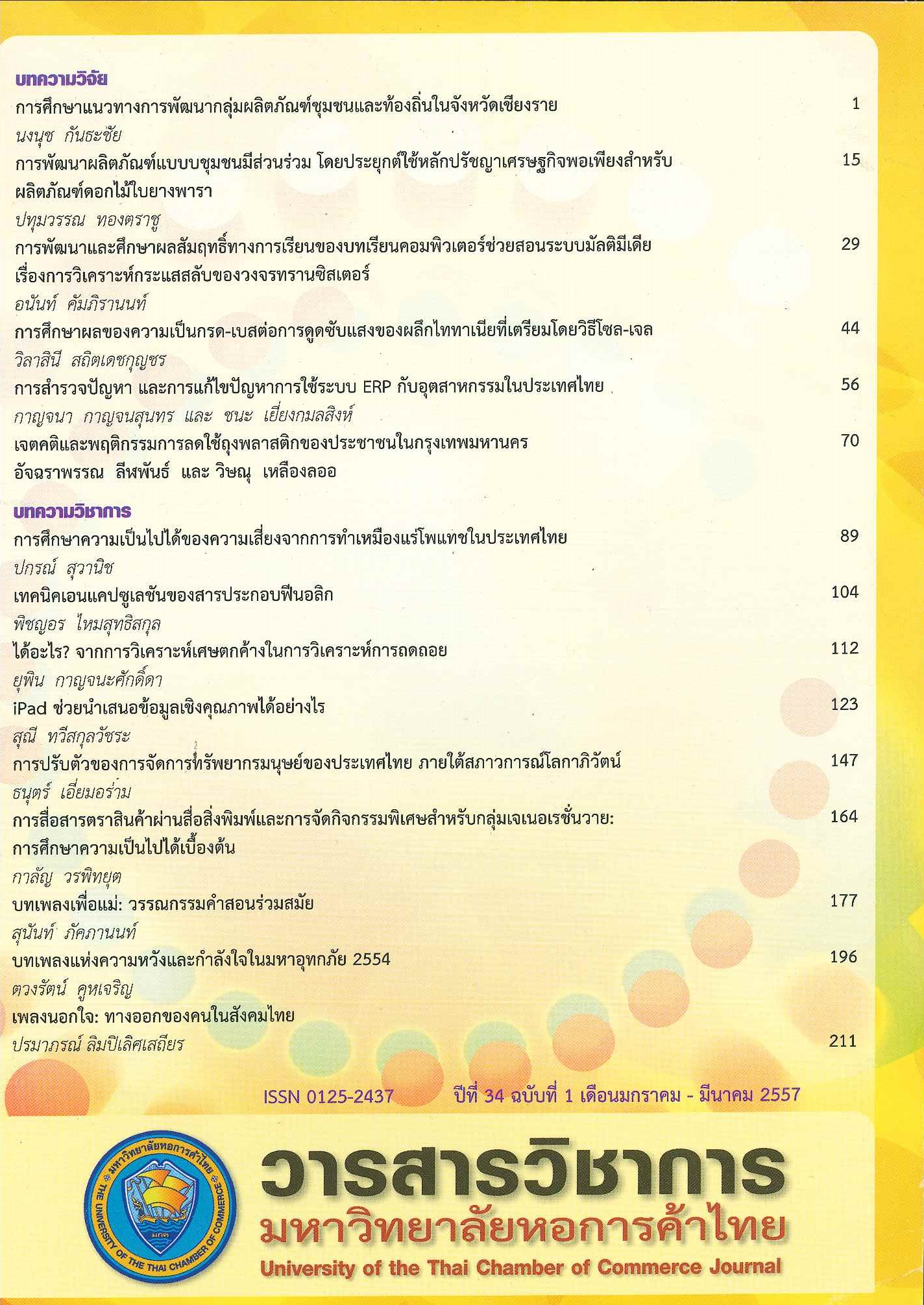
การปรับตัวของการจัดการทรัพยากรมนุษย์ของประเทศไทย ภายใต้สภาวการณ์โลกาภิวัฒน์
Article Sidebar
Main Article Content
บทคัดย่อ
การดำเนินธุรกิจภายใต้สภาวการณ์โลกาภิวัฒน์ได้ทวีความสำคัญมากขึ้น โดยที่ธุรกิจข้ามชาติจำเป็นต้องเข้าใจถึงการดำเนินงานที่มีประสิทธิภาพมากขึ้น ความสำเร็จประการหนึ่งที่จะทำให้ธุรกิจดำเนินไปได้อย่างมีประสิทธิภาพนั้น คือ การจัดการทรัพยากรมนุษย์ภายใต้สภาวการณ์โลกาภิวัฒน์ โดยการจัดการทรัพยากรมนุษย์จำเป็นต้องปรับตัวให้สอดคล้องกับสถานการณ์ที่ธุรกิจกำลังเผชิญอยู่ ในขณะเดียวกัน ภารกิจของฝ่ายทรัพยากรมนุษย์ก็ต้องเปลี่ยนแปลงไปจากการดูแลปัญหาหรือผลประโยชน์เกี่ยวกับพนักงานในองค์กรเท่านั้น แต่กลับกลายเป็นต้องมีส่วนร่วมในการกำหนดกลยุทธ์เพื่อทิศทางการดำเนินงาน ความอยู่รอดและความก้าวหน้าขององค์กรในอนาคตอีกด้วย ในอดีตฝ่ายทรัพยากรมนุษย์ถูกมองว่าเป็นเพียงหน่วยงานเล็กๆ ซึ่งมีหน้าที่เพียงในการว่าจ้างและไล่พนักงานออกเท่านั้น แต่ในช่วงเวลา 20 ปีที่ผ่านมา องค์กรต่างๆ หันมาให้ความสำคัญในด้านทักษะฝีมือ ระบบการจูงใจที่มีประสิทธิภาพและการทำงานที่สามารถยืดหยุ่นเปลี่ยนแปลงไปตามสถานการณ์ที่เปลี่ยนแปลงไปอย่างรวดเร็วมากขึ้น จึงส่งให้ผลความสำคัญของฝ่ายทรัพยากรมนุษย์มีมากขึ้นโดยนับว่าเป็นหน่วยงานที่จะสร้างประสิทธิภาพในการดำเนินธุรกิจโดยรวมแก่องค์กรได้โดยไม่ก่อให้เกิดค่าใช้จ่ายใดๆ เพิ่มขึ้น
Article Details

อนุญาตภายใต้เงื่อนไข Creative Commons Attribution-NonCommercial-NoDerivatives 4.0 International License.
ลิขสิทธิ์ของบทความ
ผลงานที่ได้รับการตีพิมพ์ถือเป็นลิขสิทธิ์ของมหาวิทยาลัยหอการค้าไทย ห้ามมิให้นำเนื้อหา ทัศนะ หรือข้อคิดเห็นใด ๆ ของผลงานไปทำซ้ำ ดัดแปลง หรือเผยแพร่ ไม่ว่าทั้งหมดหรือบางส่วนโดยไม่ได้รับอนุญาตเป็นลายลักษณ์อักษรจากมหาวิทยาลัยหอการค้าไทยก่อน
เอกสารอ้างอิง
"AEC เปลี่ยนประเทศไทย ก้าวสู่ประชาคมเศรษฐกิจอาเซียน 2558." 28-30 พฤษภาคม 2555. ประชาชาติธุรกิจ: 2-3.
Beer, M. 1997. "The Transformation of the Human Resource Function: Resolving the Tension between a Traditional Administrative and a New Strategic Role." Human Resource Management 36, 1: 49-56.
Beer, M., et. al. 1984. Managing Human Assets. New York: Free Press.
Blackler, F. 1995. "Knowledge, Knowledge Work and Organizations: An Overview and Interpretation." Organization Studies 16, 6: 1021-1046.
Buller, P.F. 1988. "Successful Partnerships: HR and Strategic Planning at Eight Top Firms." Organizational Dynamics 17, 2: 27-43.
Davenport, T., Jarvenpaa, S., and Beers, M. 1996. "Improving Knowledge Work Processes." Sloan Management Review 37, 4: 53-65.
Dyer, L., and Holder, G.W. 1988. "A Strategic Perspective of Human Resource Management." In L. Dyer, (ed), Human Resource Management: Evolving Roles and Responsibilities, pp. 1,1-1,46.
Washington, DC: Bureau of National Affairs. Edgar, F., and Geare, A. 2009. "Inside the "Black Box" and "HRM"." International Journal of Manpower 30, 3: 220-236.
Fisher, C.D., and Shaw, J.B. 1992. "Establishment Level Correlates of Human Resource Practices. "Asia Pacific Journal of Human Resources 30, 4: 30-46.
Fojt, M. 1995. "Leading the Knowledge of Workers of the 1990s." Journal of Services Marketing 9, 3: 5-6.
Giles, P. 1992, September. "The HR Policies You Are Using in the 1990s." HR Monthly: 8-10.
Gill C., and Meyer D. 2011. "The Role and Impact of HRM Policy." International Journal of Organizational Analysis 19, 1: 5-28.
Kane B., and Palmer I. 1995. "Strategic HRM or Managing the Employment Relationship?" International Journal of Manpower 16, 5: 6-21.
Kane, B., Crawford, J., and Grant D. 1999. "Barriers to Effective HRM." International Journal of Manpower 20, 8: 494-516.
Kongkasawad, Thamrongsak. 2012, May 28-30. "Wages Administration in AEC." Prachachartdhurakij: 15. (in Thai).
ธำรงศักดิ์ คงคาสวัสดิ์ 28-30 พฤษภาคม 2555. "การบริหารค่าตอบแทนในยุค AEC." ประชาชาติธุรกิจ: 15.
Kramar, R. 1992. "Strategic Human Resource Management: Are the Promises Fulfilled?" Asia Pacific Journal of Human Resources 30, 1: 1-15.
Lawler, E. 1995. "Strategic Human Resource Management: An Idea Whose Time Has Come." In B. Downie and M. Coates, (eds.), Managing Human Resources in the 1990s and Beyond, pp. 46-70.
Kingston: IRC Press. Limerick, D. 1992. "The Shape of the New Organization: Implications for Human Resource Management." Asia Pacific Journal of Human Resources 30, 1: 38-52.
Losey, M.R. 1999. "Mastering the Competencies of HR Management." Human Resource Management 38, 2: 99-102.
Moon, O. 1991. "Future Roles of Human Resource Specialists and Managers: The Task Ahead." Asia Pacific Human Resource Management 29, 1: 121-130.
Moore, L.F., and Devereaux Jennings, P. 1993. "Canadian Human Resource Management at the Crossroads." Asia Pacific Journal of Human Resources 31, 2: 12-25.
Phoojinda, Maka. 2008, August 1-7. "Human Power, Global Power." Matichon Weekly: 37. (in Thai).
มาฆะ ภู่จินดา 1-7 สิงหาคม 2551 "กระแสคนกระแสโลก" มติชนสุดสัปดาห์: 37
Poole, P., and Jenkins, G. 1997. "Responsibilities for Human Resource Management Practices in the Modern Enterprise: Evidence from Britain." Personnel Review 26, 5: 333-356
Sheehan, C. 2005. "A Model for HRM Strategic Integration." Personal Review 34, 2: 192-209.
Shipton, J., and McAuley, J. 1993. "Issues of Power and Marginality in Personnel." Human Resource Management Journal 4, 1: 1-13.
Sparrow, P., Schuler, R.S., and Jackson, S.E. 1994. "Convergence or Divergence: Human Resources Practices and Policies for Competitive Advantage Worldwide." International Journal of Human Resource Management 5, 2: 267-299.
Storey, J. 1992. Developments in the Management of Human Resources. Oxford: Basil Blackwell.
Terpstra, D. 1994. "HRM: A Key to Competitiveness." Management Decision 32, 9: 10-14.
Thailand Productivity Institute. 2012. Personnel Administration in AEC Era [Online]. Available: http://www.ftpi.or.th/ProductivityCorner (in Thai).
สถาบันเพิ่มผลผลิตแห่งชาติ 2555 การบริหารงานบุคคล เมื่อเข้าสู่ยุค AEC [ออนไลน์] เข้าถึงจาก: http://www.ftpi.or.th/ProductivityCorner
Tovstiga, G. 1999. "Profiling the Knowledge Worker in the Knowledge-Intensive Organization: Emerging Roles." International Journal of Texhnology Management 18, 5-8: 731-744.
Ulrich, D. 1997. Human Resource Champions: The Next Agenda for Adding Value and Delivering Results. Boston, MA: Harvard Business School Press. Ulrich, D. 1998. "A New Mandate for Human Resources." Harvard Business Review 76, 1: 124-134.
Wiriyapat, Nipa. 2012. "KM Problems in Organizations: Issues that Need to be Reviewed." University of the Thai Chamber of Commerce Journal 32, 2: 101-119. (in Thai).
นิภา วิริยะพิพัฒน์ 2555 "ไขปัญหา KM ในองค์กร: ประเด็นที่ต้องทบทวน" วารสารวิชาการมหาวิทยาลัยหอการค้าไทย 32, 2: 101-119.
Wright, P.M., McMahan, G.C., and McWilliams, A. 1994. "Human Resources and Sustained Competitive Advantage: A Resource-Based Perspective." International Journal of Human Resource Management 5, 2: 301-326.
