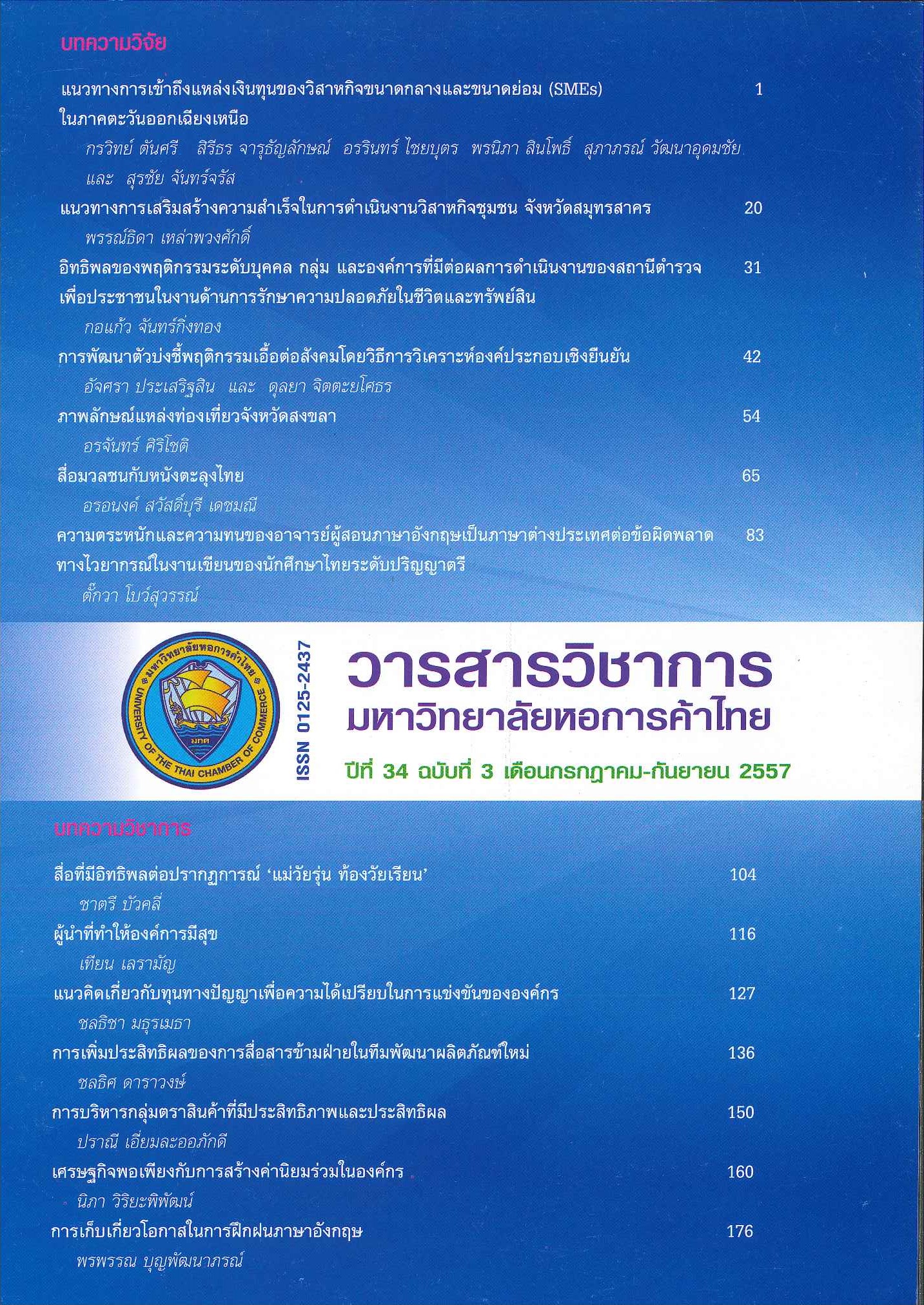
อิทธิพลของพฤติกรรมระดับบุคคล กลุ่ม และองค์การที่มีต่อผลการดำเนินงานของสถานีตำรวจเพื่อประชาชนในงานด้านการรักษาความปลอดภัยในชีวิตและทรัพย์สิน
Article Sidebar
Main Article Content
บทคัดย่อ
การศึกษาครั้งนี้มีวัตถุประสงค์เพื่อศึกษาอิทธิพลของพฤติกรรมระดับบุคคล กลุ่ม และองค์การที่มีต่อผลการดำเนินงานด้านการรักษาความปลอดภัยในชีวิตและทรัพย์สิน โดยเก็บข้อมูลกับกลุ่มตัวอย่างระดับองค์การจากสถานีตำรวจจำนวน 200 แห่ง และทำการเลือกกลุ่มตัวอย่างระดับบุคคลในแต่ละสถานีด้วยการเลือกตัวอย่างแบบเจาะจงกับผู้บังคับบัญชาในงานด้านการรักษาความปลอดภัยในชีวิตและทรัพย์สิน จำนวน 200 คน ผลการศึกษาพบว่า การปฏิบัติงานตามบทบาทหน้าที่ ภาวะผู้นำการเปลี่ยนแปลง และการปฏิบัติงานตามสถานการณ์มีอิทธิพลทางตรงต่อผลการดำเนินงานด้านการรักษาความปลอดภัยในชีวิตและทรัพย์สินเรียงตามลำดับความสำคัญ โดยการปฏิบัติงานตามบทบาทหน้าที่และภาวะผู้นำการเปลี่ยนแปลงนับเป็นปัจจัยที่มีอิทธิพลทางตรงต่อผลการดำเนินงานด้านการรักษาความปลอดภัยในชีวิตและทรัพย์สินในระดับสูง กล่าวได้ว่าการปฏิบัติงานในหน้าที่ของผู้ใต้บังคับบัญชาย่อมนำไปสู่ความสำเร็จขององค์การ นอกจากนี้ยังพบว่าภาวะผู้นำการเปลี่ยนแปลงไม่ได้มีความเหมาะสมเฉพาะกับองค์การสมัยใหม่หรือภาคเอกชนเท่านั้น แต่ภาวะผู้นำลักษณะนี้นับว่ามีความสำคัญต่อการบริหารในระบบราชการ แสดงให้เห็นว่าผู้นำที่มีลักษณะของการกระตุ้นจูงใจผู้ตามให้ใช้ความพยายามเพื่อการบรรลุเป้าหมายขององค์การนี้มีความเป็นสากลสามารถใช้ได้กับบริบททั้งภาครัฐและภาคเอกชน
Article Details

อนุญาตภายใต้เงื่อนไข Creative Commons Attribution-NonCommercial-NoDerivatives 4.0 International License.
ลิขสิทธิ์ของบทความ
ผลงานที่ได้รับการตีพิมพ์ถือเป็นลิขสิทธิ์ของมหาวิทยาลัยหอการค้าไทย ห้ามมิให้นำเนื้อหา ทัศนะ หรือข้อคิดเห็นใด ๆ ของผลงานไปทำซ้ำ ดัดแปลง หรือเผยแพร่ ไม่ว่าทั้งหมดหรือบางส่วนโดยไม่ได้รับอนุญาตเป็นลายลักษณ์อักษรจากมหาวิทยาลัยหอการค้าไทยก่อน
เอกสารอ้างอิง
สุพิศาล ภักดีนฤนาถ และคณะ. 2556. แนวทางการปฏิบัติงานตามหลักการและทฤษฎีตำรวจสมัยใหม่. นนทบุรี: กรีนแอปเปิ้ล กราฟฟิคปริ้นติ้ง.
Borman, W. C., and Motowidlo, S. J. 1993. “Expanding the Criterion Domain to Include Elements of Contextual Performance.” In N. Schmitt and W. C. Borman (eds.), Personnel Selection in Organizations, pp. 71-98. San Francisco, CA: Jossey-Bass.
. 1997. “Task Performance and Contextual Performance: The Meaning for Personnel Selection Research.” Human Performance 10, 2: 99-109.
Christian, M. S., Garza, A. S., and Slaughter, J. E. 2011. “Work Engagement: A Quantitative Review and Test of Its Relations with Task and Contextual Performance.” Personnel Psychology 64: 89-136.
Devonish, D., and Greenidge, D. 2010. “The Effect of Organizational Justice on Contextual Performance, Counterproductive Work Behaviors, and Task Performance: Investigating the Moderating Role of Ability-based Emotional Intelligence.” International Journal of Selection and Assessment 18, 1: 75-86.
Jankingthong, Korkaew, and Rurkkhum, Suthinee. 2012. “The Influential Behaviors by Individuals, Groups, and Organizations toward job Performance.” University of the Thai Chamber of Commerce Journal 32, 4: 239-250. (in Thai).
กอแก้ว จันทร์กิ่งทอง และสุธินี ฤกษ์ขำ. 2555. “อิทธิพลของพฤติกรรมระดับบุคคล กลุ่ม และองค์การที่มีต่อผลการปฏิบัติงาน.” วารสารวิชาการ มหาวิทยาลัยหอการค้าไทย 32, 4: 239-250.
Judge, T. A., and Piccolo, R. F. 2004. “Transformational and Transactional Leadership: A Meta-analytic Test of Their Relative Validity.” Journal of Applied Psychology 89, 5: 755-768.
Kim, S. 2005. “Individual-level Factors and Organizational Performance in Government Organizations.” Journal of Public Administration and Theory 15, 2: 245-261.
. 2006. “Public Service Motivation and Organizational Citizenship Behavior in Korea.” International Journal of Manpower 27, 8: 722-740.
Kreitner, R., and Kinicki, A. 2010. Organizational Behavior. 9th ed. New York: McGraw-Hill.
Moynihan, D. P., Pandey, S. K, and Wright, B.E. 2009. Pulling the Levers: Leadership, Public Service Motivation and Mission Valence [Online]. Available: https://www.researchgate.net.
Perry, J. L. 1996. “Measuring Public Service Motivation: An Assessment of Construct Reliability and Validity.” Journal of Public Administration Research and Theory 6, 1: 5-22.
Purvanova, R. K., Bono, J. E. and Dzieweczynski, J. 2006. “Transformational Leadership, Job Characteristics, and Organizational Citizenship Performance.” Human Performance 19, 1: 1-22.
Robbins, S. P. 2003. Organizational Behavior. 10th ed. Upper Saddle River, NJ: Pearson Education.
Robbins, S. P., and Judge, T. A. 2010. Organizational Behavior. 10th ed. Upper Saddle River, NJ: Prentice Hall.
Schaufeli, W. B., et al. 2002. “The Measurement of Engagement and Burnout: A Two Sample Confirmatory Factor Analytic Approach.” Journal of Happiness Studies 3, 1: 71-92.
