
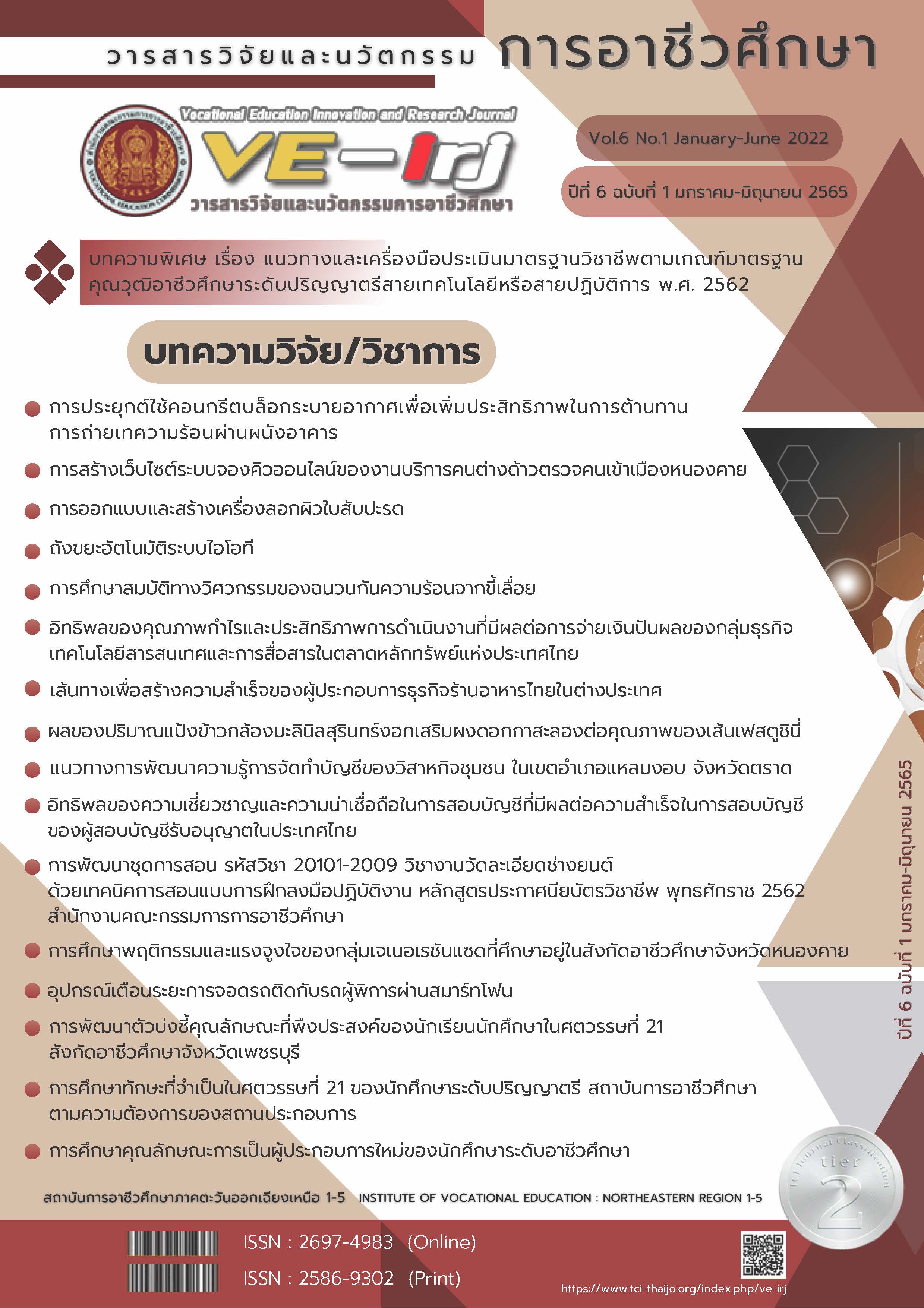
A optimization of ventilation concrete block in resistivity through the building wall.
Article Sidebar
Main Article Content
Abstract
The purpose of this research was to study the resistivity optimization of ventilation concrete block and another way to use. Concrete vent blocks are commonly used in building construction in every area of the countries. due to low cost, good availability and ease of use for experienced construction personnel . They also reduce construction times because they are larger (made of a mixture of sand and cement pressed into blocks). Concrete vent blocks can be incorporated into the construction design to optimization in resistivity through the building wall by changing the positioning and arrangement of the concrete blocks – they can be installed either lying vertically or horizontally. The study consists of measuring the inside and outside surface temperatures of a test box using concrete vent block wall, concrete block wall, and comparing those temperatures to the outside air temperature.The results of the study show that the concrete vent block wall could reduce the inside air temperature better than the concrete block wall. In the same amount of time, the concrete vent block wall could reduce the inside air temperature by 3.17oC lower than a concrete block wall.
Article Details

This work is licensed under a Creative Commons Attribution-NonCommercial-NoDerivatives 4.0 International License.
สงวนสิทธิ์ โดย สถาบันการอาชีวศึกษาภาคตะวันออกเฉียงเหนือ 1
306 หมู่ 5 ถนนมิตรภาพ หนองคาย-อุดรธานี ตำบลโพธิ์ชัย อำเภอเมืองหนองคาย จังหวัดหนองคาย 43000
โทร 0-4241-1445,0-4241-1447
ISSN : 3027-6861 (print) ISSN : 3027-687X (online)
References
[2] สุนทร บุญญาธิการ และอุษณีย์ มิ่งวิมล.(2542). การใช้ฉนวน. เอกสารเผยแพร่การอนุรักษ์พลังงานกรมพัฒนาและส่งเสริมพลังงาน กระทรวงวิทยาศาสตร์เทคโนโลยีและสิ่งแวดล้อม.กรุงเทพมหานคร.
[3] สินีรัตน์ ภัทรธรรมกุล. (2537). ผลของมวลสารและสีของผนังต่อพฤติกรรมการถ่ายเทความร้อนเข้าสู่อาคาร. วิทยานิพนธ์สถาปัตยกรรมศาสตรมหาบัณฑิต คณะสถาปัตยกรรมศาสตร์ จุฬาลงกรณ์มหาวิทยาลัย.
[4] กระทรวงพลังงาน.(2547) แนวทางการเลือกใช้วัสดุก่อสร้างและฉนวนเพื่อการอนุรักษ์พลังงาน. กรุงเทพมหานคร:กรมพัฒนาพลังงานทดแทนและอนุรักษ์พลังงาน.
[5] ณัฐกานต์ เกษประทุม. (2543). พฤติกรรมการถ่ายเทความร้อนผ่านผนังอาคารที่มีมวลสารมาก. วิทยานิพนธ์ สถาปัตยกรรมศาสตรมหาบัณฑิต สาขาวิชาเทคโนโลยีอาคาร จุฬาลงกรณ์มหาวิทยาลัย.
[6] สานนท์ บุญมี, (2550). การหารูปแบบของผนังภายนอกบ้านพักอาศัยที่เหมาะสม : การศึกษาเชิงทดลอง /. มหาวิทยาลัยเทคโนโลยีพระจอมเกล้าพระนครเหนือ,:ม.ป.ท.
[7] สำนักคณะกรรมการการศึกษาขั้นพื้นฐาน.(2564). บัญชีราคาวัสดุก่อสร้างและค่าแรงงาน : สำนักอำนวยการกลุ่มออกแบบและก่อสร้าง.
