
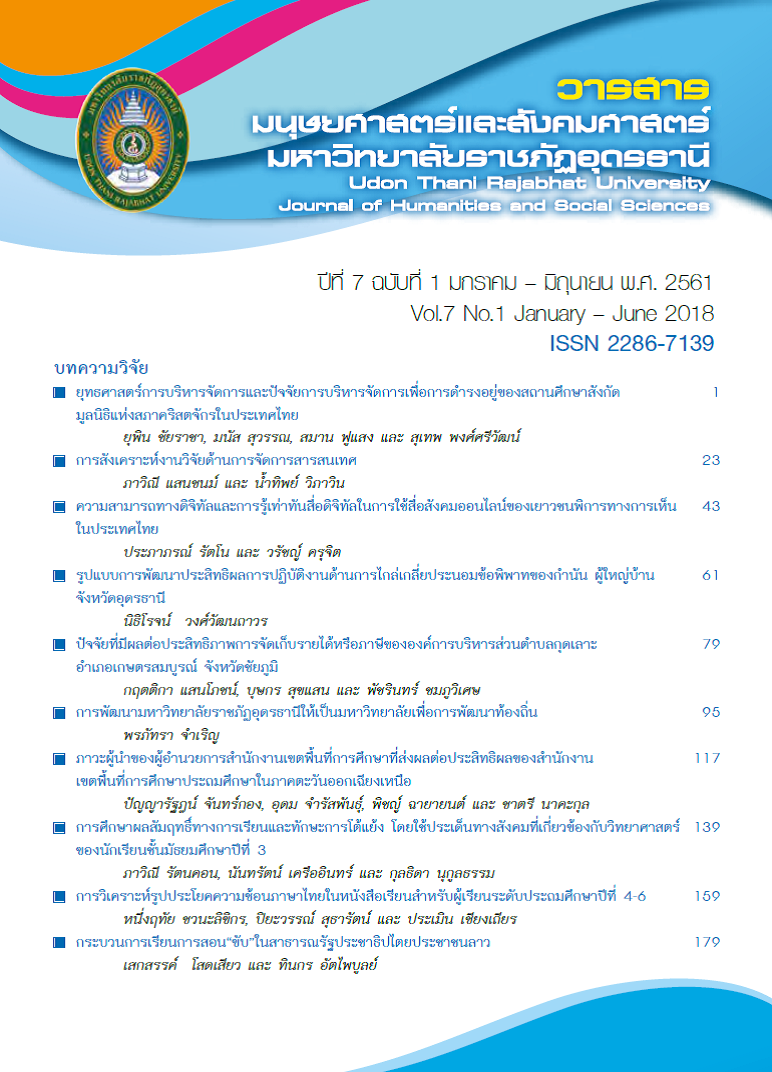
ความสามารถทางดิจิทัลและการรู้เท่าทันสื่อดิจิทัลในการใช้สื่อสังคมออนไลน์ ของเยาวชนพิการทางการเห็นในประเทศไทย
Article Sidebar
Main Article Content
บทคัดย่อ
การวิจัยครั้งนี้มีวัตถุประสงค์เพื่อศึกษาพฤติกรรมการใช้สื่อสังคมออนไลน์ของเยาวชนพิการทางการเห็นความสามารถทางดิจิทัล การรู้เท่าทันสื่อดิจิทัล และผลของการใช้สื่อสังคมออนไลน์ของเยาวชนพิการทางการเห็น เครื่องมือการวิจัย คือ แบบสอบถาม กลุ่มตัวอย่างเป็นเยาวชนพิการทางการเห็นที่กำลังศึกษาอยู่ในระดับมัธยมศึกษาตอนปลายหรือเทียบเท่าและอุดมศึกษา จำนวน 260 คน ผลการวิจัย พบว่า กลุ่มตัวอย่างส่วนใหญ่เริ่มใช้สื่อสังคมออนไลน์มาแล้ว 5 - 6 ปี ใช้สื่อสังคมออนไลน์เฉลี่ย 1-3 ชั่วโมงต่อวัน โดยใช้ผ่านสมาร์ทโฟน มีวัตถุประสงค์เพื่อติดต่อสื่อสาร ประเภทสื่อสังคมออนไลน์ที่กลุ่มตัวอย่างใช้ในระดับมากที่สุด คือ YouTube และ Facebook รูปแบบในการใช้สื่อสังคมออนไลน์ คือ ใช้ในการสนทนา (chat) และกดถูกใจ (like) อยู่ในระดับมาก
ผลการทดสอบสมมติฐาน พบว่า กลุ่มตัวอย่างที่มีประเภทความพิการ ระยะเวลาที่เริ่มใช้และระยะเวลาในการใช้สื่อสังคมออนไลน์เฉลี่ยต่อวันแตกต่างกันมีการรู้เท่าทันสื่อดิจิทัลแตกต่างกัน อย่างมีนัยสำคัญทางสถิติที่ระดับ .05 ความสามารถทางดิจิทัลมีความสัมพันธ์กับผลของการใช้สื่อสังคมออนไลน์ของเยาวชนพิการทางการเห็น อย่างมีนัยสำคัญทางสถิติที่ระดับ .01 นอกจากนี้ ผลการวิจัยพบว่า ความสามารถทางดิจิทัลด้านการจัดการสารสนเทศ และด้านการสื่อสารส่งผลต่อการรู้เท่าทันสื่อดิจิทัล อย่างมีนัยสำคัญทางสถิติที่ระดับ .01
Article Details
เอกสารอ้างอิง
Digital Advertising Association. (2016). Internet User in Thailand. Retrieved November 5, 2016, from http://www.daat.in.th/index.php/daat-internet/. (in Thai).
สมาคมโฆษณาดิจิทัล. (2559). ข้อมูลผู้ใช้อินเทอร์เน็ตของไทย. สืบค้นเมื่อ 5 พฤศจิกายน 2559, จาก http://www.daat.in.th/index.php/daat-internet/
Jutrakul, S. (2016). Family and Digital Literacy of Digital Natives. Journal of Management, Chiang Rai Rajabhat University, 11(1), 131-150. (in Thai).
สุภารักษ์ จูตระกูล. (2559). ครอบครัวกับการรู้เท่าทันสื่อดิจิทัล (Digital Literacy) ของดิจิทัลเนทีฟ (Digital Natives). วารสารวิทยาการจัดการ มหาวิทยาลัยราชภัฏเชียงราย, 11(1), 131-150.
Khuprayon, U., Tinanon, S., Yameiym, C., & Sribua, P. (1988). Technique of Orientation and Movement: Teacher’s Guide for Visually Impaired. Bangkok: Department of General Education Ministry of education. (in Thai).
อุษา ขำประยูร, ศรีสมร ทินานนท์, แฉล้ม แย้มเอี่ยม และ พเยาว์ ศรีบัว. (2531). เทคนิคการปฐมนิเทศและการเคลื่อนไหว: คู่มือการฝึกสำหรับครูสอนคนตาบอด. กรุงเทพ: กรมสามัญศึกษา กระทรวงศึกษาธิการ.
Kongrach, P. (2011). The study of Teenagers’ Behaviors in Using Social Networking Sites in Thailand: A Case Study of Facebook. Thesis, Master of Science (Technology Management), Thamasat University. (in Thai).
ภานุวัฒน์ กองราช. (2554). พฤติกรรมการใช้เครือข่ายสังคมออนไลน์ของวัยรุ่นในประเทศไทย: กรณีศึกษา Facebook. วิทยานิพนธ์ปริญญาวิทยาศาสตรมหาบัณฑิต สาขาวิชาการบริหารเทคโนโลยี มหาวิทยาลัยธรรมศาสตร์.
Karuchit, W. (2016). Negative Effects of Digital Media on Thai Youngsters: Case Studies from Thailand and Abroad. Bangkok: Association of Youth Radio and Media, Thai Health Promotion Foundation. (in Thai).
วรัชญ์ ครุจิต. (2558). รูปแบบของการสื่อสารในสื่อดิจิทัลที่ส่งผลกระทบในแง่ลบต่อเด็กละเยาวชน และแนวทางการดูแล ป้องกัน และเสริมสร้างความรู้เท่าทันสื่อดิจิทัลสำหรับเด็กและเยาวชน กรณีศึกษาจากประเทศไทยและต่างประเทศ. กรุงเทพฯ: สมาคมวิทยุและสื่อเพื่อเด็กและเยาวชน สำนักงานกองทุนสนับสนุนการสร้างเสริมสุขภาพ.
Martiniello, N., et al. (2012). Accessibility of social media for students who are blind or have low vision. Retrieved November 12, 2016, from http:// www.blindcanadians.ca/publications/cbm/32/accessibility-social-media-students-who-are-blind-or-have-low-vision
McLuhan, M. (1964). Understanding Media: The Extensions of Man. New York: McGraw Hill.
Ministry of Digital Economy and Society. (2016). Digital Economy and Society Improvement Plan. Retrieved December 18, 2016, from http://www.mict.- go.th/assets/portals/1/files/590613_4Digital_Economy_PlanBook.pdf. (in Thai)
กระทรวงดิจิทัลเพื่อเศรษฐกิจและสังคม. (2559). แผนพัฒนาดิจิทัลเพื่อเศรษฐกิจและสังคม. สืบค้นเมื่อ 18 ธันวาคม 2559, จากhttp://www.mict.go.th/assets/portals/1/files/590613_4Digital_Economy_Plan-Book.pdf
Ng, W. (2012). Can we teach digital natives digital literacy?. Computers & Education, 59(3), 1065-1078.
Pimpakun, P. (2017, 4 January). Visually Impaired: Social Media User. Interview. (in Thai)
ไพศาล พิมพกรรณ์. (2560, 4 มกราคม). คนพิการทางการเห็นที่ใช้สื่อสังคมออนไลน์. สัมภาษณ์.
Qiu, S., Hu, J., & Rauterberg, M. (2015). Mobile social media for the blind: preliminary observations. Proceedings of the International Conference on Enabling Access for Persons with Visual Impairment (ICEAPVI), 12-14 February 2015, Athens, Greece, 152-156.
Siriyuvasak,U.(Ed.). (2004). Introduction to Mass Communication: Mass Media Culture and Society. Bangkok: Chulalongkorn University. (in Thai).
อุบลรัตน์ ศิริยุวศักดิ์. (บรรณาธิการ). (2547). สื่อสารมวลชนเบื้องต้น: สื่อมวลชน วัฒนธรรม และสังคม.กรุงเทพฯ: จุฬาลงกรณ์มหาวิทยาลัย.
Wuthiastasarn, W. (2014). Myth of Impaired in Thai Entertainment Media. Retrieved December 2 ,2016, from http://www.bluerollingdot.org/articles/scoop/224. (in Thai).
ไวยวุฒิ วุฒิอรรถสาร. (2557). มายาคติความพิการในสื่อบันเทิงไทย. ค้นเมื่อ 2 ธันวาคม 2559, จาก http://www.bluerollingdot.org/articles/scoop/224
