Exploring the Community and Public Surrounding Area of one University in Bangkok Metropolitan Area to Develop Place-Based Field Trips aimed at Enhancing English Communication in Daily Life
Article Sidebar
Main Article Content
Abstract
Learning sites and their staff play a crucial role in supporting English language learning, especially in settings where English is taught as a foreign language. These sites provide students with meaningful opportunities to practice English in ways that align with real-world activities. This study examined the readiness of learning sites and their environments within a one-kilometer radius of an educational institute in Bangkok to support English learning. Five learning sites were selected using a simple random sampling method: four cultural and religious sites and one library. While the selected sites are historically and culturally significant and have the potential for integrated learning, the findings revealed that they lack adequate resources for English language support, such as English-language materials, vocabulary, and learning activities. Furthermore, the personnel at these sites could not communicate in English, and there were insufficient English-language facilities. Based on the literature review, the researcher proposed a six-step approach for conducting educational field trips: (1) content study and site survey, (2) designing activities and lesson plans, (3) quality assurance and plan development, (4) preparation for field trips, (5) teaching and conducting the field trip, and (6) conclusion and activity development.
Article Details

This work is licensed under a Creative Commons Attribution-NonCommercial-NoDerivatives 4.0 International License.
The contents and data in published articles in the Journal of Education and Innovative Learning are considered the ideas and responsibility of the author(s). The Editorial team does not necessarily agree with any ideas or hold mutual responsibility of them. Plagiarism is not permitted, even for academic purposes. However, proper citation must be given whenever referencing the articles.
References
Aguado-Moralejo, I., Enjuto, M. T., & Arenaza, O. O. (2020). Place-based learning through field trips in geography. INTED2020 Proceedings, 14th International Technology, Education and Development Conference (6015-6021). IATED. https://doi.org/10.21125/inted.2020.1626
Arcodia, C., Abreu Novais, M., Cavlek, N., & Humpe, A. (2021). Educational tourism and experiential learning: Students’ perceptions of field trips. Tourism Review, 76(1), 241-254. https://doi.org/10.1108/TR-05-2019-0155
Brooks, J. G., & Brooks, M. G. (1999). In search of understanding: The case for constructivist classrooms. ASCD.
Can, Ö. K., Lane, J. F., & Ateşkan, A. (2017). Facilitating place-based environmental education through bird studies: an action research investigation. Environmental Education Research, 23(5), 733-747. https://doi.org/10.1080/13504622.2016.1233389
Chaiyapoo, M. C., Sonrod, S., & Chanasit, C. (2025). Needs analysis of English competency development for entrepreneurs in Agro Tourism Destinations, Khlong Mahasawat, Nakhon Pathom Province. Rattanakosin Journal of Social Sciences and Humanities, 7(1), 12-20. https://so05.tci-thaijo.org/index.php/RJSH/article/view/274842 [in Thai]
Chutong, K. P. C. (2024). The development of English communication skills for ecotourism in Bang Bai Mai Subdistrict, Mueang District, Surat Thani Province: A case study of community-based boat tours. Law and Local Society Journal, 8(2), 103-128. https://so04.tci-thaijo.org/index.php/llsj/article/view/274292 [in Thai]
Cleveland, B., & Soccio, P. (2015). Evaluating the pedagogical effectiveness of learning spaces. In R. H. Crawford & A. Stephan (Eds.), Living and learning: Research for a better built environment: 49th International Conference of the Architectural Science Association 2015 (507-516). The Architectural Science Association and The University of Melbourne. https://anzasca.net/wp-content/uploads/2015/12/049_Cleveland_Soccio_ASA2015.pdf
Cleveland, B., Soccio, P., & Love, P. (2016, November 27 – December 1). Learning environment evaluation and the development of school facility design guidelines [Paper presentation]. The Annual Meeting of the Australian Association for Research in Education, Melbourne, Victoria, Australia. https://eric.ed.gov/?id=ED591864
Crew, M. (2020). The effectiveness of place-based programmes and campaigns in improving outcomes for children: A literature review. A national literacy trust research report. National Literacy Trust. https://eric.ed.gov/?id=ED607978
Davidson, S. K., Passmore, C., & Anderson, D. (2010). Learning on zoo field trips: The interaction of the agendas and practices of students, teachers, and zoo educators. Science Education, 94(1), 122-141. https://doi.org/10.1002/sce.20356
Dean, S. N. (2021). National Park interpretation and place-based education: An integrative literature review. Journal of Experiential Education, 44(4), 363-377. https://doi.org/10.1177/1053825920979626
Dewey, J. (1986). Experience and education. The educational forum, 50(3), 241-252. https://doi.org/10.1080/00131728609335764
Erickson, H. H., Watson, A. R., & Greene, J. P. (2024). An experimental evaluation of culturally enriching field trips. Journal of Human Resources, 59(3), 879-904. https://doi.org/10.3368/jhr.1020-11242R1
Gajda, K. A. (2020). Glocalism and its implementation: the case of museum-based education. The International Journal of Interdisciplinary Global Studies, 15(3), 29-42. https://doi.org/10.18848/2324-755X/CGP/v15i03/29-42
Imms, W., Cleveland, B., & Fisher, K. (Eds.). (2016). Evaluating learning environments: Snapshots of emerging issues, methods and knowledge. Advances in Learning Environments Research. Sense. https://doi.org/10.1007/978-94-6300-537-1
Kulakov, S., Purgina, M., & Koynov, R. (2020). Development of a case-based approach to the digital support of regular activities taking into international experience. In I. Klopotan, K. Czako, & V. Beker (Eds.), Economic and Social Development, 53rd International Scientific Conference on Economic and Social Development Development (1-7). Varazdin Development and Entrepreneurship Agency. https://www.esd-conference.com/upload/book_of_proceedings/Book_of_Proceedings_esdSvetiMartin2020_Online.pdf
Lim, C.-T. D., & Fraser, B. J. (2018). Learning environments research in English classrooms. Learning Environments Research, 21(3), 433-449. https://doi.org/10.1007/s10984-018-9260-6
Limsiriruengrai, P. (2022). Research to obtain guidelines for Thai-English translation for developing linguistic landscape in tourist attractions in Thailand. Journal of Studies in the Field of Humanities, 29(2), 200-222. https://so04.tci-thaijo.org/index.php/abc/article/view/236765 [in Thai]
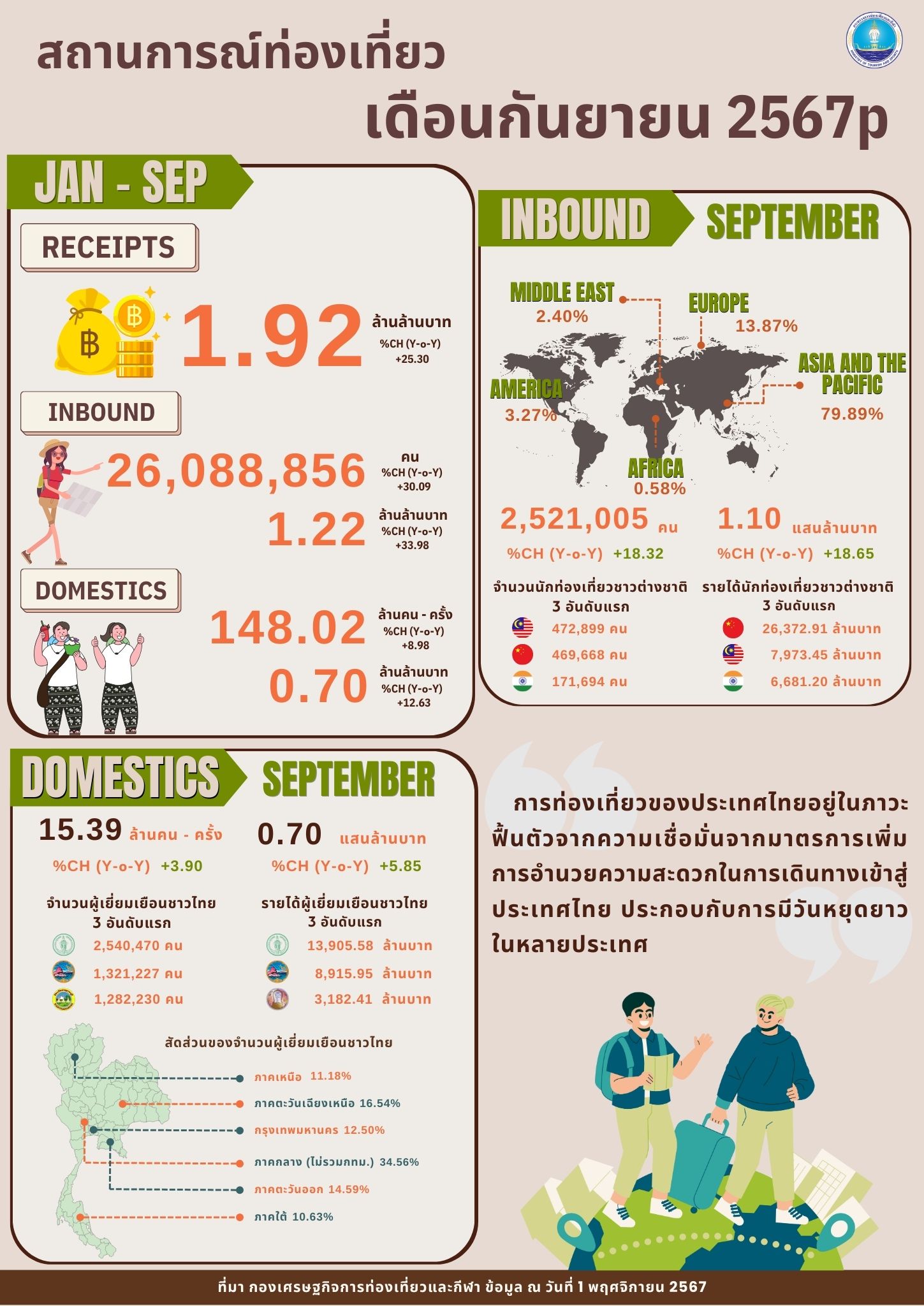
Ministry of Tourism and Sports. (2024). Infographic: International Tourist Arrivals to Thailand Jan-Sep 2024. [Infographic]. Ministry of Tourism & Sports. https://www.mots.go.th/images/v2022_17309687171024LiH4Liy4LiZIEluZm8g4Liq4LiW4Liy4LiZ4LiB4Liy4Lij4LiT4LmM4LiX4LmI4Lit4LiH4LmA4LiX4Li14LmI4Lii4Lin4LiB4Lix4LiZ4Lii4Liy4Lii4LiZLmpwZw==.jpg [in Thai]
Nespor, J. (2000). School field trips and the curriculum of public spaces. Journal of Curriculum Studies, 32(1), 25-43. http://doi.org/10.1080/002202700182835
Russell-Ciardi, M. (2006). Place-based education in an urban environment1. Museum International, 58(3), 71-77. https://unesdoc.unesco.org/ark:/48223/pf0000147302
Scarce, R. (1997). Field trips as short-term experiential education. Teaching Sociology, 25(3), 219-226. https://doi.org/10.2307/1319398
Sermsook, K., Nakplad, R., & Jantawong, L. (2021). Problems and needs analysis of English for tourism industry: A case of hotel staff in Phang Nga Province, Thailand. Education Quarterly Reviews, 4(3), 73-82. https://doi.org/10.31014/aior.1993.04.03.319
Sharafuddin, M. A. (2015). Types of tourism in Thailand. E-review of Tourism Research, 12(3), 210-219. https://www.researchgate.net/publication/283780957_Types_of_tourism_in_Thailand
Sievers, E., Spierenburg, M., Jhagroe, S. S., & van Oudenhoven, A. P. E. (2024). Place-based knowledge transfer in a local-to-global and knowledge-to-action context: key steps and facilitative factors. Ecology and Society, 29(3), Article 8. https://doi.org/10.5751/ES-15024-290308
Smith, G. A. (2002). Place-based education: Learning to be where we are. Phi delta kappan, 83(8), 584-594. https://doi.org/10.1177/003172170208300806
Sobel, D. (2004). Place-based education: Connecting classroom and community. Nature and listening, 4(1), 1-7. https://kohalacenter.org/teachertraining/pdf/pbexcerpt.pdf
Tolman, J. (2021). Teaching our cities: place-based education in an urban environment. In Merse, C. L., Seydel, J., Kensler, L. A. W. & Sobel, D. (Eds.), Trailblazers for Whole School Sustainability: Case Studies of Educators in Action (38-51). Routledge. https://doi.org/10.4324/9781003152811
Walsh, D., & Downe, S. (2005). Meta-synthesis method for qualitative research: a literature review. Journal of advanced nursing, 50(2), 204-211. https://doi.org/10.1111/j.1365-2648.2005.03380.x
Wulandari, F. (2022). Students’ perceptions of the field trip in vocabulary learning: A descriptive quantitative research in the sixth semester students of English for business and professional communication in the academic year of 2021-2022. English Language Studies and Applied Linguistics Journal, 3(1), 1-11. https://jurnal.polteq.ac.id/index.php/elsa/article/download/125/101
Yemini, M., Lieberthal, E. B., Nahhas, R., Streisfeld, S., Gnaima, Z., Kalderon, M., & Fliss, R. (2023). Place-based education in diverse urban communities: The case of Israel. International Journal of Educational Research, 121, 102224. https://doi.org/10.1016/j.ijer.2023.102224
Zhao, J., LaFemina, P., Carr, J., Sajjadi, P., Wallgrün, J. O., & Klippel, A. (2020). Learning in the field: comparison of desktop, immersive virtual reality, and actual field trips for place-based STEM education. In F. Argelaguet, G. Bruder, R. Kopper, & M. E. Latoschik (Eds.), 2020 IEEE Conference on Virtual Reality and 3D User Interfaces (VR) (893-902). IEEE. https://doi.org/10.1109/VR46266.2020.00012