Problems and Proposed Enhancement Strategies of Traditional English Teaching and Learning System at Xilin Nationality High School in Guangxi, China
Abstract
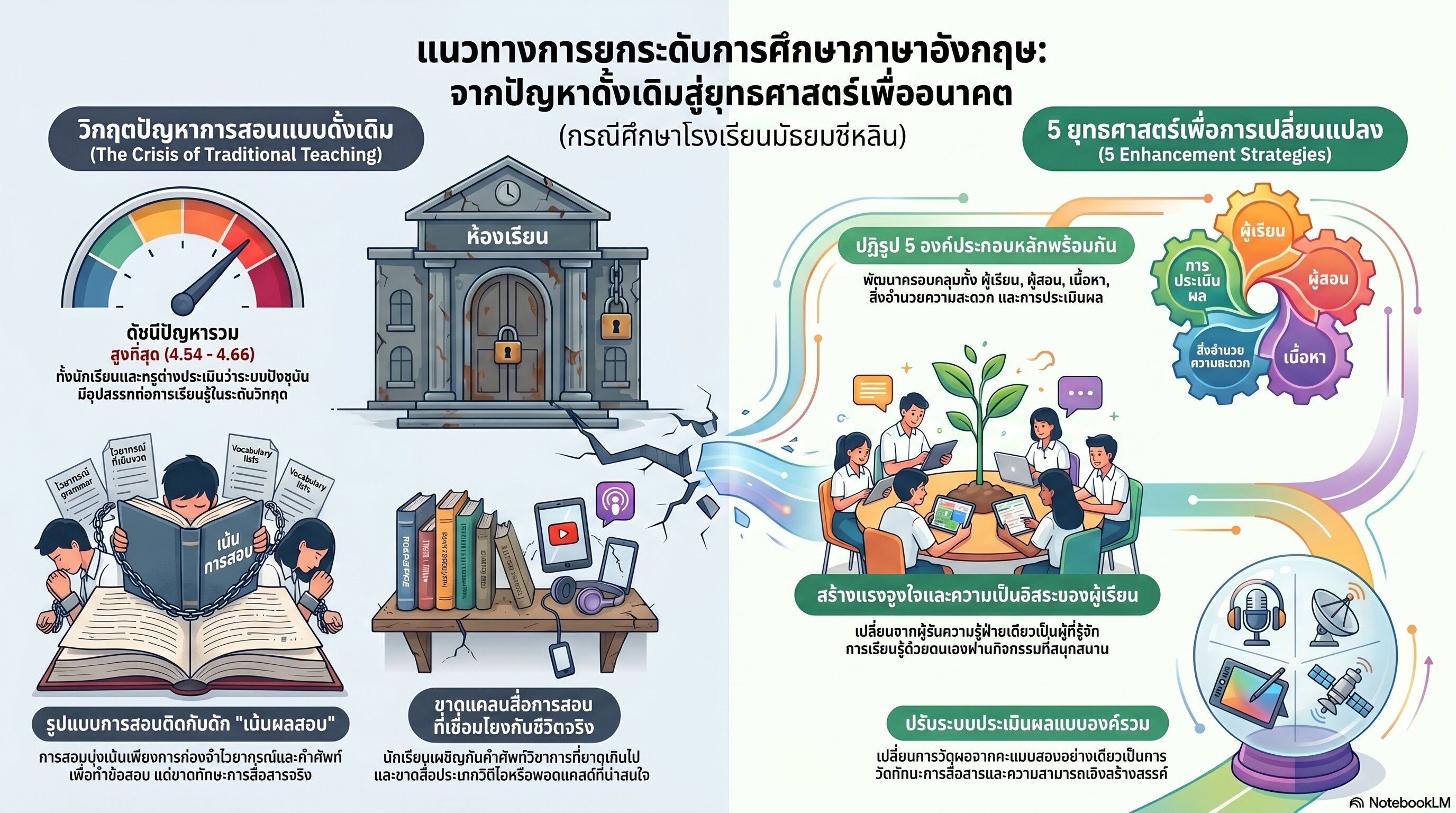
This research aimed to: 1) identify the specific problems of Traditional English Teaching and Learning System at Xilin Nationality High School, and 2) develop effective enhancement strategies based on these problems. The respondents were 356 students and 144 teachers from Xilin Nationality High School, selected through the Stratified Random Sampling Method. Two main research instruments employed in this research included: 1) a questionnaire employed for the investigation of English listening problems, and 2) a set of questions for a focus group discussion meeting for the approval of the enhancement strategies. The collected data and information were analyzed and presented in terms of frequency count, percentage, mean and standard deviation. In addition, the comments towards the correctness and suitability of the enhancement strategies were collected and analyzed through the Content Analysis Method. The findings indicated that: 1) The problems of Traditional English Teaching and Learning System were rated in the highest level (= 4.66, S.D.=0.22), 2) Based on the research results, the enhancement strategies were constructed. The strategies were divided into 5 chapters; namely, 1) About learners, 2) About Instructors,3) About Teaching-Learning Materials 4), About teaching-learning Facilities and 5) About Teaching-Learning Evaluation. Each chapter was approved by the 3 specialists in terms of the correctness and suitability. This means the constructed strategies are considered suitable for using as guidelines to enhance the English learning skill of the students.
References
Brown, H. D. (1994). Teaching by principles: An interactive approach to language pedagogy. Prentice Hall Regents.
Chomphubut, U. (2019). Development of learning management model to enhance communication ability in listening and speaking English for Prathom Suksa 5 students, Watbhurapaphiram Municipal School, Department of Education, Roi Et Municipality, Roi Et Province. Academic Journal of Mahamakut Buddhist University Roi Et Campus, 9(2), 274–288. https://so01.tci-thaijo.org/index.php/AJMBU/article/view/244705
Dawilai, S., Champaphaeng, M., Chanthaphrom, N., & Srinarach, W. (2024). Expectations of learning English for the first-year English major students, Faculty of Humanities and Social Sciences, Chiang Rai Rajabhat University. Fa Nuea Journal, 15(1), 97–116. https://so01.tci-thaijo.org/index.php/FaNJ/article/view/272523
Jantakhun, T., Noibutdee, O., & Jantakhun, K. (2024). Developing English skills and collaborative learning based on intelligent cloud learning system for students in Roi Et Province. MCU Ubonratchathani Journal of Buddhist Studies (JOBU), 6(3), 1869–1880. https://so12.tci-thaijo.org/index.php/JOBU2025/article/view/3476
Jiang, Y. (2021). Challenges of implementing inquiry-based learning in Chinese secondary school EFL classrooms: A review of teachers’ and students’ perceptions. Journal of Studies in the English Language, 16(2), 1–21. https://so04.tci-thaijo.org/index.php/jsel/article/view/255177
Jianfeng, C., Sagaya Raj, G., & Tan Tjin Ai, J. (2018). The correlations among learning motivation, autonomy and language proficiency in Chinese EFL context. LEARN Journal: Language Education and Acquisition Research Network, 11(1), 1–14. https://so04.tci-thaijo.org/index.php/LEARN/article/view/135861
Makkana, U. (2013). A development of English speaking skills of English for everyday use course for industrial management students (Research report). Rajamangala University of Technology Rattanakosin, Wang Klaikangwol Campus.
Munta, C., Pansa, B., & Srakaew, P. N. (2024). An educational technology-integrated instructional system for English language teaching and learning in MCU. Journal of Asian Language Teaching and Learning (Online), 5(3), 182–191. https://so10.tci-thaijo.org/index.php/jote/article/view/1824
Nattheeraphong, A. (2020). Underprivileged students’ second language motivation: Cases of three highly motivated non-English major students. REFLections, 27(2), 199–217. https://doi.org/10.61508/refl.v27i2.248392
Natthiko, P. N., Pansa, B., & Paengkamhag, W. (2025). A SECI model-based instruction system for teaching English to high school students of the Phrapariyattidham School General Education Section, Group One. Journal of Asian Language Teaching and Learning (Online), 6(1), 115–131. https://so10.tci-thaijo.org/index.php/jote/article/view/2319
Pattiya, J., & Chaiyasuk, D. (2023). Exploring the roles of the L2 motivational self system in the English learning achievement of Thai high school learners. KKU Research Journal (Graduate Studies) Humanities and Social Sciences, 10(3), 19–32. https://so04.tci-thaijo.org/index.php/gskkuhs/article/view/261045
Phattraphakin, K., Ginn Lietz, M., Ariya, S., Skulkhu, J., & Suraseranee, P. (2025). How important is it for learners of English to have an accent like native speakers? Journal of Buddhist Education and Research (JBER), 11(1), 153–160. https://so06.tci-thaijo.org/index.php/jber/article/view/281324
Pisaipan, K., & Sunanta, P. (2023). English speaking instructional system. Journal of Lanna Societies, 1(1), 10–20. https://so13.tci-thaijo.org/index.php/jls/article/view/225
Salaeh, S., & Mora, J. (2025). Suggested practical steps of using the Cake application to improve English learners’ speaking skills. Hatyai Academic Journal, 23(2), 349–365. https://so01.tci-thaijo.org/index.php/HatyaiAcademicJournal/article/view/275757
Sittikul, P., & Thongphut, A. (2025). Pedagogical guidelines using integrated teaching approaches to enhance undergraduate learners’ English oral communication ability. Journal of Liberal Arts RMUTT, 6(1), 117–131. https://doi.org/10.60101/jla.2025.6.1.6565
Tanawutpornpinit, S., Sikkhabandit, S., Yuenyong, N., Khaniyao, K., & Sadakorn, K. (2023). The administration model for learning new style English: The Common European Framework of Reference for Languages (CEFR) secondary level linked to educational quality assurance. Journal of Educational Review Faculty of Education in MCU, 10(3), 351–363. https://so02.tci-thaijo.org/index.php/EDMCU/article/view/266127
Ven. Tejaniya, Chantimachaiamorn, C., & Thitavangso, P. V. (2024). Development on English grammar learning skills of Grade Five students at government high school in Minbu Township, Myanmar. Journal of Asian Language Teaching and Learning (Online), 5(3), 63–76. https://so10.tci-thaijo.org/index.php/jote/article/view/1815
Ven. Vilasa, Chantimachaiamorn, C., & Pansa, B. (2024). A study of English learning motivation of Grade 10 students in High School Namma, Myanmar. Journal of Asian Language Teaching and Learning (Online), 5(3), 104–116. https://so10.tci-thaijo.org/index.php/jote/article/view/1818
Wang, M., & Chinokul, S. (2023). Foreign language anxiety of rural EFL junior middle school Chinese students: A case study of a school in East China. Parichart Journal, 36(4), 213–233. https://doi.org/10.55164/pactj.v36i4.267238
Yodming, R. (2019). English language learning motivation and myCourseVille learning management system in classroom. Kasem Bundit Journal, 20(2), 81–91. https://so04.tci-thaijo.org/index.php/jkbu/article/view/225012
Yuhan, M., & Chinokul, S. (2025). Investigation of extramural English activities practices among Chinese EFL high school students with different English proficiency levels. BRU ELT Journal, 3(2), 107–123. https://doi.org/10.14456/bej.2025.8
Yuhannan, A., Chatranonth, P., & Sungroong, P. (2024). The exploring motivative dynamics in English language learning among university students in Thailand’s Deep South through L2MSS framework. Journal of Roi Kaensarn Academi, 9(10), 1058–1069. https://so02.tci-thaijo.org/index.php/JRKSA/article/view/270441
Downloads
Published
How to Cite
Issue
Section
Categories
License
Copyright (c) 2026 Journal of Buddhist Education and Research (JBER)

This work is licensed under a Creative Commons Attribution-NonCommercial-NoDerivatives 4.0 International License.