Constructing of a Pop Music Singing Exercise Book for Junior High School Students at the Affiliated Middle School of Zhejiang Conservatory of Music in the 21st Century
Keywords:
Pop Music Singing, Exercise Book Construction, Junior High School Students, Affiliated Middle School of Zhejiang Conservatory of MusicAbstract
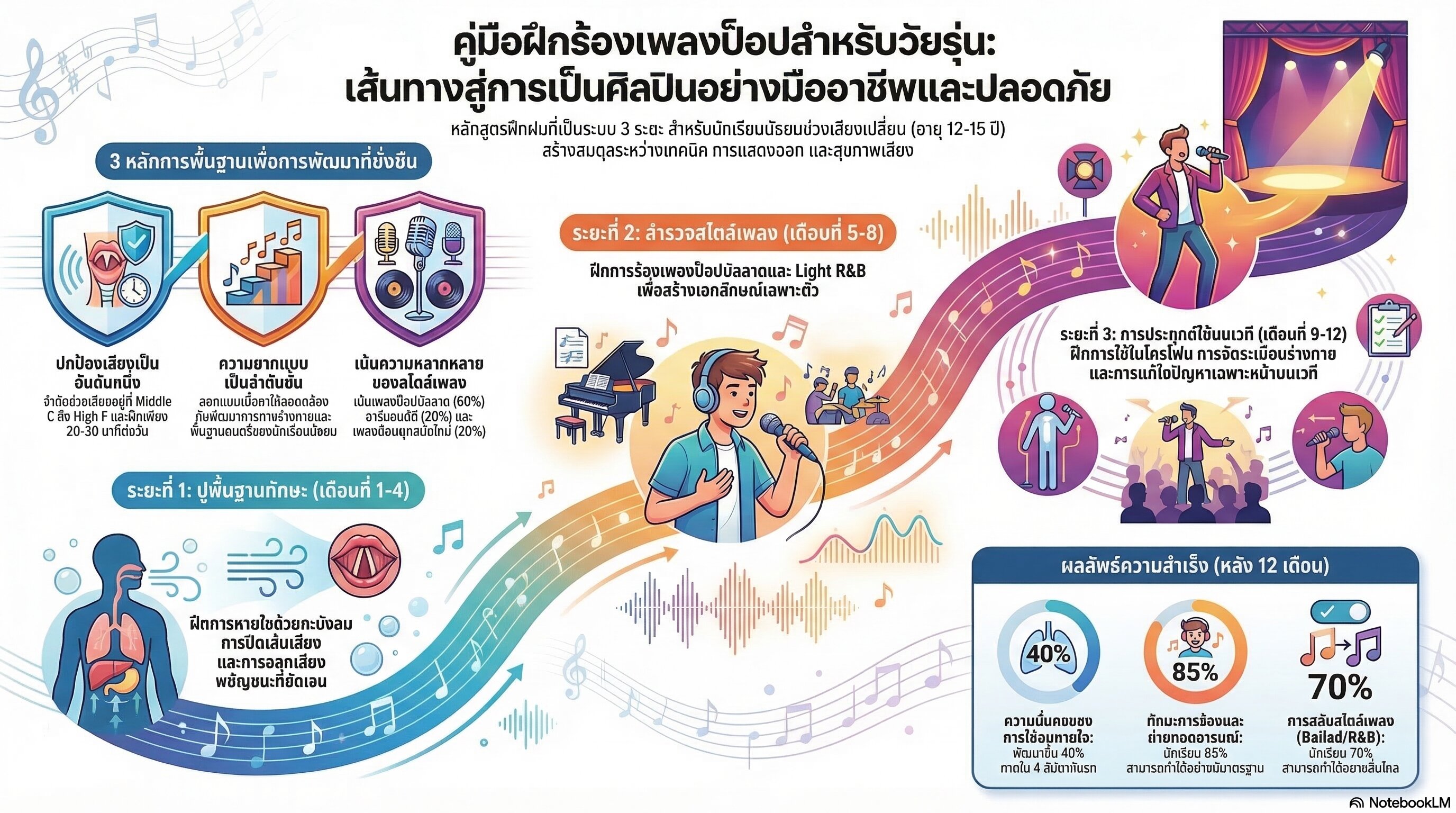
This study aims to construct a targeted pop music singing exercise book for 12–15-year-old junior high school students in the voice change period at the Affiliated Middle School of Zhejiang Conservatory of Music. It addresses prominent issues in current pop singing education for adolescents at the school, such as mismatched teaching resources, lack of systematic training, and high risks of vocal damage from improper practice. Against the backdrop of the continuous evolution of global and Chinese pop music styles, teenagers at the school show immense enthusiasm for pop singing actively participating in short-video cover challenges and campus singing competitions yet existing teaching resources fail to match their physiological characteristics during the voice change period and professional learning needs. As a scientific tool aligned with teenagers’ vocal physiological traits, cognitive rules, and pop music aesthetic preferences, this exercise book serves as an ideal case for exploring localized pop music education models in professional music affiliated middle schools. A mixed research method is adopted, including semi-structured interviews with 6 vocal educators and experts from diverse backgrounds, Index of Item Objective Congruence (IOC) validity evaluation, formative assessments every 4 weeks, summative assessments through a 12-month teaching simulation, and document analysis of teenage vocal physiology, pop music style evolution, and teaching material construction theories. The results show that the exercise book adheres to three core principles: "vocal protection first, progressive difficulty, and style focus." It adopts a three-stage progressive structure ("Basic Skill Training → Pop Style Exploration → Stage Application"), focusing on pop styles suitable for adolescents at the school, such as pop ballads, light R&B, and pop-rap fusion. With an average IOC validity score of 0.83, it demonstrates good content validity. Formative assessment results indicate a 40% improvement in students’ breath stability after 4 weeks of basic training; summative assessments reveal that 85% of students can proficiently sing pop song fragments with standard techniques and emotional expression, and 70% can complete simple style switching between pop ballads and light R&B. This exercise book provides a practical teaching tool for pop singing education of adolescents at the Affiliated Middle School of Zhejiang Conservatory of Music, and offers a reference for the development of localized and systematic pop music teaching materials for teenagers in professional music affiliated middle schools in China.
References
Björnberg, E. (2010). Teaching pop music in the music classroom. International Journal of Music Education, 28(3), 257–270. https://doi.org/10.1177/0255761410370765
Chen, L. (2022). Research on the application of art songs in vocal music teaching [Master’s thesis]. Sichuan Conservatory of Music.
Davidson, J. W., & Welsh, N. (2004). Vocal development in popular music singing. Journal of Voice, 18(4), 482–490. https://doi.org/10.1016/j.jvoice.2003.09.003
Liu, H. (2024). Research on targeted pop music teaching for junior high school students. Journal of Zhejiang Conservatory of Music, (1), 89–95.
Miller, T. (2013). Pop music and youth culture. Sage Publications.
Wang, J. (2023). Research on the integration of skill training and artistic expression in pop music teaching materials. Music Creation, (3), 102–108.
Zhou, X. (2021). Status quo and improvement strategies of pop music teaching in conservatory affiliated middle schools [Master’s thesis]. Nanchang University.
Bai, K. (2024). Music theory of Kodaly method [Web page]. Baidu Baike. Retrieved from https://baike.baidu.com/item/ Kodály Method /394112
Miller, T. (2013). Pop music and youth culture. Sage Publications.
Tong, Y. (2016). Analysis of secondary school music teaching strategies under the influence of modern popular music.Art Technology, (08), 364. https://doi.org/CNKI:SUN:YSKK.0.2016-08-319
Wang, J. (2023). Research on the integration of skill training and artistic expression in pop music teaching materials. Music Creation, (3), 102–108.
Zhou, X. (2021). Status quo and improvement strategies of pop music teaching in conservatory affiliated middle schools [Master’s thesis]. Nanchang University.
Downloads
Published
How to Cite
Issue
Section
Categories
License
Copyright (c) 2026 Journal of Buddhist Education and Research (JBER)

This work is licensed under a Creative Commons Attribution-NonCommercial-NoDerivatives 4.0 International License.