การเปลี่ยนแปลงของภาษาถิ่นไทยในยุคโลกาภิวัตน์: บริบทภาษาภูไท
บทคัดย่อ
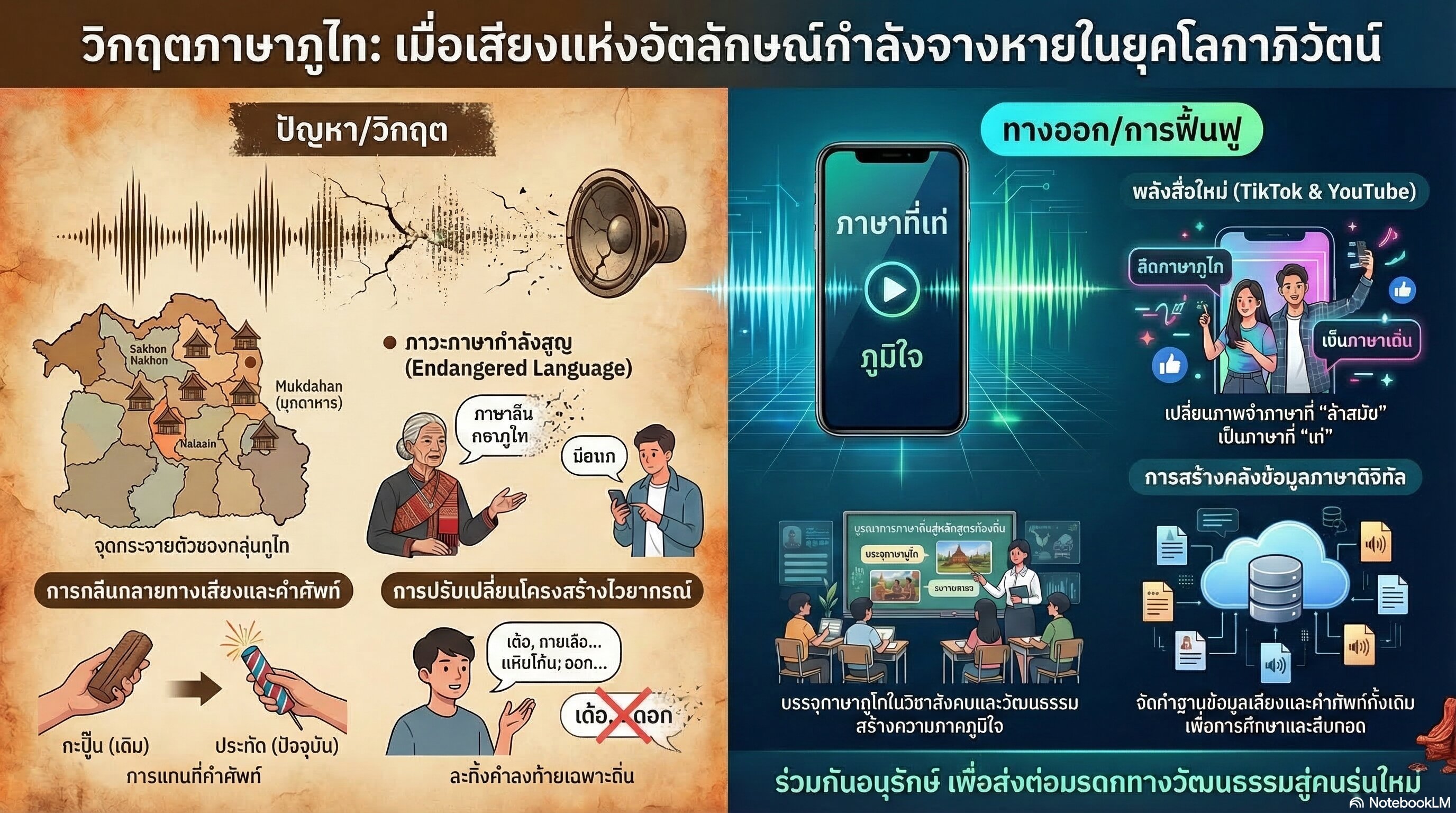
บทความนี้มุ่งศึกษาการเปลี่ยนแปลงของภาษาถิ่นไทยในยุคโลกาภิวัตน์ โดยใช้กรณีศึกษาภาษาภูไทในภาคตะวันออกเฉียงเหนือของประเทศไทย ซึ่งถือเป็นภาษาถิ่นที่สะท้อนอัตลักษณ์ วัฒนธรรม และภูมิปัญญาท้องถิ่นที่สืบทอดมายาวนาน ภายใต้กระแสโลกาภิวัตน์ การใช้ภาษาไทยมาตรฐานและภาษาสากลที่แพร่หลายในระบบการศึกษาและสื่อสารมวลชน ส่งผลให้ภาษาภูไทเกิดการเปลี่ยนแปลงทั้งในระดับเสียง คำศัพท์ และไวยากรณ์ โดยเฉพาะในกลุ่มเยาวชนที่ละทิ้งการใช้ภาษาดั้งเดิมและหันไปใช้ภาษาที่มีสถานะสูงกว่า การศึกษาพบว่าปรากฏการณ์ดังกล่าวสะท้อนกระบวนการกลมกลืนทางภาษา (language shift) และภาวะภาษากำลังสูญ (endangered language) ซึ่งนำไปสู่การลดบทบาทของภาษาถิ่นในฐานะเครื่องมือถ่ายทอดวัฒนธรรม บทความยังนำเสนอแนวทางการอนุรักษ์และฟื้นฟู เช่น การบูรณาการภาษาภูไทในหลักสูตรท้องถิ่น การสร้างสื่อออนไลน์ และการจัดกิจกรรมชุมชน เพื่อธำรงความหลากหลายทางภาษาและสร้างความภาคภูมิใจในอัตลักษณ์ชาติพันธุ์ไทยในยุคสมัยใหม่
เอกสารอ้างอิง
บุญมี แก้วมณี. (2558). การเปลี่ยนแปลงทางไวยากรณ์ของภาษาภูไทในจังหวัดนครพนม. วารสารภาษาและวัฒนธรรม, 12(1), 45–62.
ปราโมทย์ เมืองนิล. (2559). ภาษาถิ่นกับการเปลี่ยนแปลงในสังคมไทยยุคใหม่. วารสารสังคมศาสตร์, 14(1), 89–104.
ธำรงค์ ทัศนาญชลี. (2546). ภาษาถิ่นอีสาน: การเปรียบเทียบกับภาษาไทยกลาง. กรุงเทพฯ: สำนักพิมพ์จุฬาลงกรณ์มหาวิทยาลัย.
ธนพร เนาว์สุวรรณ. (2556). การวิเคราะห์ภาษาถิ่นล้านนาในมิติทางสังคมวัฒนธรรม. เชียงใหม่: มหาวิทยาลัยเชียงใหม่.
ภัทราวดี มีสุวรรณ. (2559). คำถามและโครงสร้างประโยคคำถามในภาษาเหนือ. วารสารภาษาศาสตร์ไทย, 13(2), 80–90.
เรืองเดช ปันเขื่อนขัติย์. (2525). ภาษาถิ่นตระกูลไทย. กรุงเทพฯ: สถาบันวิจัยภาษาและวัฒนธรรมเพื่อพัฒนาชนบท มหาวิทยาลัยมหิดล.
วิโรจน์ อรุณมานะกุล. (2555). ไวยากรณ์ภาษาใต้: การศึกษาทางภาษาศาสตร์เชิงพรรณนา. สงขลา: มหาวิทยาลัยทักษิณ.
วิเชียร ดวงแก้ว. (2561). การศึกษาการแปรและการเปลี่ยนแปลงทางภาษาของภาษาภูไทในชุมชนผู้สูงอายุ. วารสารภาษาศาสตร์ไทย, 17(2), 101–119.
สมเจตน์ วงศ์ปิยะ. (2547). ลักษณะไวยากรณ์ของภาษาอีสาน. ขอนแก่น: มหาวิทยาลัยขอนแก่น.
สุกัญญา สุจฉายา. (2561). ภาษาวัยรุ่นกับอัตลักษณ์การสื่อสาร. วารสารภาษาและวัฒนธรรม, 20(3), 140–150.
สุรางค์ ภาคเครือ. (2560). ภาษาพูดในภาคกลาง: โครงสร้างและหน้าที่ทางวัจนปฏิบัติ. กรุงเทพฯ: สำนักพิมพ์แห่งจุฬาลงกรณ์มหาวิทยาลัย.
อารีย์ สวัสดี. (2552). ลักษณะทางสังคมภาษาของคำในภาษาถิ่นใต้. สงขลา: มหาวิทยาลัยทักษิณ.
Bourdieu, P. (1991). Language and symbolic power. Harvard University Press.
Crystal, D. (2000). Language death. Cambridge University Press.
Fishman, J. A. (1991). Reversing language shift: Theoretical and empirical foundations of assistance to threatened languages. Clevedon, UK: Multilingual Matters.
Grenoble, L. A., & Whaley, L. J. (2006). Saving languages: An introduction to language revitalization. Cambridge University Press.
Hopper, P. J., & Traugott, E. C. (2003). Grammaticalization (2nd ed.). Cambridge University Press.
Holmes, J. (2013). An introduction to sociolinguistics (4th ed.). Routledge.
Hall, S. (1996). Cultural identity and diaspora. In P. Mongia (Ed.), Contemporary postcolonial theory (pp. xx–xx). Arnold.
Pennycook, A. (2010). Language as a local practice. Routledge.
Thompson, R. (2013). Language and identity in multilingual Thailand: The fading voices of the Tai Phuan. Journal of Southeast Asian Linguistics, 8(2), 112–130.
UNESCO. (2003). Language vitality and endangerment. UNESCO Ad Hoc Expert Group on Endangered Languages.
ดาวน์โหลด
เผยแพร่แล้ว
รูปแบบการอ้างอิง
สัญญาอนุญาต
ลิขสิทธิ์ (c) 2026 Journal of Buddhist Education and Research (JBER)

อนุญาตภายใต้เงื่อนไข Creative Commons Attribution-NonCommercial-NoDerivatives 4.0 International License.