Personnel Administration According to the Brahmavihāra Dhamma Principles of Educational Institution Administrators under the Maha Sarakham Primary Educational Service Area Office 3
Keywords:
Personnel Administration According, Brahmavihāra-Dhamma Principles, Educational Institution AdministratorsAbstract
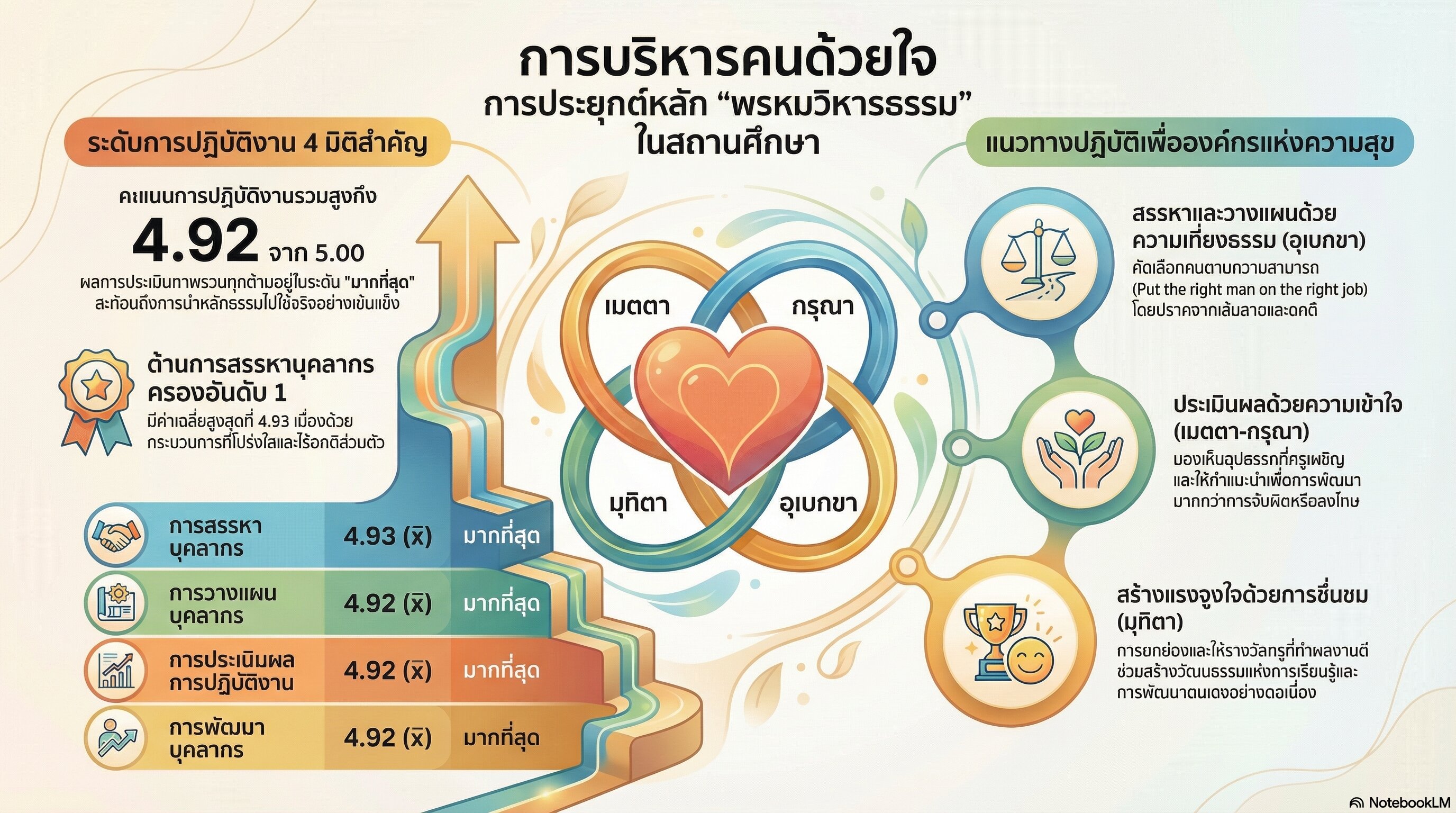
This research aimed to study the conditions of personnel administration of educational institution administrators under the Maha Sarakham Primary Educational Service Area Office 3 and to propose guidelines for personnel administration according to the Brahmavihāra-Dhamma Principles. A mixed-methods research design was employed, combining quantitative and qualitative approaches. The quantitative phase used a questionnaire administered to 285 respondents, while the qualitative phase involved interviews with 10 key informants. Quantitative data were analyzed using basic statistical methods, and qualitative data were analyzed through content analysis. The findings of the research were as follows: 1) The overall level of personnel administration according to the Brahmavihāra-Dhamma Principles of educational institution administrators under the Maha Sarakham Primary Educational Service Area Office 3 was found to be at the highest level. By aspect, from highest to lowest, they were as follows: personnel recruitment, personnel planning, personnel performance evaluation, and personnel development, respectively. 2) The personnel administration according to the Brahmavihāra-Dhamma Principles of educational institution administrators under the Maha Sarakham Primary Educational Service Area Office 3 emphasizes fairness and compassion. School administrators value the equal development and performance evaluation of teachers, consider job applicants without bias, and provide opportunities for personnel to grow according to their potential. Administrators offer constructive advice to enhance staff capability and recognize outstanding teachers through awards and acknowledgment, thereby motivating continuous self-improvement and enthusiasm in professional development.
References
กระทรวงศึกษาธิการ. (2560). แผนการศึกษาแห่งชาติ พ.ศ. 2560–2579. สำนักงานเลขาธิการสภาการศึกษา.
กระทรวงศึกษาธิการ. (2561). ยุทธศาสตร์ชาติ 20 ปี (พ.ศ. 2561–2580) ด้านการพัฒนาและเสริมสร้างศักยภาพทรัพยากรมนุษย์. สำนักงานเลขาธิการสภาการศึกษา.
คณะกรรมการการศึกษาแห่งชาติ. (2542). พระราชบัญญัติการศึกษาแห่งชาติ พ.ศ. 2542. สำนักนายกรัฐมนตรี.
คณะกรรมการการศึกษาแห่งชาติ. (2545). พระราชบัญญัติการศึกษาแห่งชาติ (ฉบับที่ 2) พ.ศ. 2545. สำนักนายกรัฐมนตรี.
ธีระ รุญเจริญ. (2554). ภาวะผู้นำทางการศึกษา. เค.พี. บุ๊คส์.
บุญชม ศรีสะอาด. (2560). การวิจัยเบื้องต้น (พิมพ์ครั้งที่ 10). สุวีริยาสาส์น.
พระธรรมปิฎก (ป.อ. ปยุตฺโต). (2542). พุทธธรรม (พิมพ์ครั้งที่ 6). มหาวิทยาลัยมหาจุฬาลงกรณราชวิทยาลัย.
พระพรหมคุณาภรณ์ (ป.อ. ปยุตฺโต). (2559). พุทธธรรม (พิมพ์ครั้งที่ 36). มูลนิธิพุทธธรรม.
พระปลัดจันทร์ สิริจนฺโท. (2561). แนวทางการพัฒนาการบริหารบุคคลตามหลักพรหมวิหาร 4 ของผู้บริหารโรงเรียนประถมศึกษา เขตบางแค สังกัดกรุงเทพมหานคร (วิทยานิพนธ์ครุศาสตรมหาบัณฑิต, มหาวิทยาลัยมหาจุฬาลงกรณราชวิทยาลัย).
ภิญโญ สาธร. (2556). การบริหารการศึกษา: หลักการและแนวคิด. โอเดียนสโตร์.
วิโรจน์ สารรัตนะ. (2557). การบริหารการศึกษา: แนวคิด ทฤษฎี และการปฏิบัติ. โรงพิมพ์ทิพยวิสุทธิ์.
วัชระ คณะทรง. (2564). การบริหารงานบุคคลตามหลักพรหมวิหารธรรมของผู้บริหารสถานศึกษา สังกัดสำนักงานเขตพื้นที่การศึกษาประถมศึกษาระยอง เขต 2 (รายงานการวิจัย, มหาวิทยาลัยราชภัฏรำไพพรรณี).
สมบัติ ทีฆทรัพย์. (2550). คุณธรรมและจริยธรรมของนักบริหาร (พิมพ์ครั้งที่ 2). โรงพิมพ์จุฬาลงกรณ์มหาวิทยาลัย.
สำนักงานเขตพื้นที่การศึกษาประถมศึกษามหาสารคาม เขต 3. (2566). รายงานข้อมูลสารสนเทศทางการศึกษา. ผู้จัดทำ.
สำนักงานคณะกรรมการการศึกษาขั้นพื้นฐาน. (2564). แนวทางการบริหารงานบุคคลในสถานศึกษา. กระทรวงศึกษาธิการ.
สำนักงานกองทุนสนับสนุนการวิจัย. (2558). รายงานโครงการปฏิรูปการเรียนรู้ทั้งโรงเรียนด้วยการวิจัยและพัฒนา. สำนักงานกองทุนสนับสนุนการวิจัย.
Downloads
Published
How to Cite
Issue
Section
License
Copyright (c) 2026 Authors

This work is licensed under a Creative Commons Attribution-NonCommercial-NoDerivatives 4.0 International License.