การขับเคลื่อนนโยบายศูนย์กลางทางการแพทย์(Medical Hub) เชิงท่องเที่ยวและกรณีศึกษาผู้ บริการทางการแพทย์จากกลุ่มประเทศความร่วมมืออ่าวอาหรับ Gulf Cooperation Council (GCC)
คำสำคัญ:
ศูนย์กลางทางการแพทย์, การท่องเที่ยวเชิงการแพทย์, กลุ่มประเทศความร่วมมืออ่าวบทคัดย่อ
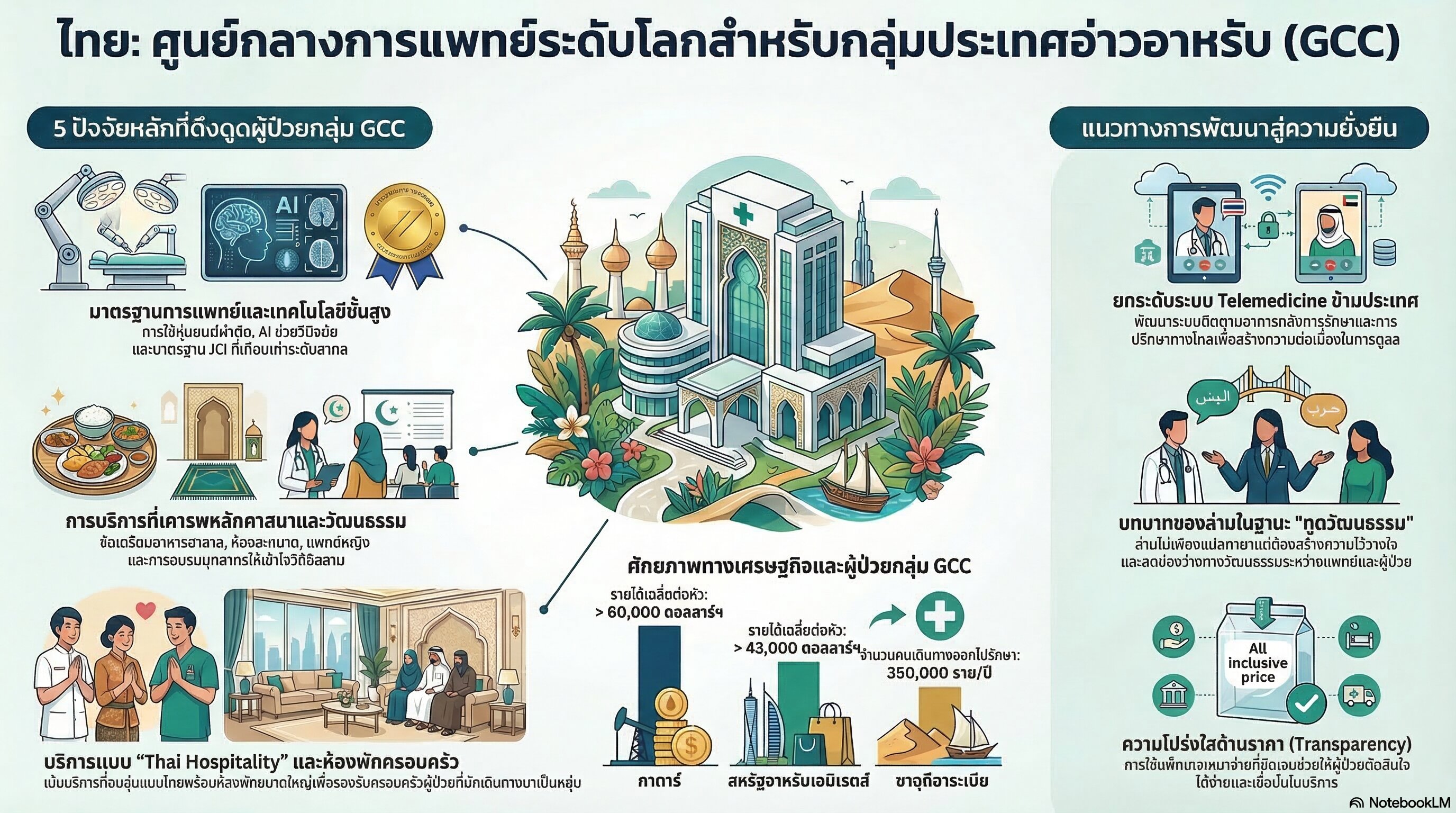
การวิจัยครั้งนี้มีวัตถุประสงค์เพื่อศึกษาสถานการณ์การขับเคลื่อนนโยบายศูนย์กลางทางการแพทย์ ของประเทศไทยที่มุ่งดึงดูดนักท่องเที่ยวเชิงการแพทย์จากกลุ่มประเทศความร่วมมืออ่าวอาหรับ และเพื่อวิเคราะห์ปัจจัยสำคัญที่มีผลต่อการตัดสินใจเลือกใช้บริการทางการแพทย์ในประเทศไทย การวิจัยใช้ระเบียบวิธีเชิงคุณภาพ โดยการวิเคราะห์เอกสารและสัมภาษณ์เชิงลึกและกึ่งโครงสร้างกับผู้บริหารโรงพยาบาลเอกชนที่ได้รับมาตรฐาน JCI และล่ามทางการแพทย์ ผลการวิจัยพบว่า ประเทศไทยมีนโยบาย Medical Hub ที่ดำเนินการอย่างต่อเนื่องและสามารถถ่ายทอดสู่การปฏิบัติจริงในระดับโรงพยาบาล เช่น การพัฒนาบุคลากร การลงทุนเทคโนโลยีทางการแพทย์ และการจัดบริการที่ตอบสนองต่อความต้องการเฉพาะของผู้ป่วยจาก GCC ทั้งในด้านศาสนา วัฒนธรรม ความเป็นส่วนตัว และบริการครอบครัว ปัจจัยสำคัญที่ดึงดูดนักท่องเที่ยวเชิงสุขภาพ ได้แก่ คุณภาพและเทคโนโลยีการรักษาที่ทันสมัย การให้บริการแบบองค์รวมและอบอุ่นแบบไทย การจัดบริการที่เคารพหลักศาสนาอิสลาม ความโปร่งใสด้านค่าใช้จ่าย สภาพแวดล้อมการท่องเที่ยวที่เอื้อต่อการพักฟื้น และความสะดวกด้านโครงสร้างพื้นฐาน ผลการศึกษาชี้ว่า ปัจจัยเหล่านี้ช่วยสร้างความเชื่อมั่นและทำให้ประเทศไทยเป็นจุดหมายปลายทางสำคัญสำหรับนักท่องเที่ยวจาก GCC ข้อเสนอแนะเชิงปฏิบัติ คือ ควรพัฒนาบริการเฉพาะกลุ่ม เช่น ห้องพักที่เหมาะสมกับครอบครัวและบริการแพทย์หญิง เสริมระบบ Telemedicine และสร้างฐานข้อมูลกลางเพื่อเพิ่มความน่าเชื่อถือ ข้อเสนอแนะเชิงวิชาการ คือ ควรศึกษาเชิงลึกประสบการณ์ผู้ป่วย GCC และเปรียบเทียบกับประเทศคู่แข่งในภูมิภาคเพื่อยกระดับขีดความสามารถของไทยในฐานะ Medical Hub ระดับนานาชาติ
เอกสารอ้างอิง
กริช อึ้งวิฑูรสถิตย์, จรินทร์ เจริญศรีวัฒนกุล, และพิชา คนกาญจน์. (2567). รูปแบบการให้บริการด้านการท่องเที่ยวเชิงสุขภาพสำหรับชาวตะวันออกกลางในประเทศไทย: บุคลากรทางสุขภาพควรตระหนัก. วารสารสหศาสตร์ศรีปทุม ชลบุรี (ออนไลน์), 10(1), 1–15. https://so04.tci-thaijo.org/index.php/ISCJ/article/view/268587
จิตรลดา ปิ่นทอง, และกมลวรรณ รอดห์ริง. (2568). ปัจจัยขับเคลื่อนที่มีอิทธิพลต่อการตัดสินใจของนักท่องเที่ยวชาวต่างชาติที่มีฐานะดีในการท่องเที่ยวเชิงสุขภาพในเขตพื้นที่ระเบียงเศรษฐกิจภาคตะวันออก: กรณีศึกษาจังหวัดชลบุรี. วารสารเศรษฐศาสตร์ประยุกต์และกลยุทธ์การจัดการ, 12(1), 190–204. https://kuojs.lib.ku.ac.th/index.php/jems/article/view/6210
ชมพูขนิษฐ์ สูตะบุตร, และทักษิณา แสนเย็น. (2564). พฤติกรรมนักท่องเที่ยวมุสลิมและปัจจัยส่วนประสมทางการตลาดบริการการท่องเที่ยวฮาลาลในประเทศไทย. วารสารวิชาการสถาบันวิทยาการจัดการแห่งแปซิฟิค, 7(1), 307–314.
ณัฏฐพัชร มณีโรจน์. (2558). ความสามารถในการแข่งขันของการท่องเที่ยวเชิงการแพทย์ของประเทศไทย. วารสารปาริชาต, 29(1), 196–215.
บุศรินทร์ เขียวไพรี. (2565). โอกาสและข้อจำกัดของการพัฒนาศูนย์การแพทย์ครบวงจร (Medical hub) [วิทยานิพนธ์มหาบัณฑิต, จุฬาลงกรณ์มหาวิทยาลัย].
พรมิตร กุลกาลยืนยง. (2560). การท่องเที่ยวเชิงการแพทย์ในประเทศไทย: ความท้าทายและการพัฒนา. วารสารนวัตกรรมสื่อสารสังคม, 5(1), 125–132.
สาริกา ค้าสุวรรณ. (2560). พฤติกรรมการใช้บริการทางการแพทย์ในประเทศไทยของนักท่องเที่ยวเชิงสุขภาพจากตะวันออกกลาง: มุมมองจากผู้ให้บริการทางการแพทย์. วารสารเกษตรศาสตร์ธุรกิจประยุกต์, 11(1), 53–76.
อริสรา อัครพิสิฐ. (2564). อุตสาหกรรมการแพทย์ครบวงจรของประเทศไทย: ศักยภาพและโอกาส. สยามวิชาการ, 22(2), 18–36.
Campinha-Bacote, J. (2002). The process of cultural competence in the delivery of healthcare services: A model of care. Journal of Transcultural Nursing, 13(3), 181–184. https://doi.org/10.1177/10459602013003003
International Monetary Fund. (2023). World economic outlook database. https://www.imf.org/en/Publications/WEO/weo-database/2023
Kaplan, R. S., & Norton, D. P. (2004). Strategy maps: Converting intangible assets into tangible outcomes. Harvard Business School Press.
Lertputtarak, S., Thongra-ar, J., & Samokhin, D. (2022). Factors attracting Arab patients to travel for medical services in Thailand. Journal of Liberal Arts and Service Industry, 5(1), 283–303.
Pine, B. J., & Gilmore, J. H. (1999). The experience economy: Work is theatre & every business a stage. Harvard Business School Press.
World Bank. (2020). Thailand’s healthcare infrastructure development report. World Bank Group.
World Bank. (2023). GDP per capita (current international $): Saudi Arabia, Qatar, United Arab Emirates, Kuwait, Bahrain, Oman. https://data.worldbank.org
World Health Organization. (2018). Healthcare systems in the Gulf Cooperation Council countries. Eastern Mediterranean Health Journal, 24(5), 437–446.
ดาวน์โหลด
เผยแพร่แล้ว
รูปแบบการอ้างอิง
ฉบับ
ประเภทบทความ
หมวดหมู่
สัญญาอนุญาต
ลิขสิทธิ์ (c) 2026 Journal of Buddhist Education and Research (JBER)

อนุญาตภายใต้เงื่อนไข Creative Commons Attribution-NonCommercial-NoDerivatives 4.0 International License.