Development of Learning Community Based on Sangahavatthu 4 Principles
Keywords:
Learning Community, Saṅgahavatthu 4, Dāna, Piyavācā, Atthacariyā, Samānattatā, Educational Administration.Abstract
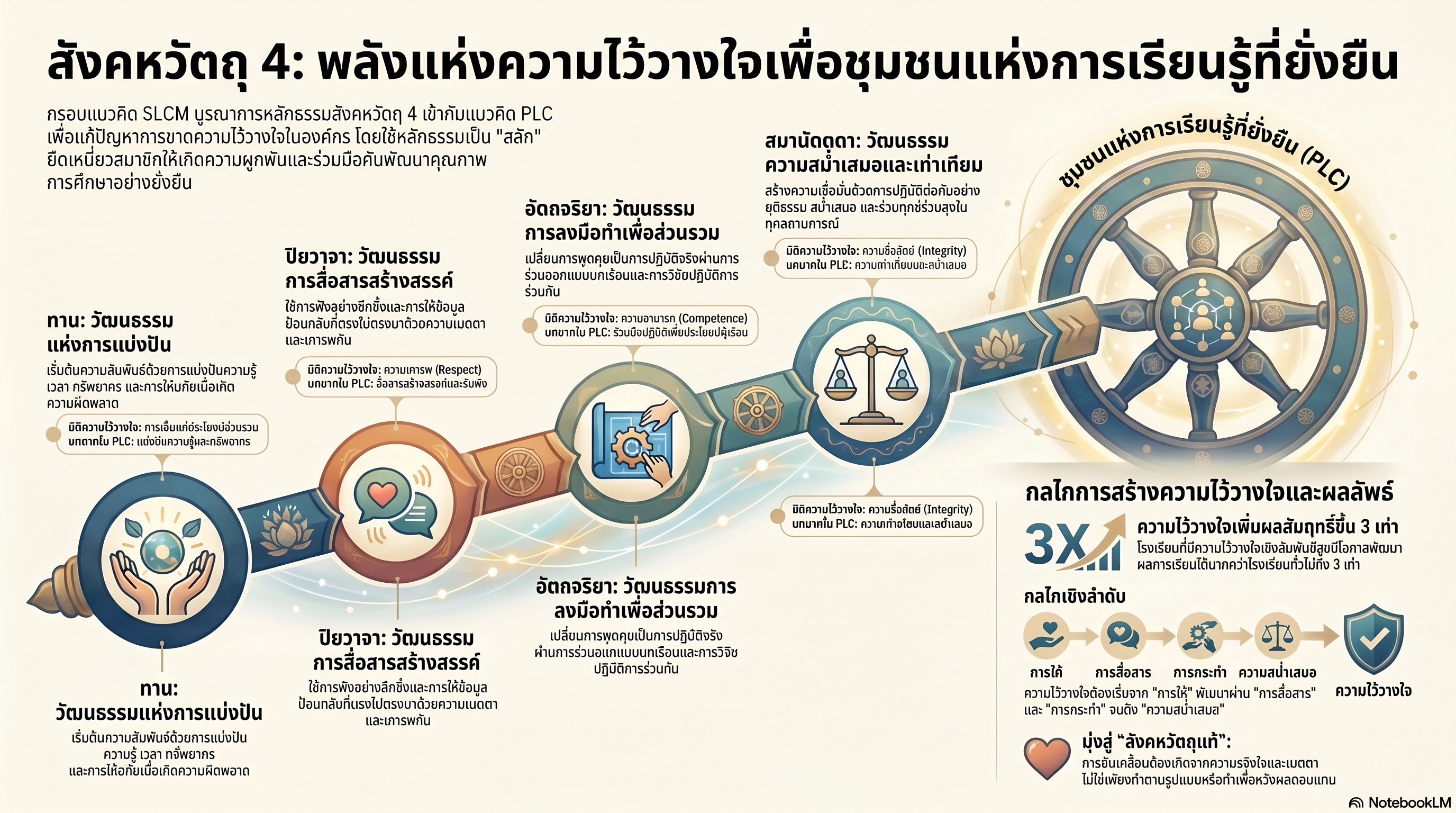
This academic article aims to present a conceptual framework for developing learning communities based on the Four Saṅgahavatthu principles—the Buddhist foundations of social solidarity. The study integrates the Saṅgahavatthu 4, namely Dāna (generosity), Piyavācā (kindly speech), Atthacariyā (beneficial conduct), and Samānattatā (impartiality and consistency), with the concept of the Professional Learning Community (PLC). The findings reveal that the Saṅgahavatthu 4 can effectively drive the development of learning communities: Dāna promotes the sharing of knowledge and resources; Piyavācā fosters constructive communication; Atthacariyā encourages collaborative actions for the common good; and Samānattatā builds trust through fairness, consistency, and equity. Together, these principles contribute to learning communities characterized by cohesion, mutual support, and sustainability.
References
มหาจุฬาลงกรณราชวิทยาลัย. (2539). พระไตรปิฎกภาษาไทย ฉบับมหาจุฬาลงกรณราชวิทยาลัย. โรงพิมพ์มหาจุฬาลงกรณราชวิทยาลัย.
พระพรหมคุณาภรณ์ (ป. อ. ปยุตฺโต). (2553). พจนานุกรมพุทธศาสตร์ ฉบับประมวลธรรม. สำนักพิมพ์ผลิธัมม์.
พระพรหมคุณาภรณ์ (ป. อ. ปยุตฺโต). (2559). พุทธธรรม ฉบับปรับขยาย. สำนักพิมพ์ผลิธัมม์.
สำนักงานคณะกรรมการการศึกษาขั้นพื้นฐาน. (2564). แนวทางการขับเคลื่อนชุมชนแห่งการเรียนรู้ทางวิชาชีพ (PLC). กระทรวงศึกษาธิการ.
Blau, P. M. (1964). Exchange and power in social life. Wiley.
Bohm, D. (1996). On dialogue. Routledge.
Bryk, A. S., & Schneider, B. (2002). Trust in schools: A core resource for improvement. Russell Sage Foundation.
Cooperrider, D. L., & Srivastva, S. (1987). Appreciative inquiry in organizational life. Research in Organizational Change and Development, 1, 129–169.
Covey, S. M. R. (2006). The speed of trust: The one thing that changes everything. Free Press.
DuFour, R., & Eaker, R. (1998). Professional learning communities at work: Best practices for enhancing student achievement. Solution Tree.
DuFour, R., DuFour, R., & Eaker, R. (2008). Revisiting professional learning communities at work: New insights for improving schools. Solution Tree.
Grant, A. (2013). Give and take: A revolutionary approach to success. Viking.
Hord, S. M. (1997). Professional learning communities: Communities of continuous inquiry and improvement. Southwest Educational Development Laboratory.
Lewicki, R. J., & Bunker, B. B. (1996). Developing and maintaining trust in work relationships. In R. M. Kramer & T. R. Tyler (Eds.), Trust in organizations: Frontiers of theory and research (pp. 114–139). Sage.
Putnam, R. D. (2000). Bowling alone: The collapse and revival of American community. Simon & Schuster.
Scott, K. (2017). Radical candor: Be a kick-ass boss without losing your humanity. St. Martin's Press.
Senge, P. M. (1990). The fifth discipline: The art and practice of the learning organization. Doubleday.
Tschannen-Moran, M. (2014). Trust matters: Leadership for successful schools (2nd ed.). Jossey-Bass.
Wenger, E. (1998). Communities of practice: Learning, meaning, and identity. Cambridge University Press.
Downloads
Published
How to Cite
Issue
Section
License
Copyright (c) 2026 Authors

This work is licensed under a Creative Commons Attribution-NonCommercial-NoDerivatives 4.0 International License.