The Role of Monks in Ecological Management
Abstract
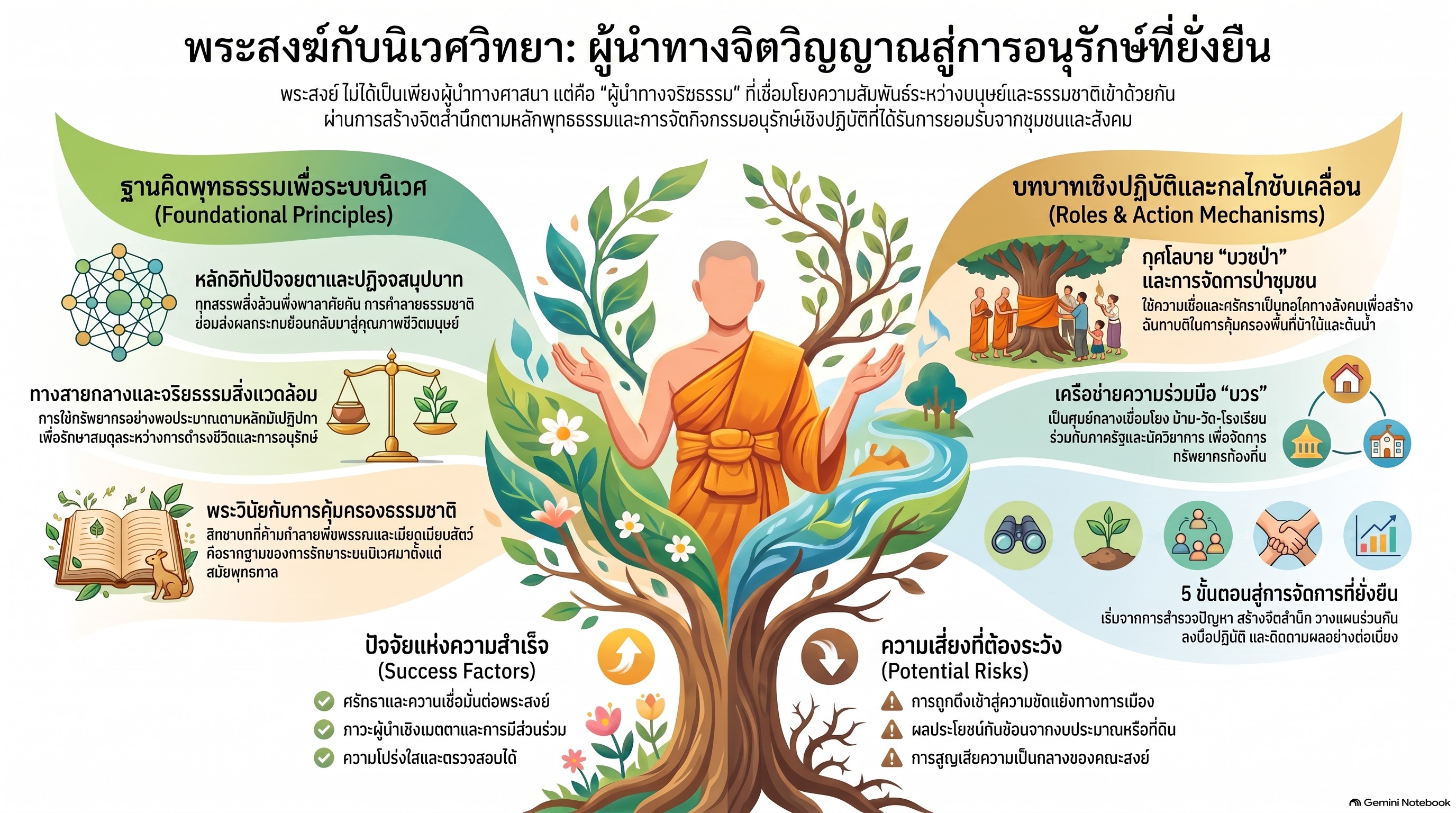
This academic article aims to 1) study the relationship between the role of Buddhist monks and ecosystem management, 2) analyze Buddhist concepts regarding the relationship between humans and nature and the philosophy that connects all life, and 3) examine the practical role of Buddhist monks in the conservation and management of natural resources. The study found that Buddhist monks play a significant role in ecosystem management, not only as religious leaders but also as ethical and social leaders who help create awareness of natural resource and environmental conservation among the public. This is achieved through the dissemination of Buddhist teachings, moral training, and setting an example in living according to the principles of sufficiency economy. Buddhist concepts reflect the relationship between humans and nature based on the principles of compassion and non-violence, highlighting that all living things depend on each other. The destruction of nature affects the quality of human life. Therefore, the conservation of natural resources is both a social duty and a practice based on Buddhist principles. Furthermore, Buddhist monks play a practical role in environmental conservation through various activities such as forest ordination, community forest conservation, water source restoration, reforestation, campaigns to reduce wasteful resource consumption, and building collaborative networks between temples, communities, the government, and civil society. These activities promote public participation in the care and maintenance of natural resources and strengthen communities in ecosystem management.
References
ธนู แก้วโอภาส. (2549). ศาสนาโลก (พิมพ์ครั้งที่ 3). สำนักพิมพ์สุขภาพใจ.
พระชลญาณมุนี (สมโภช ธมฺมโภโช). (2558). พระพุทธศาสนากับการอนุรักษ์สิ่งแวดล้อมตามพระธรรมวินัย. วารสาร มจร สังคมศาสตร์ปริทรรศน์, 4(2), 123–138.
พระพรหมคุณาภรณ์ (ป. อ. ปยุตฺโต). (2551). พจนานุกรมพุทธศาสน์ ฉบับประมวลศัพท์ (พิมพ์ครั้งที่ 11). เอส. อาร์. พริ้นติ้ง แมส โปรดักส์.
พระพรหมคุณาภรณ์ (ป. อ. ปยุตฺโต). (2560). พุทธธรรมกับสิ่งแวดล้อม. มูลนิธิพุทธธรรม.
มหาวิทยาลัยสุโขทัยธรรมาธิราช. (2540). การบวชป่าชุมชน [รายการโทรทัศน์]. สถานีโทรทัศน์ อสมท ช่อง 9.
มูลนิธิคุ้มครองสัตว์ป่าและพืชพันธุ์แห่งประเทศไทย. (2536). พระสงฆ์กับการอนุรักษ์ธรรมชาติ. อมรินทร์.
ยุกติ สาริกภูติ. (2540, 24 เมษายน). สัมภาษณ์พิเศษ. ไทยรัฐ.
วิฑูรย์ เลี่ยนจำรูญ. (2560). สิทธิชุมชนกับทรัพยากรธรรมชาติ. สถาบันชุมชนท้องถิ่น.
วิยุทธ์ จำรัสพันธ์ และคณะ. (ม.ป.ป.). โครงการวิจัยเรื่องการอนุรักษ์และการจัดการทรัพยากรป่าไม้โดยองค์กรชุมชน: กรณีศึกษา ศาลปู่ตาของบ้านหว่าน ตำบลหว่านคำ อำเภอราศีไศล จังหวัดศรีสะเกษ. โครงการวิจัยวนศาสตร์ชุมชน คณะมนุษยศาสตร์และสังคมศาสตร์ มหาวิทยาลัยขอนแก่น.
สมบูรณ์ สุขสำราญ. (2558). ศาสนากับการพัฒนาอย่างยั่งยืน. สำนักพิมพ์จุฬาลงกรณ์มหาวิทยาลัย.
สำนักงานคณะกรรมการสิ่งแวดล้อม. (2530). ความรู้เรื่องสิ่งแวดล้อม (พิมพ์ครั้งที่ 1). บริษัท เอสโซ่สแตนดาร์ด ประเทศไทย จำกัด.
สุรพงษ์ ชัยนาม. (2561). พระสงฆ์กับการจัดการป่าชุมชน. วารสารสังคมศาสตร์.
สุวิทย์ ธีรศาศวัต และคณะ. (2535). รายงานการวิจัยป่าชุมชนอีสาน.
เสรีวัฒน์ สมินทร์ปัญญา. (2539). นิเวศวิทยาสิ่งแวดล้อมกับการปรับปรุงความเป็นอยู่ของมนุษย์. สำนักพิมพ์โอเดียนสโตร์.
Macy, J. (2007). World as lover, world as self. Parallax Press.
Payutto, P. A. (1994). Buddhist economics: A middle way for the marketplace. Buddhadhamma Foundation.
Schumacher, E. F. (1973). Small is beautiful: Economics as if people mattered. Harper & Row.
Downloads
Published
How to Cite
Issue
Section
Categories
License
Copyright (c) 2026 Journal of Buddhist Education and Research (JBER)

This work is licensed under a Creative Commons Attribution-NonCommercial-NoDerivatives 4.0 International License.