เหตุผลและปัจจัยที่มีอิทธิพลต่อการเข้าชมภาพยนตร์ในโรงภาพยนตร์: การศึกษาเปรียบเทียบผู้ชมภาพยนตร์ชาวจีนและชาวไทย
คำสำคัญ:
Cinema Going Behavior, 4P Marketing, Audience Preferenceบทคัดย่อ
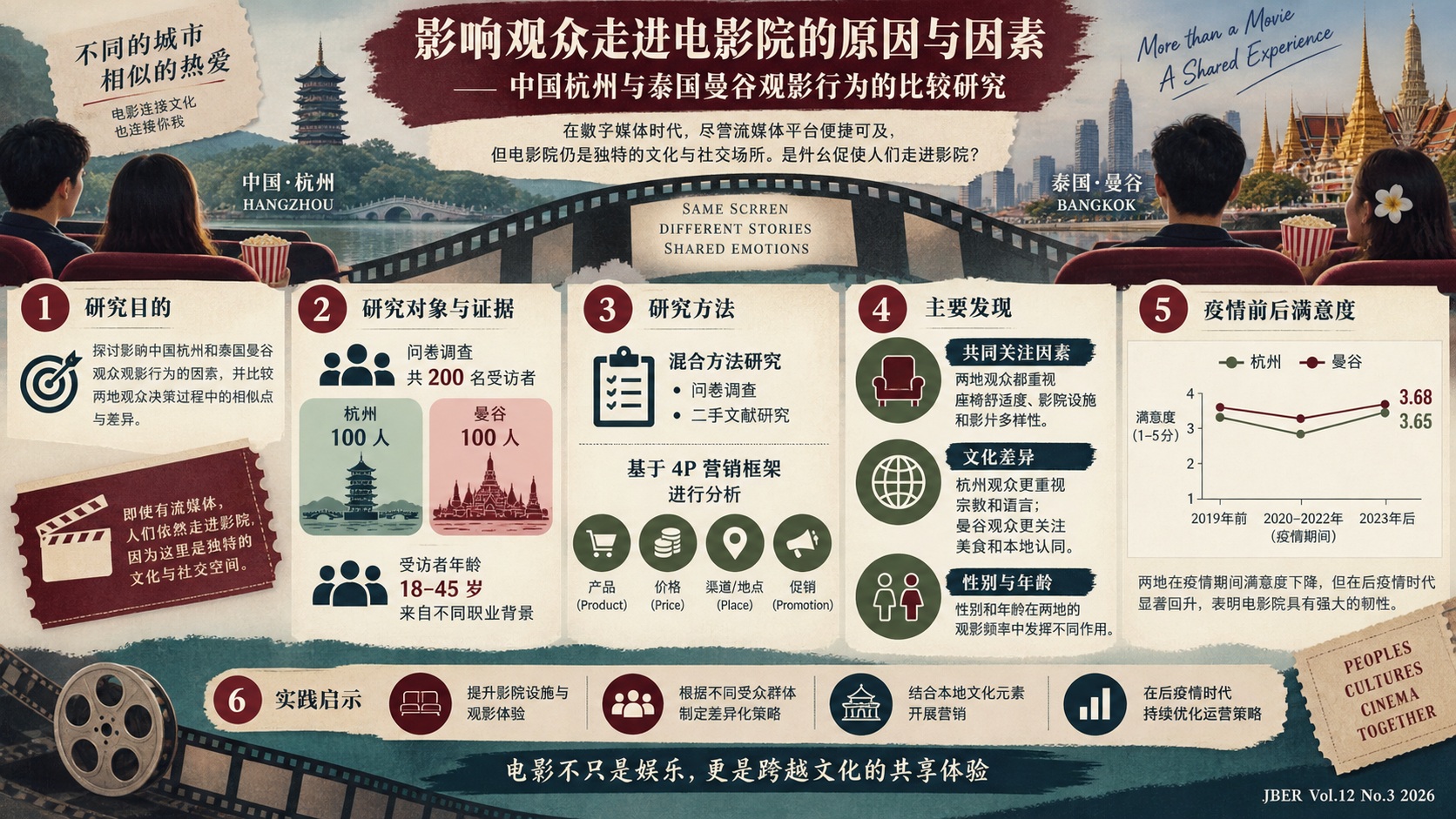
ในยุคของสื่อดิจิทัล โรงภาพยนตร์ยังคงเป็นพื้นที่ทางวัฒนธรรมและสังคมที่มีเอกลักษณ์เฉพาะตัว แม้จะมีความสะดวกสบายจากแพลตฟอร์มสตรีมมิง การศึกษานี้มุ่งสำรวจปัจจัยที่มีอิทธิพลต่อพฤติกรรมการเข้าชมภาพยนตร์ในเมืองหางโจว ประเทศจีน และกรุงเทพมหานคร ประเทศไทย โดยเน้นที่ราคา ทำเล สิ่งอำนวยความสะดวก คุณภาพการบริการ ประเภทภาพยนตร์ และตารางการฉาย โดยใช้กรอบแนวคิดการตลาด 4P เป็นฐาน การวิจัยนี้ใช้วิธีการแบบผสมผสาน มีการแจกแบบสอบถามให้แก่ผู้ตอบแบบสอบถามจำนวน 200 คน แบ่งเท่า ๆ กันระหว่างสองเมือง และสนับสนุนด้วยการทบทวนวรรณกรรมรอง ผลการศึกษาพบทั้งรูปแบบร่วมกันและความแตกต่างเฉพาะทางวัฒนธรรมในพฤติกรรมการเข้าชมภาพยนตร์ ผู้ชมในทั้งสองเมืองให้ความสำคัญกับความสะดวกสบายของที่นั่ง สิ่งอำนวยความสะดวกของโรงภาพยนตร์ และความหลากหลายของภาพยนตร์ แต่มิติทางวัฒนธรรมส่งผลต่อความชอบที่แตกต่างกัน กล่าวคือ ผู้ชมในหางโจวให้ความสำคัญกับศาสนาและภาษา ขณะที่ผู้ชมในกรุงเทพฯ ให้ความสำคัญกับอาหารและอัตลักษณ์ท้องถิ่น เพศและอายุยังมีบทบาทที่แตกต่างกันต่อความถี่ในการเข้าชมภาพยนตร์ หลักฐานหลังการระบาดใหญ่บ่งชี้ถึงการฟื้นตัวที่ชัดเจนของความพึงพอใจของผู้ชม ซึ่งตอกย้ำถึงความยืดหยุ่นของโรงภาพยนตร์ในฐานะพื้นที่ทางสังคมและวัฒนธรรมร่วมกัน งานวิจัยนี้มีส่วนช่วยต่อการศึกษาเปรียบเทียบการบริโภคสื่อโดยเน้นความแตกต่างข้ามวัฒนธรรม และให้ข้อเสนอแนะเชิงปฏิบัติสำหรับผู้ประกอบการโรงภาพยนตร์
คำสำคัญ: พฤติกรรมการเข้าชมภาพยนตร์; การตลาด 4P; ความชอบของผู้ชม
เอกสารอ้างอิง
Alamdari, F. (2000). Evaluation of the causes and factors of attracting audiences in performing arts (Unpublished master’s thesis). Tarbiat Modarres University, Tehran.
Armstrong, G., & Kotler, P. (2000). Marketing: An introduction (5th ed.). Prentice-Hall.
Buccheri, A. (2022). The impact of the shortening and the non-exclusivity of the theatrical window on moviegoing behaviour: A comparison between Italy and Denmark (Master’s thesis).
Chaney, D., Lunardo, R., & Mencarelli, R. (2018). Consumption experience: Past, present and future. Qualitative Market Research, 21(4), 402–420. https://doi.org/10.1108/QMR-04-2018-0042
De Mooij, M., & Hofstede, G. (2011). Cross-cultural consumer behavior: A review of research findings. Journal of International Consumer Marketing, 23(3), 181–192.
Eliashberg, J., & Shugan, S. M. (1997). Film patronage: Choices and consequences. Marketing Science, 16(2), 119–139.
Engel, J. F., Kollat, D. T., & Blackwell, R. D. (1978). Consumer behavior. Holt, Rinehart & Winston.
Finney, J. (2010). The impact of geographic location on cinema attendance. Journal of Urban Culture Studies, 5(2), 98–112.
Hennig-Thurau, T., Houston, M. B., & Walsh, G. (2007). Electronic word-of-mouth via consumer-opinion platforms: What motivates consumers to articulate themselves on the internet? Journal of Interactive Marketing, 21(1), 38–52.
Holbrook, M. B., & Hirschman, E. C. (1982). The experiential aspects of consumption: Consumer fantasies, feelings, and fun. Journal of Consumer Research, 9(2), 132–140.
Howard, J. A., & Sheth, J. N. (1969). The theory of buyer behavior. Wiley.
Karimzadeh, M. (2006). Cinema technology innovation and audience preferences. Iranian Journal of Culture and Cinema, 12(3), 145–161.
Kotler, P., & Armstrong, G. (2008). Principles of marketing (12th ed.). Pearson Prentice Hall.
Lamb, C. W., Hair, J. F., & McDaniel, C. (1998). Marketing. South-Western College Publishing.
Leon-Castro, E., et al. (2015). Empirical evidence on the determination of the level of education and income of consumers in the preferential purchase criterion based on product differentiation. International Journal of Business and Social Science, 6(7), 59–65.
Lilien, G. L., Kotler, P., & Sridhar, M. (1992). Marketing models. Prentice-Hall.
Lovell, G., & Gianluca, P. (2009). Urban cinemas: Location as a competitive advantage. Cinema Economics Review, 14(1), 45–59.
Palmer, A. (2005). Principles of service marketing (4th ed.). McGraw-Hill Education.
Pauli, J. (2002). Film marketing and the importance of screening times. In Marketing and Broadcasting Film (pp. 89–99). Farabi Cinema Foundation.
Shoja’Nouri, R. (2011). Physical aspects of film screening and audience satisfaction. Management Science Letters, 2(4), 1349–1358.
ดาวน์โหลด
เผยแพร่แล้ว
รูปแบบการอ้างอิง
ฉบับ
ประเภทบทความ
หมวดหมู่
สัญญาอนุญาต
ลิขสิทธิ์ (c) 2026 Journal of Buddhist Education and Research (JBER)

อนุญาตภายใต้เงื่อนไข Creative Commons Attribution-NonCommercial-NoDerivatives 4.0 International License.