The Effects of Aerobic Dance–Based Physical Education Activities on Health-Related Physical Fitness Among Overweight Adolescents
Abstract
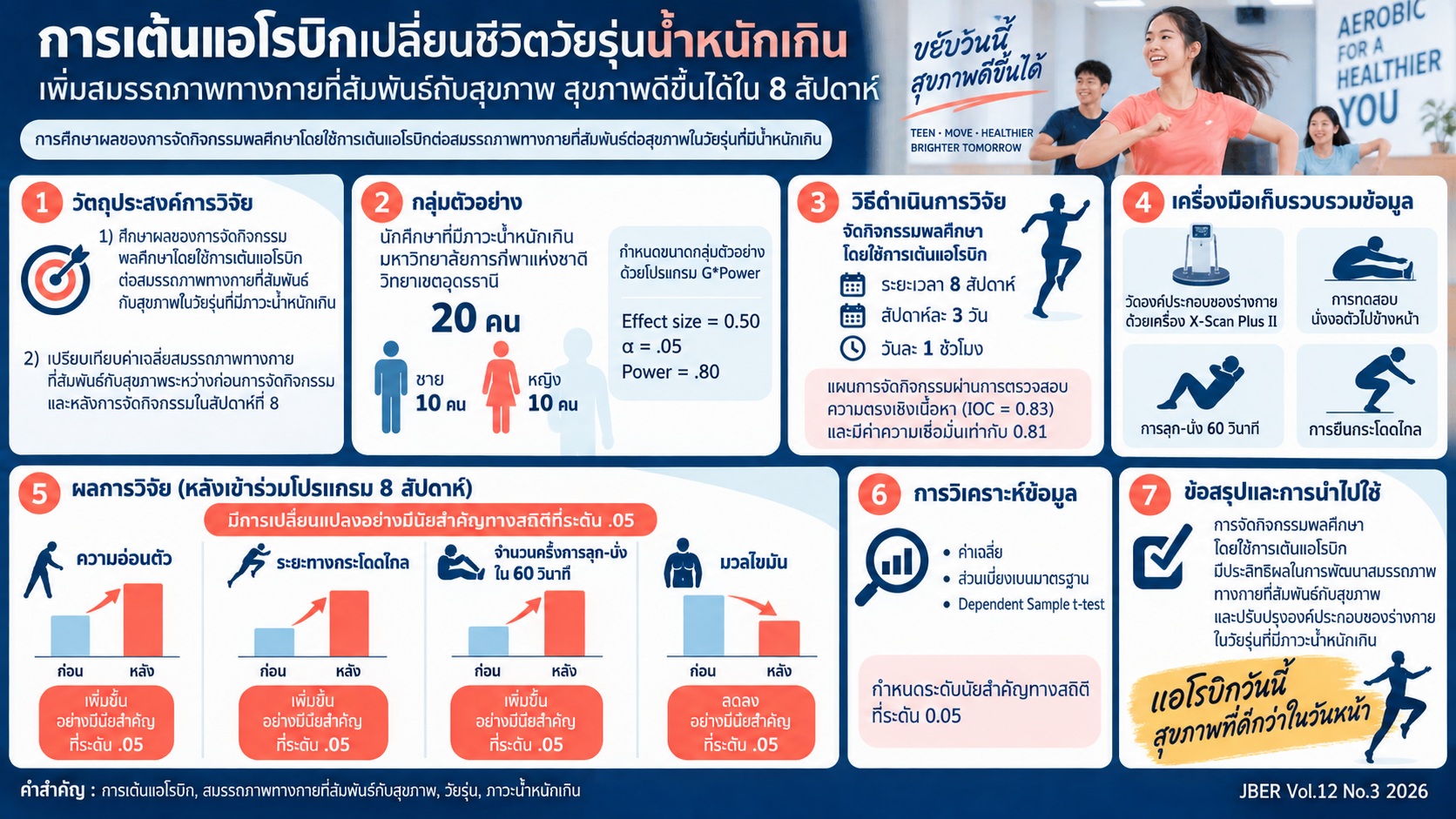
This study aimed to (1) examine the effects of an aerobic dance–based physical education program on health-related physical fitness among overweight adolescents, and (2) compare mean scores of health-related physical fitness before the intervention and after the 8th week of participation. The research employed a pre-experimental design. The sample consisted of 20 overweight students (10 males and 10 females) from the Thailand National Sports University, Udon Thani Campus. The sample size was determined using G*Power software, with an effect size of 0.50, a significance level of .05, and a statistical power of .80. The intervention instrument was an aerobic dance–based physical education program implemented over 8 weeks, three sessions per week, with each session lasting 60 minutes. The program demonstrated acceptable content validity (IOC = 0.83) and reliability (α = 0.81). Data collection instruments included body composition assessment using the X-Scan Plus II analyzer, the sit-and-reach test, the 60-second sit-up test, and the standing long jump test. Data were analyzed using mean, standard deviation, and dependent samples t-test.
The findings revealed that after completing the 8-week program, participants showed statistically significant improvements at the .05 level in flexibility, standing long jump distance, number of sit-ups completed in 60 seconds, and body fat mass. In conclusion, the aerobic dance–based physical education program was effective in enhancing health-related physical fitness and improving body composition among overweight adolescents.
Downloads
Published
How to Cite
Issue
Section
Categories
License
Copyright (c) 2026 Journal of Buddhist Education and Research (JBER)

This work is licensed under a Creative Commons Attribution-NonCommercial-NoDerivatives 4.0 International License.