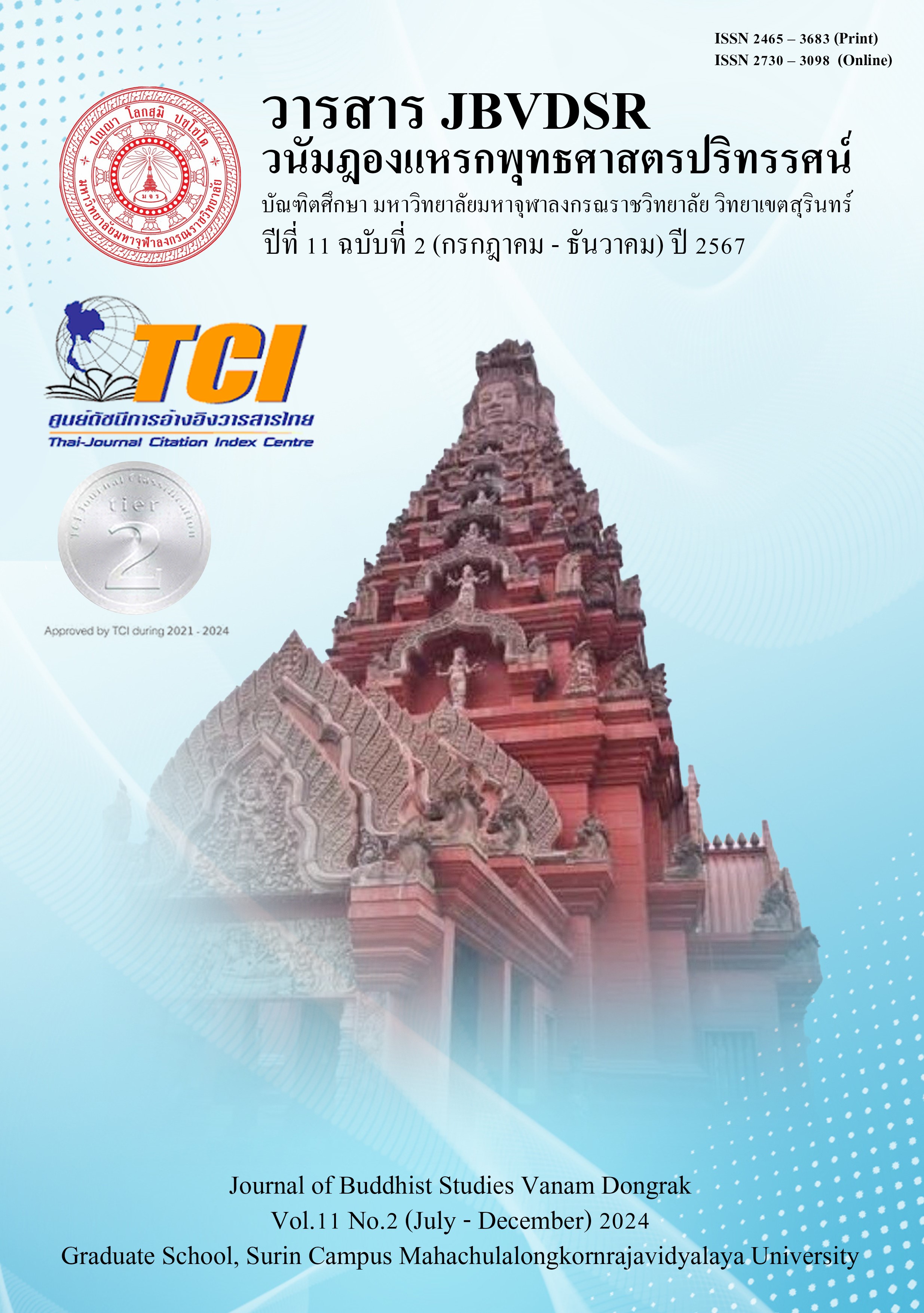
THE MODEL OF SUSTAINABLE TEMPLE DEVELOPMENT FOR PROMOTING CULTURAL TOURISM OF PRASAT THAMCHAN TEMPLE, PRANG KU DISTRICT, SISAKET PROVINCE
Keywords:
Promotion, Cultural Tourism, Development Model, SisaketAbstract
The purposes of this study were: 1) to study the concept of cultural tourism in sustainable Prasat Thamchan Temple Community, 2) to study the concept of community development to be strengthened and build cultural immunity for sustainable development, and 3) to analyze the sustainable temple development model for promoting the cultural tourism of Prasat Thamchan Temple, Prang Ku District, Sisaket Province. The study was qualitative research, collected the in-depth interview data and the focus group discussion data. And it was analyzed data with content of the context.
The results of the study were as follows:
- Sustainable temple development model for promoting the cultural tourism was found that the Prasat Thamchan Temple development model in Prang Ku District, Sisaket Province was in a very good level because there was the Khom ancient site, aged not less than 800. For the ancient site veneration has carried on since 18th Buddhist Century, it was the suitability for the aspects of sculpture, architecture, and life styles of the people and it was the temple development model for learning
- The concept of strengthening a community development and building the sustainably cultural immunity, arts and culture revival and oneself local uniqueness to learning for visitors: 1) planning 2) organization management 3) personnel management 4) administration 5) supervision, for becoming the effective tourist attractions in the growth based on local wisdom
- The analysis of sustainable development model for promoting the cultural tourism of Prasat Thamchan Temple in Prang Ku District, Sisaket province was a significant history with its valuable arts construction or artifacts and an ancient site including administration, for facilitating the religious rite performance as personnel, education promoting, an orphanage, a lodge for travellers, a court of justice, a hospital, a center of arts and cultures.
Downloads
References
กรมการศาสนา. (2542). คู่มือการบริหารและการจัดการวัดฉบับย่อ. กรุงเทพมหานคร:
โรงพิมพ์การศาสนา.
วิวัฒน์ชัย บุญยภักดิ์. (2531). วัดเป็นอย่างไรจะต้องมีคู่มือพัฒนา. จุลสารการท่องเที่ยว. ปีที่ 7
ฉบับที่ 1 (มกราคม 2531): 74-76.
พระครูขันติวโรภาส (ขาว ขนฺติโก). (2559). รูปแบบการพัฒนาวัดในกรุงเทพมหานครให้เป็นแหล่ง
เรียนรู้ด้านศิลปวัฒนธรรม. วารสารสถาบันวิจัยญาณสังวร. 7(1): 119.
พระธรรมกิตติวงศ์. (ทองดี สุรเตโช), (2546). คำวัด. กรุงเทพมหานคร : เลี่ยงเซียง.
พระธรรมปิฎก (ป.อ.ปยุตฺโต). (2541). พจนานุกรมพุทธศาสตร์ ฉบับประมวลธรรม.
กรุงเทพมหานคร: สหธรรมิก.
เลิศพร ภาระกุล. (2551). การจัดการการท่องเที่ยวแบบยั่งยืน : เอกสารคำสอน ภาควิชาการ
ท่องเที่ยวและการโรงแรม คณะศิลปศาตร์และวิทยาศาสตรมหาวิทยาลัยธุรกิจบัณฑิตย์.
ลักษณา เกยุราพันธ์ และคณะ. (2559). การพัฒนารูปแบบการจัดกิจกรรมการท่องเที่ยวเชิง
วัฒนธรรมชุมชนไทยพวน เพื่อส่งเสริมการเรียนรู้เชิงสร้างสรรค์ จังหวัดนครนายก.
วารสารวิชาการ Veridian E-Jounal Silpakorn University. 9(2): 6
บุญเลิศ จิตตั้งวัฒนา. (2548). การพัฒนาการท่องเที่ยวแบบยั่งยืน. ศูนย์วิชาการท่องเที่ยวแห่ง
ประเทศไทย พิมพ์ครั้งที่ 1 บริษัท เพรส แอนด์ ดีไซน์ จำกัด..(2548). อุตสาหกรรม
การท่องเที่ยวธุรกิจที่ไม่มีวันตาย. กรุงเทพมหานคร : สำนักพิมพ์ ซี.พี.บุ๊คสแตนดาร์ด.
บุญเลิศ จิตตั้งวัฒนา. (2557). การพัฒนาการท่องเที่ยวแบบยั่งยืน : การวางแผนการท่องเที่ยว
อย่างยั่งยืน. พิมพ์ครั้งที่ 2. ฉบับปรับปรุง. กรุงเทพมหานคร: ธรรมสาร.
วรพล วัฒนเหลืองอรุณ และคณะ. (2562). การศึกษาเอกลักษณ์เพื่อการท่องเที่ยวบนพื้นฐานของ การจัดการท่องเที่ยวอย่างยั่งยืนพื้นที่อำเภอแม่ริม จังหวัดเชียงใหม่. วารสารวิจัยราชภัฏ เชียงใหม่. 10(2): 53-68.
สุชานาฏ สิตารักษ์ และคณะ. (2563). การพัฒนารูปแบบการบริหารจัดการวัดเพื่อเป็นแหล่ง
ท่องเที่ยวเชิงวัฒนธรรมอย่างยั่งยืนในเขตภาคเหนือตอนบน. วารสารราชภัฏเชียงใหม่. 21(1): 24.