Academic Administration according to the Four Iddhipāda Principles of Educational Institution Administrators under the Khon Kaen Primary Educational Service Area Office 1
Keywords:
Academic Administration according, the Four Iddhipāda Principles, Educational Institution AdministratorsAbstract
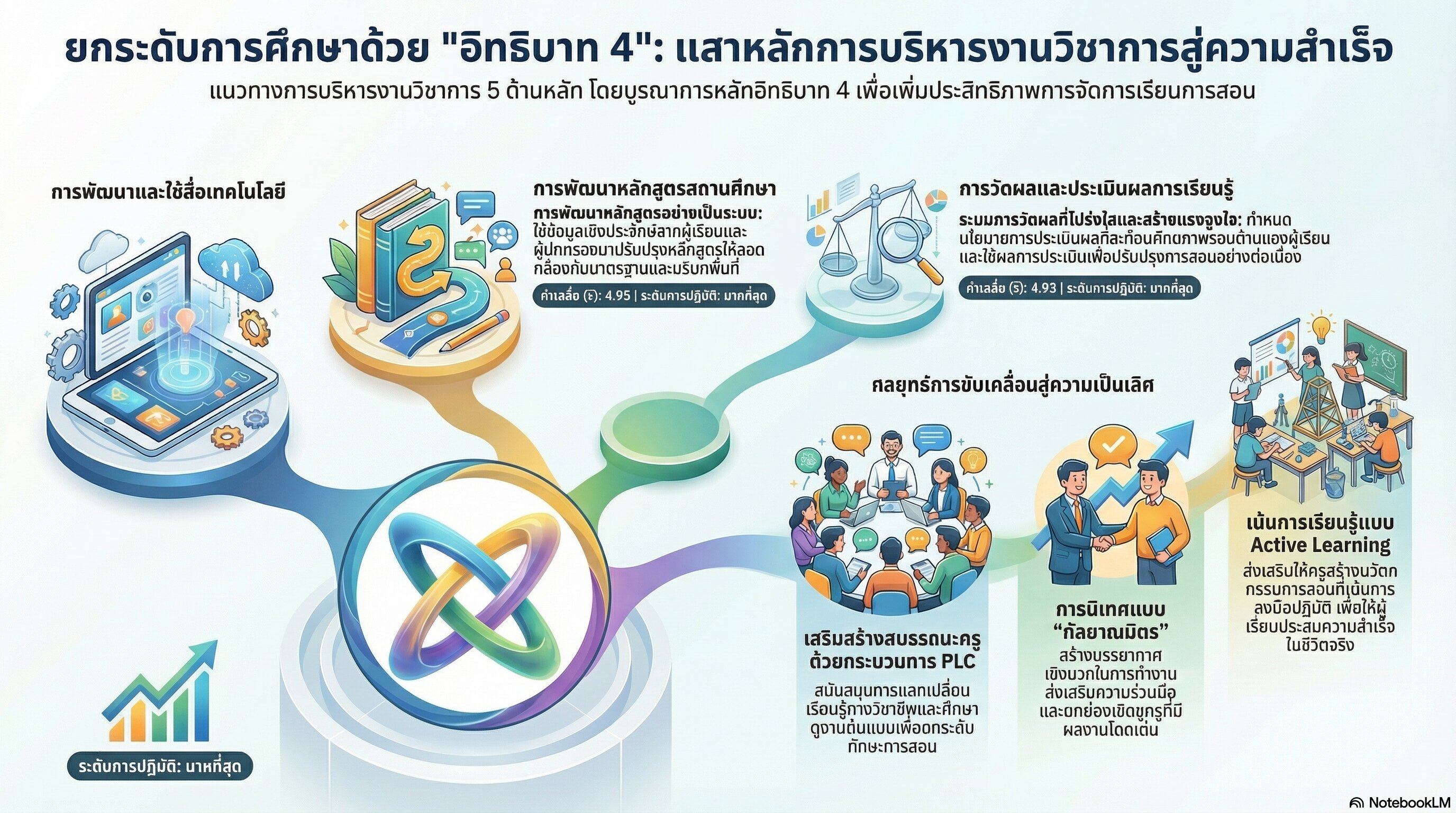
This research aimed to study the academic administration according to the Four Iddhipāda Principles of educational institution administrators under the Khon Kaen Primary Educational Service Area Office 1 and to propose guidelines for academic administration based on the same principles. A mixed-methods research design was employed, integrating both quantitative and qualitative approaches. The quantitative phase utilized a questionnaire administered to 305 respondents, while the qualitative phase involved interviews with nine key informants. Quantitative data were analyzed using basic statistical methods, and qualitative data were analyzed through content analysis. The findings of the research were as follows: 1. The overall level of academic administration according to the Four Iddhipāda Principles of educational institution administrators under the Khon Kaen Primary Educational Service Area Office 1 was found to be at the highest level. By aspect, from highest to lowest, they were as follows: development and use of educational media and technology, development of the school curriculum, measurement and evaluation of learning outcomes, educational supervision, and development of learning processes. 2. The guidelines for academic administration according to the Four Iddhipāda Principles of educational institution administrators under the Khon Kaen Primary Educational Service Area Office 1 are as follows: School administrators should systematically develop curricula using evidence-based data from students, teachers, parents, and internal supervision processes to ensure alignment with educational contexts and standards. They should support teacher professional development through training, professional learning communities (PLCs), and study visits. Administrators should also promote learning processes that incorporate digital media and technology, encourage Active Learning, and conduct close monitoring and evaluation. Furthermore, they should establish transparent and motivating assessment systems, continuously enhance educational media and technology, and implement clear supervision plans aimed at improving teacher competencies. Finally, administrators should foster a positive atmosphere that encourages collaboration and pride in continuous teaching and learning development.
References
กระทรวงศึกษาธิการ. (2542). พระราชบัญญัติการศึกษาแห่งชาติ พ.ศ. 2542. โรงพิมพ์คุรุสภา.
กระทรวงศึกษาธิการ. (2553). แนวทางการจัดการเรียนรู้ตามหลักสูตรแกนกลางการจัดการศึกษาขั้นพื้นฐาน พุทธศักราช 2551. โรงพิมพ์สหกรณ์การเกษตรแห่งประเทศไทย.
บุญชม ศรีสะอาด. (2554). การวิจัยเบื้องต้น (พิมพ์ครั้งที่ 6). สุวีริยาสาส์น.
สำนักงานเขตพื้นที่การศึกษาประถมศึกษาขอนแก่น เขต 1. (2565). รายงานผลการดำเนินงานตามแผนปฏิบัติการ ประจำปีงบประมาณ พ.ศ. 2565. สำนักงานเขตพื้นที่การศึกษาประถมศึกษาขอนแก่น เขต 1.
สำนักงานเขตพื้นที่การศึกษาประถมศึกษาขอนแก่น เขต 1. (2566). แผนปฏิบัติการ ประจำปีงบประมาณ 2566. สำนักงานเขตพื้นที่การศึกษาประถมศึกษาขอนแก่น เขต 1.
สำนักงานเขตพื้นที่การศึกษาประถมศึกษาขอนแก่น เขต 1 กลุ่มนโยบายและแผน. (2566). แผนพัฒนาคุณภาพการศึกษาขั้นพื้นฐาน พ.ศ. 2566–2570. สำนักงานเขตพื้นที่การศึกษาประถมศึกษาขอนแก่น เขต 1.
Gulick, L., & Urwick, J. (1973). Papers on the science of administration. Institute of Public Administration.
Downloads
Published
How to Cite
Issue
Section
License
Copyright (c) 2026 Authors

This work is licensed under a Creative Commons Attribution-NonCommercial-NoDerivatives 4.0 International License.