A Study of Linguistic Strategies and Social and Cultural Reflections in Tai Loei Molam Literature: The Maeng Tap Tao Melody of Loei Province
Keywords:
Linguistic Strategies, Social and Cultural Reflections, Tai Loei Molam Literature, Maeng Tap Tao Melody, Loei ProvinceAbstract
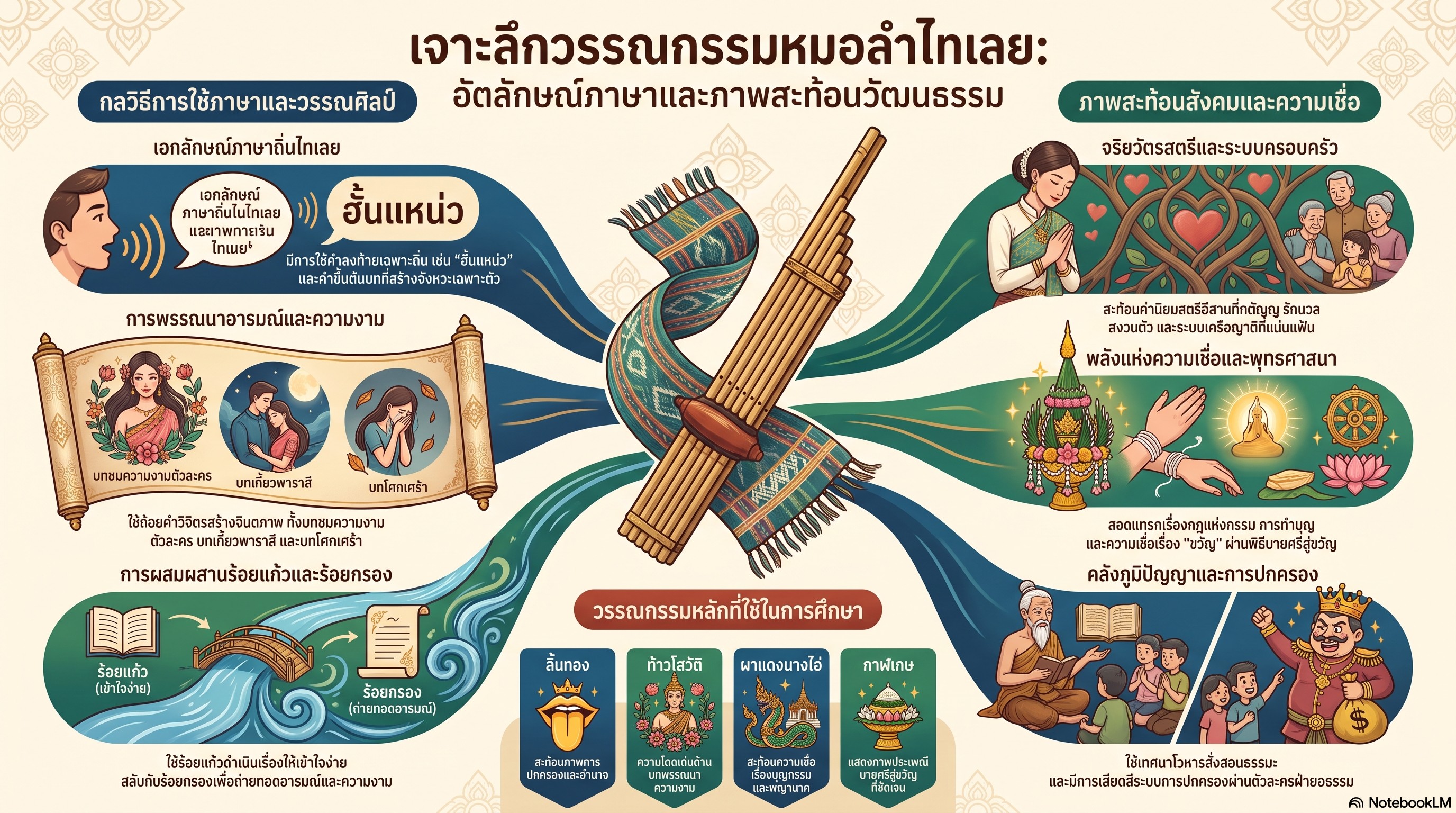
This research entitled “A Study of Linguistic Strategies and Social and Cultural Reflections in Tai Loei Molam Literature: The Maeng Tap Tao Melody of Loei Province” aimed to: investigate the linguistic strategies employed in Tai Loei Molam literature and examine the social and cultural reflections represented in the literature. The study employed a qualitative research approach. Data were collected from four Tai Loei Molam literary texts, namely Lin Thong, Thao Sowat, Pha Daeng Nang Ai, and Kanlaket, together with interviews with Molam artists, local scholars, and cultural experts. The data were analyzed descriptively. The findings revealed that the linguistic strategies of Tai Loei Molam literature are characterized by the use of the Tai Loei dialect, which reflects local identity and cultural uniqueness. Various literary techniques were found, including rhyme, alliteration, repetition, descriptive expressions, the integration of prose and verse, as well as the incorporation of local wisdom, proverbs, and traditional sayings. Furthermore, figurative language such as similes, metaphors, symbolism, hyperbole, and personification was employed to enhance literary aesthetics and create vivid imagery. The social and cultural reflections found in the literature portray the lifestyles of Tai Loei people, family relationships, kinship systems, social values, women’s roles, education, and local governance. The literature also reflects beliefs in Buddhism, sacred entities, supernatural powers, fortune-telling, magic, and traditional rituals that have been inherited through generations. The study highlights that Tai Loei Molam literature serves not only as entertainment but also as a valuable repository of linguistic, social, and cultural wisdom, representing the identity of the Tai Loei community and contributing significantly to the preservation of local cultural heritage.
References
กรมส่งเสริมวัฒนธรรม. (2562). มรดกภูมิปัญญาทางวัฒนธรรม ประจำปีพุทธศักราช 2562. กรมส่งเสริมวัฒนธรรม กระทรวงวัฒนธรรม.
กุหลาบ มัลลิกะมาส. (2542). วรรณคดีวิจารณ์. มหาวิทยาลัยรามคำแหง.
ดนุพล ไชยสินธุ์ และคณะ. (2547). สิทธิชุมชนท้องถิ่นภาคอีสาน. สำนักงานกองทุนสนับสนุนการวิจัย.
ตรีศิลป์ บุญขจร. (2523). นวนิยายกับสังคมไทย พ.ศ. 2475–2500. จุฬาลงกรณ์มหาวิทยาลัย.
เติม วิภาคย์พจนกิจ. (2542). ประวัติศาสตร์อีสาน. โรงพิมพ์มหาวิทยาลัยธรรมศาสตร์.
ทรงวิทย์ พิมพ์พะกรรณ์. (2553). หมอลำกับการดำรงอยู่ท่ามกลางความเปลี่ยนแปลงทางสังคมและวัฒนธรรม. วารสารศิลปกรรมศาสตร์ มหาวิทยาลัยขอนแก่น, 2(1), 66–88.
ไทยโรจน์ พวงมณี และคณะ. (2564). แนวทางการอนุรักษ์และพัฒนาต่อยอดศิลปวัฒนธรรมพื้นที่หมู่บ้านน้ำพร อำเภอเชียงคาน จังหวัดเลย. วารสารศิลปกรรมศาสตร์ มหาวิทยาลัยขอนแก่น, 13(2), 175–201.
ธนานันท์ ตรงดี. (2557). ไวยากรณ์ภาษาไทยถิ่นอีสาน. ภาควิชาภาษาไทยและภาษาตะวันออก คณะมนุษยศาสตร์ มหาวิทยาลัยมหาสารคาม.
ธิติกฤศ มาเพ็ชร. (2565). การพัฒนาหลักสูตรท้องถิ่นลำแมงตับเต่าไทเลย [วิทยานิพนธ์ปรัชญาดุษฎีบัณฑิต]. มหาวิทยาลัยมหาสารคาม.
ประคอง นิมมานเหมินท์. (2551). วรรณกรรมพื้นบ้านศึกษา. จุฬาลงกรณ์มหาวิทยาลัย.
ประพนธ์ เรืองณรงค์, & เสาวลักษณ์ อนันตศานต์. (2545). ภูมิปัญญาทางภาษา. ไทยวัฒนาพานิช.
ศิราพร ณ ถลาง. (2552). ทฤษฎีคติชนวิทยา: วิธีวิทยาในการวิเคราะห์ตำนาน-นิทานพื้นบ้าน (พิมพ์ครั้งที่ 2). สำนักพิมพ์แห่งจุฬาลงกรณ์มหาวิทยาลัย.
ศิริรัตน์ ศรีธรรมา. (2553). ลักษณะวรรณศิลป์ในเรื่องโสวัต [วิทยานิพนธ์ศิลปศาสตรมหาบัณฑิต สาขาวิชาภาษาไทย]. มหาวิทยาลัยราชภัฏมหาสารคาม.
สุจิตต์ วงษ์เทศ. (2548). วัฒนธรรมพื้นบ้านและภูมิปัญญาไทย. มติชน.
สุภาวดี พรหมสีทอง. (2559). วิถีชีวิตชาวอีสานจากบทร้องกลอนลำของหมอลำบุญช่วง เด่นดวง [วิทยานิพนธ์ศิลปศาสตรมหาบัณฑิต สาขาวิชาไทยศึกษา]. มหาวิทยาลัยรามคำแหง.
สุริยา บรรพลา. (2544). แมงตับเต่าไทเลย. สาขานาฏศิลป์ สถาบันราชภัฏเลย.
สุริยา บรรพลา. (2548). การวิจัยและพัฒนาเรื่องภูมิปัญญาการแสดงแมงตับเต่าสู่ศิลปะการแสดงร่วมสมัย. สถาบันวิจัยและพัฒนา มหาวิทยาลัยราชภัฏเลย.
สุวิทย์ สารเงิน. (2558). การสืบทอดศิลปะการแสดงหมอลำไทเลยคณะนาด้วงวิทยา อำเภอนาด้วง จังหวัดเลย [วิทยานิพนธ์ศิลปศาสตรมหาบัณฑิต สาขาไทยศึกษาเพื่อการพัฒนา]. มหาวิทยาลัยราชภัฏเลย.
สำนักงานวัฒนธรรมจังหวัดเลย. (2547). พระธาตุศรีสองรัก ดินแดนแห่งสัจจะและไมตรี อำเภอด่านซ้าย จังหวัดเลย. โรงพิมพ์รุ่งแสงธุรกิจการพิมพ์.
อาทิตย์ สุวรรณสุข. (2562). วิเคราะห์กลวิธีการใช้ภาษาในกลอนลำของหมอลำฉวีวรรณ ดำเนิน [วิทยานิพนธ์อักษรศาสตรมหาบัณฑิต สาขาภาษาไทยเพื่อการพัฒนาอาชีพ]. มหาวิทยาลัยศิลปากร.
อิศเรศ ดลเพ็ญ. (2559). หมอลำ การแสดงพื้นบ้านอีสาน: ขุมทรัพย์แห่งความรู้และความบันเทิง. วารสารบัณฑิตศึกษา, 5(2), 56–71.
อุดม บัวศรี. (2544). ภูมิปัญญาอีสาน. มหาวิทยาลัยขอนแก่น.
Downloads
Published
How to Cite
Issue
Section
License
Copyright (c) 2026 Authors

This work is licensed under a Creative Commons Attribution-NonCommercial-NoDerivatives 4.0 International License.