สมรรถนะของผู้บริหารสถานศึกษายุคดิจิทัล สังกัดสำนักการศึกษาเทศบาล เมืองร้อยเอ็ด จังหวัดร้อยเอ็ด
คำสำคัญ:
สมรรถนะ, ผู้บริหารสถานศึกษา, ยุคดิจิทัลบทคัดย่อ
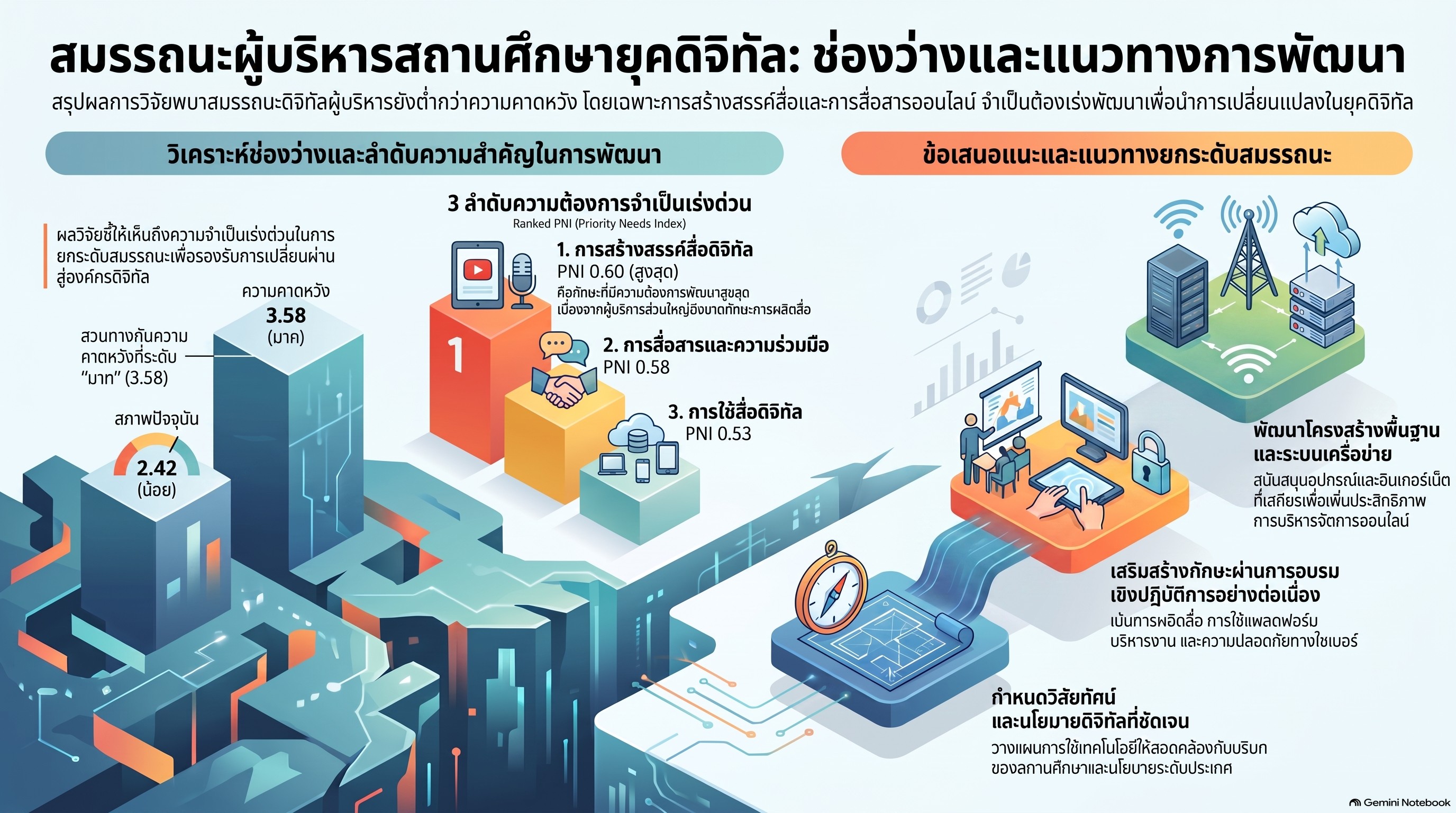
การวิจัยครั้งนี้มีวัตถุประสงค์เพื่อ 1) ศึกษาสภาพปัจจุบันและสภาพที่พึงประสงค์ของสมรรถนะผู้บริหารสถานศึกษายุคดิจิทัล 2) ศึกษาความต้องการจำเป็นของสมรรถนะผู้บริหารสถานศึกษายุคดิจิทัล และ 3) รวบรวมข้อเสนอแนะเกี่ยวกับการพัฒนาสมรรถนะผู้บริหารสถานศึกษายุคดิจิทัล สังกัดสำนักการศึกษาเทศบาลเมืองร้อยเอ็ด จังหวัดร้อยเอ็ด กลุ่มตัวอย่าง ได้แก่ ผู้บริหารและครูในสังกัดสำนักการศึกษาเทศบาลเมืองร้อยเอ็ด ปีการศึกษา 2567 จำนวน 159 คน เครื่องมือที่ใช้ในการวิจัย คือ แบบสอบถาม วิเคราะห์ข้อมูลโดยใช้ความถี่ ค่าร้อยละ ค่าเฉลี่ย ส่วนเบี่ยงเบนมาตรฐาน และค่าดัชนีความต้องการจำเป็นแบบปรับปรุง ผลการวิจัยพบว่า สภาพปัจจุบันของสมรรถนะผู้บริหารสถานศึกษายุคดิจิทัล โดยภาพรวมอยู่ในระดับน้อย ส่วนสภาพที่พึงประสงค์โดยภาพรวมอยู่ในระดับมาก เมื่อพิจารณาเป็นรายด้าน พบว่า ด้านการใช้สื่อดิจิทัล ด้านการสร้างสรรค์สื่อดิจิทัล ด้านจริยธรรมและความปลอดภัยทางดิจิทัล และด้านการสื่อสารและการสร้างความร่วมมือทางดิจิทัล อยู่ในระดับมาก ขณะที่ด้านวิสัยทัศน์ และด้านการรู้และเข้าใจดิจิทัล อยู่ในระดับปานกลาง ทั้งนี้ ผลการวิเคราะห์ความต้องการจำเป็นโดยรวมมีค่า PNIModified เท่ากับ 0.48 โดยด้านที่มีความต้องการจำเป็นสูงสุด ได้แก่ ด้านการสร้างสรรค์สื่อดิจิทัล รองลงมา คือ ด้านการสื่อสารและการสร้างความร่วมมือทางดิจิทัล ด้านการใช้สื่อดิจิทัล ด้านการรู้และเข้าใจดิจิทัล ด้านวิสัยทัศน์ และด้านจริยธรรมและความปลอดภัยทางดิจิทัล ตามลำดับ ผู้บริหารสถานศึกษาควรได้รับการพัฒนาสมรรถนะด้านดิจิทัลอย่างต่อเนื่อง โดยส่งเสริมการกำหนดวิสัยทัศน์และนโยบายด้านดิจิทัล พัฒนาทักษะการใช้และสร้างสรรค์สื่อดิจิทัล สนับสนุนโครงสร้างพื้นฐานทางเทคโนโลยี ส่งเสริมจริยธรรมและความปลอดภัยทางดิจิทัล รวมถึงสร้างเครือข่ายความร่วมมือผ่านระบบดิจิทัล เพื่อเพิ่มประสิทธิภาพการบริหารจัดการสถานศึกษาในยุคดิจิทัล
เอกสารอ้างอิง
กระทรวงศึกษาธิการ. (2566). แผนปฏิบัติราชการ ประจำปีงบประมาณ พ.ศ. 2566 ของกระทรวงศึกษาธิการ (ฉบับปรับปรุงตามงบประมาณที่ได้รับจัดสรร). https://www.moe.go.th/
ณัฐกานต์ สุทธิจิตร์, ธีระวัฒน์ มอนไธสง, & วิสุทธิ์ วิจิตรพัชราภรณ์. (2567). กลยุทธ์การพัฒนาสมรรถนะผู้บริหารสถานศึกษาในยุคดิจิทัลของโรงเรียนมัธยมศึกษา สังกัดสำนักงานคณะกรรมการการศึกษาขั้นพื้นฐาน. Journal of Roi Kaensarn Academi, 9(11), 1490–1512.
เทศบาลเมืองร้อยเอ็ด. (2567). แผนพัฒนาบุคลากร 3 ปี ประจำปีงบประมาณ พ.ศ. 2567–2569.
บุณฑริกา พงษ์ศิริวรรณ. (2565). ความต้องการจำเป็นในการพัฒนารูปแบบการจัดการเรียนรู้เพื่อส่งเสริมความสามารถทางการคิดอย่างมีวิจารณญาณของนักเรียนชั้นมัธยมศึกษาปีที่ 3 [วิทยานิพนธ์ปริญญามหาบัณฑิต, มหาวิทยาลัยเชียงใหม่].
พิชญาณี กาหลง. (2563). แนวทางการใช้เทคโนโลยีสารสนเทศเพื่อการบริหารของสถานศึกษาขั้นพื้นฐาน สังกัดสำนักงานเขตพื้นที่การศึกษาประถมศึกษาชัยภูมิ เขต 1. วารสารบัณฑิตวิจัย, 11(1), 149–162.
รัชฎาพร มีอาษา. (2563). การใช้เทคโนโลยีสารสนเทศในการบริหารงานวิชาการของผู้บริหารสถานศึกษา อำเภอเมืองสระแก้ว สังกัดสำนักงานเขตพื้นที่การศึกษาประถมศึกษาสระแก้ว เขต 1 [วิทยานิพนธ์การศึกษามหาบัณฑิต, มหาวิทยาลัยบูรพา].
วราวุฒิ มุขกระโทก. (2566). สมรรถนะด้านดิจิทัลของผู้บริหารสถานศึกษาส่งผลต่อการบริหารงานวิชาการในสถานศึกษา สังกัดสำนักงานเขตพื้นที่การศึกษาประถมศึกษาสระบุรี เขต 1. วารสารเทคโนโลยีและสื่อสารการศึกษา คณะศึกษาศาสตร์ มหาวิทยาลัยมหาสารคาม, 6(17), 68–79.
ศิริเพ็ญ ทองดี. (2561). การประเมินความต้องการจำเป็นในการพัฒนาสมรรถนะการประเมินตามสภาพจริงสำหรับครูโรงเรียนมัธยมศึกษา [วิทยานิพนธ์วิทยาศาสตรมหาบัณฑิต, มหาวิทยาลัยบูรพา].
สุวิมล ว่องวาณิช. (2562). การวิจัยประเมินความต้องการจำเป็น (พิมพ์ครั้งที่ 4). สำนักพิมพ์แห่งจุฬาลงกรณ์มหาวิทยาลัย.
ไอรดา นรสาร. (2566). ภาวะผู้นำดิจิทัลของผู้บริหารที่ส่งผลต่อประสิทธิผลการบริหารโรงเรียนในสังกัดสำนักงานเขตพื้นที่การศึกษาประถมศึกษาสกลนคร เขต 1 [วิทยานิพนธ์ครุศาสตรมหาบัณฑิต, มหาวิทยาลัยราชภัฏสกลนคร].
Kashaka, N. D. (2025). Exploring the role of emotional intelligence in educational leadership. Research Invention Journal of Current Issues in Arts and Management, 4(2), 12–15.
Krejcie, R. V., & Morgan, D. W. (1970). Determining sample size for research activities. Educational and Psychological Measurement, 30, 607–610.
Likert, R. (1967). The human organization: Its management and value. McGraw-Hill.
Nubun, C. C., Hassan, Z., & Hamidi, H. (2024). Teachers' insight on digital competencies and maturity among school administrators in Sarawak, Malaysian schools. Asia Proceedings of Social Sciences, 12, 45–48. https://doi.org/10.31580/APSS.V12I1.5226
Padolina-Alcantara, F. P. (2023). Digital era readiness and leadership and management competencies of school heads in the school's division of Marinduque. International Journal for Research in Applied Science and Engineering Technology, 11(5), 2886–2903.
Sheninger, E. (2025). 7 pillars of digital leadership. International Center for Leadership in Education.
ดาวน์โหลด
เผยแพร่แล้ว
รูปแบบการอ้างอิง
ฉบับ
ประเภทบทความ
หมวดหมู่
สัญญาอนุญาต
ลิขสิทธิ์ (c) 2026 Journal of Buddhist Education and Research (JBER)

อนุญาตภายใต้เงื่อนไข Creative Commons Attribution-NonCommercial-NoDerivatives 4.0 International License.