A Recreation Center Management Model for Promoting a Learning Metropolis Based on Buddhist Principles in Bangkok Metropolitan Administration Recreation Centers
Keywords:
Recreation Center Management, Learning Metropolis, Buddhist Principles, V-LEARNAbstract
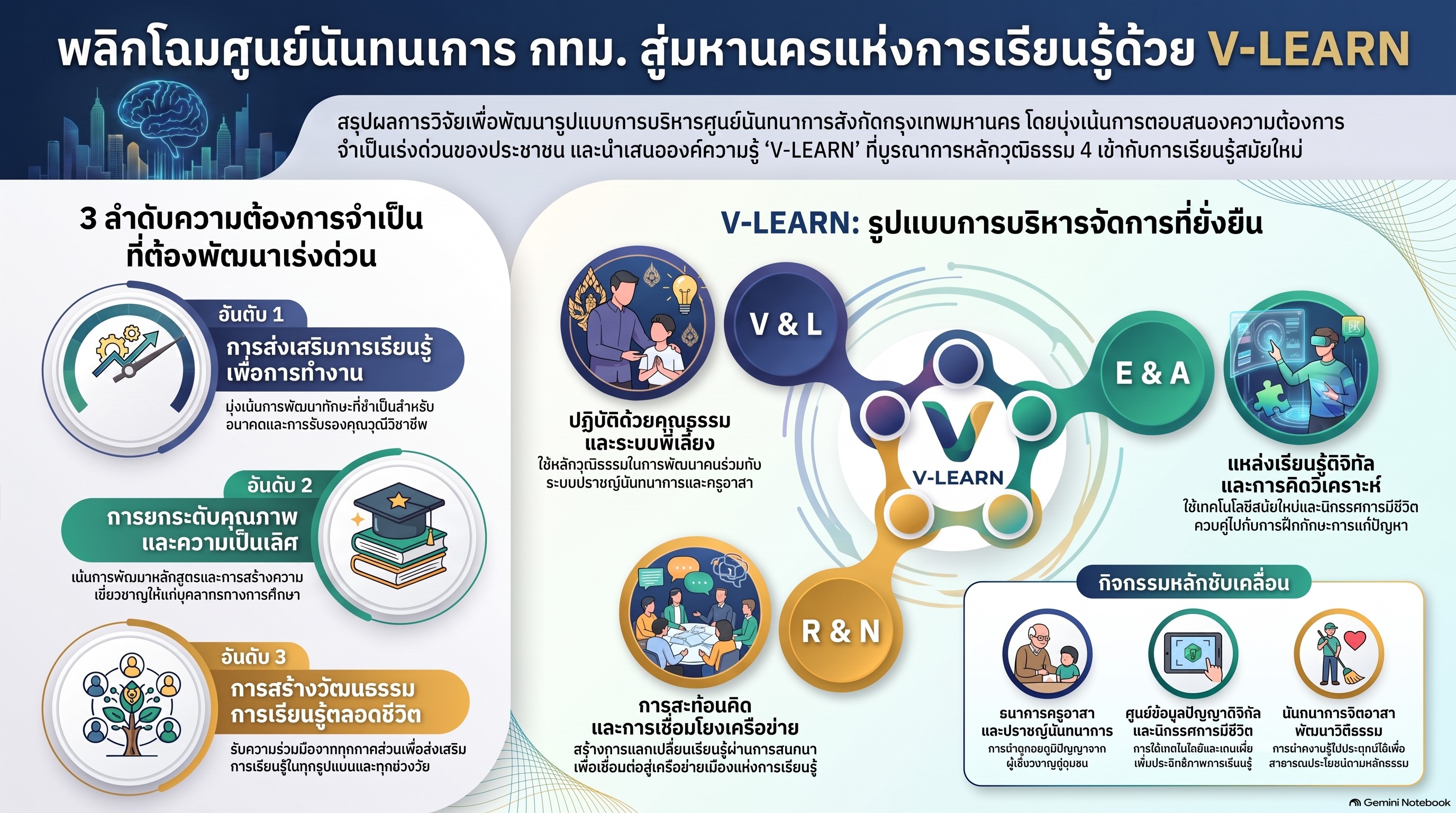
This dissertation aims to 1) study the needs for managing recreation centers to promote a learning metropolis in Bangkok Metropolitan Administration (BMA) recreation centers; 2) develop a management model for recreation centers to promote a learning metropolis based on Buddhist principles in BMA recreation centers; and 3) evaluate the management model for recreation centers to promote a learning metropolis based on Buddhist principles in BMA recreation centers. This research employs a mixed-methods approach combining quantitative and qualitative research. Quantitative research used questionnaires with a sample of 322 users of BMA recreation centers and examined the management model of recreation centers to promote a learning metropolis based on Buddhist principles with a sample of 25 people. Statistical methods used included frequency percentage, mean, standard deviation, and PNImodified calculation. Qualitative research involved interviews with 15 target individuals and focus group discussions with 9 experts. Research instruments included interview guides and focus group discussion manuals. Qualitative results were summarized. The research findings revealed: 1. The study of the needs for managing recreation centers to promote a learning metropolis in Bangkok Metropolitan Administration (BMA) recreation centers showed a high level of importance, ranked according to the needs, with the most important needs identified as... 1. The most urgent areas for development are: promoting work-based learning (ranked #1), followed by improving the quality and excellence of learning, promoting a lifelong learning culture, revitalizing learning in families and communities, promoting comprehensive learning from basic to higher education levels, and expanding the use of modern learning technologies. 2. The results of developing a management model for recreation centers to promote a learning metropolis based on Buddhist principles for recreation centers under the Bangkok Metropolitan Administration showed that the research created a textual model with four components: 1. Principles, 2. Objectives, 3. Methods of operation, namely: 1) Management of recreation centers to promote a learning metropolis, and 2) Activities for developing the management of recreation centers to promote a learning metropolis, which include: Activity 1: The Volunteer Teacher and Recreation Scholar Bank Project; Activity 2: Digital Wisdom Information Center and Living Exhibition; Activity 3: Workshop on Thinking, Doing, and Solving Problems Quickly; and Activity 4: Volunteer Recreation Project. 1. Development of Buddhist principles; and 2) Guidelines for evaluating the management model of recreation centers to promote a learning metropolis based on Buddhist principles for recreation centers under the Bangkok Metropolitan Administration. Conditions for success. 3. The results of the evaluation of the management model of recreation centers to promote a learning metropolis based on Buddhist principles for recreation centers under the Bangkok Metropolitan Administration, including suitability, feasibility, and usefulness, showed that in terms of feasibility, usefulness, and suitability, respectively, it can be used as a management model for recreation centers to promote a learning metropolis based on Buddhist principles for recreation centers under the Bangkok Metropolitan Administration according to the V-LEARN knowledge base, which includes: V: Virtuous Practice, applying Buddhist principles (Vuttitham) in work and human development; L: Lifelong Mentorship, a system of volunteer teachers and recreation experts who continuously transfer knowledge in accordance with the principles; E: Enhanced Digital Assets, using digital data and exhibitions to increase learning efficiency; A: Analytical Thinking, promoting analytical thinking and problem-solving processes; R: Reflective Dialogue, exchanging knowledge through discussion and reflection; and N: Networked Learning City, connecting as a network of learning cities.
References
มหาจุฬาลงกรณราชวิทยาลัย. (2535). พระไตรปิฎกภาษาบาลีฉบับมหาจุฬาเตปิฏกํ 2500. โรงพิมพ์มหาจุฬาลงกรณราชวิทยาลัย.
มหาจุฬาลงกรณราชวิทยาลัย พระไตรปิฎกภาษาไทยฉบับมหาจุฬาลงกรณราชวิทยาลัย. (2539). โรงพิมพ์มหาจุฬาลงกรณราชวิทยาลัย.
มหามกุฏราชวิทยาลัย. (2525). พระไตรปิฎกภาษาบาลี ฉบับสฺยามรฏฺเตปิฏกํ 2525. โรงพิมพ์มหามกุฏราชวิทยาลัย.
มหามกุฏราชวิทยาลัย พระไตรปิฎกพร้อมอรรถกถา แปล ชุด 91 เล่ม. (2534). โรงพิมพ์มหามกุฏราชวิทยาลัย.
มหาจุฬาลงกรณราชวิทยาลัย. (2539). ฎีกาภาษาบาลี ฉบับมหาจุฬาฎีกา. โรงพิมพ์มหาจุฬาลงกรณราชวิทยาลัย.
มหาจุฬาลงกรณราชวิทยาลัย ปกรณวิเสสภาษาบาลี ฉบับมหาจุฬาปกรณวิเสโส. (2539). โรงพิมพ์วิญญาณ.
มหาจุฬาลงกรณราชวิทยาลัย ปกรณวิเสสภาษาบาลี ฉบับมหาจุฬาปกรณวิเสโส อรรถกถาภาษาบาลี ฉบับมหาจุฬาอฏฺกถา. (2532). โรงพิมพ์มหาจุฬาลงกรณราชวิทยาลัย.
กรมพลศึกษา กระทรวงการท่องเท่ียวและกีฬา. (2562). แนวทางการบริหารจัดการศูนย์นันทนาการ. โรงพิมพ์เอส. ออฟเซ็ทกราฟฟิคดีไซน์.
จันทรานี สงวนนาม. (2545). ทฤษฎีและแนวปฏิบัติในการบริหารสถานศึกษา. บุ๊คพอยท์.
จุมพล สวัสดิยากร. (2542). หลักการบริหารและมนุษยสัมพันธ์. โรงพิมพ์สุวรรณภูมิ.
ชาญชัย อาจิณสมาจาร. (2540). ศัพท์การบริหารการศึกษา. ไทยวัฒนาพานิช.
ชาญชัย อาจิณสมาจาร การนิเทศการศึกษา. (2550). โรงพิมพ์เคแอนด์พีบุ๊คส์.
ณัฏฐพันธ์ เขจรนันทน์. (2552). ระบบสารสนเทศเพื่อการจัดการฉบับปรับปรุงใหม่. ซีเอ็ดเคชั่น.
เด่น ชะเนติยัง. (2533). การบริหารงานบุคคล. ม. ป. ท.
ธนจรส พูนสิทธิ์. (2541). การจัดการองค์การและการบริหาร. สหธรรมิก.
ธีรวุฒิ บุญยโสภณ และวีระพงษ์ เฉลิมจิระรัตน์. (2534). องค์การและการจัดการ. อักษรปริทรรศน์.
ธีรวุฒิ เอกะกุล. (2543). ระเบียบวิธีวิจัยทางพฤติกรรมศาสตร์และสังคมศาสตร์. อุบลราชธานี: สถาบันราชภัฎอุบลราชธานี.
ธีระ รุญเจริญ. (2550). ความเป็นมืออาชีพในการจัดและบริหารการศึกษายุคปฏิรูปการศึกษา (พิมพ์ครั้งที่ 3). ข้าวฟาง.
ธีระรัตน์ กิจจารักษ์. (2542). คุณธรรมสำหรับผู้บริหาร. มหาวิทยาลัยธรรมศาสตร์.
นิรมล เสรีสกุล และธนพร โอวาทวรวรัญญู. (2565). การวิเคราะห์เครือข่ายทางสังคมในการขับเคลื่อนแนวคิดเมืองแห่งการเรียนรู้ของกรุงเทพมหานคร กรณีศึกษาย่านกะดีจีน-คลองสาน. วารสารสถาบันพระปกเกล้า.
เนตร์พัณณา ยาวิราช. (2546). การจัดการสมัยใหม่. เซ็นทรัลเอ็กซ์เพรส.
บุญใจ ศรีสถิตนรากูล. (2555). การพัฒนาและตรวจสอบคุณภาพเครื่องมือวิจัย. จุฬาลงกรณ์มหาวิทยาลัย.
บุญชม ศรีสะอาด. (2554). การวิจัยเบื้องต้น ฉบับปรับปรุงใหม่ (พิมพ์ครั้งที่ 7). บริษัท สุวีริยาสาสาส์น จำกัด: .
ประพันธ์ สุริหาร. (2547). ศัพท์เทคนิคทางการบริหาร. ขอนแก่น: ภาควิชาบริหารการศึกษาคณะศึกษาศาสตร์ มหาวิทยาลัยขอนแก่น.
ปราชญา กล้าผจญ และสมศักดิ์ คงเที่ยง. (2545). หลักและทฤษฎีการบริหารการศึกษา. บพิธการพิมพ์.
ปราชญา กล้าผจญ และสมศักดิ์ คงเที่ยง. (ม.ป.ป.). หลักและทฤษฎีการบริหารการศึกษา. หน้า 16 – 17.
พนัส หันนาคินทร์. (2542). ประสบการณ์ในการบริหารบุคลากร. จุฬาลงกรณมหาวิทยาลัย.
พระธรรมโกศาจารย์ ประยูร ธมฺมจิตฺโต ป. (2549). ธ. 9. Ph. D.. พุทธวิธีบริหาร. โรงพิมพ์มหาจุฬาลงกรณราชวิทยาลัย.
พระพรหมคุณาภรณ์ (ป. (2554). อ. ปยุตตโต). พจนานุกรมพุทธศาสน์ ฉบับประมวลศัพท์ ชำระ-เพิ่มเติม ช่วงที่ 1/ยุติ (พิมพ์ครั้งที่ 17). โรงพิมพ์พระพุทธศาสนาของธรรมสภา.
พระมหาวุฒิชัย วชิรเมธี (ว. (2550). วชิรเมธี). คนสำราญงานสำเร็จ (พิมพ์ครั้งที่ 3). บริษัทอมรินทร์พริ้นติ้งแอนด์พลับลิชชิ่ง จำกัด มหาชน.
พะยอม วงศ์สารศรี. (2542). องค์การและการจัดการ. พรานนกการพิมพ์.
พิทยา บวรวัฒนา. (2546). การบริหารเชิงบูรณาการ. นนทบุรี: สำนักงานข้าราชการพลเรือน.
พูลสุข หิงคานนท์. (2540). ทฤษฎีที่เกี่ยวกับการบริหารระบบบริการพยาบาล. ชุดวิชาการพัฒนาศักยภาพระบบบริการพยาบาล หน่วยที่ 3. นนทบุรี: โรงพิมพ์มหาวิทยาลัยสุโขทัยธรรมาธิราช.
ภารดี อนันต์นาวี. (2551). หลักหาร แนวคิด ทฤษฎีทางการบริหารการศึกษา. ชลบุรี: มนตรี. มิเกล กาไรซาบาล.
ภาวิดา ธาราศรีสุทธิ. (2537). การบริหารโรงเรียนประถมศึกษา. มหาวิทยาลัยรามคำแหง.
ภาวิดา ธาราศรีสุทธิและวิบูลย์ โตวณะบุตร. (2542). หลักและทฤษฎีการบริหารการศึกษา. มหาวิทยาลัยรามคำแหง.
มยุรี อนุมานราชธน. (2547). นโยบายสาธารณะ แนวความคิด กระบวนการและการวิเคราะห์. คะนึงนิจการพิมพ์.
มัลลิกา ต้นสอน. (2544). การจัดการยุคใหม่. เอ็กซเปอร์เน็ท จำกัด.
เบญจพร แก้วมีศรี. (2545). การนำเสนอรูปแบบการพัฒนาคุณลักษณะภาวะผู้นำของผู้บริหารวิทยาลัยพยาบาล สังกัดกระทรวงสาธารณสุข [วิทยานิพนธ์ปริญญาดุษฎีบัณฑิต, จุฬาลงกรณ์มหาวิทยาลัย].
อุทุมพร จามรมาน. (2541). โมเดล. วารสารวิชาการ, 1(3), 22–26.
Good, C. V. (1973). Dictionary of education (3rd ed.). McGraw-Hill.
Downloads
Published
How to Cite
Issue
Section
License

This work is licensed under a Creative Commons Attribution-NonCommercial-NoDerivatives 4.0 International License.