Development of Smart City Relationship Structure for Sustainable City of Khon Kaen Municipality
Keywords:
Infrastructure development; smart cityAbstract
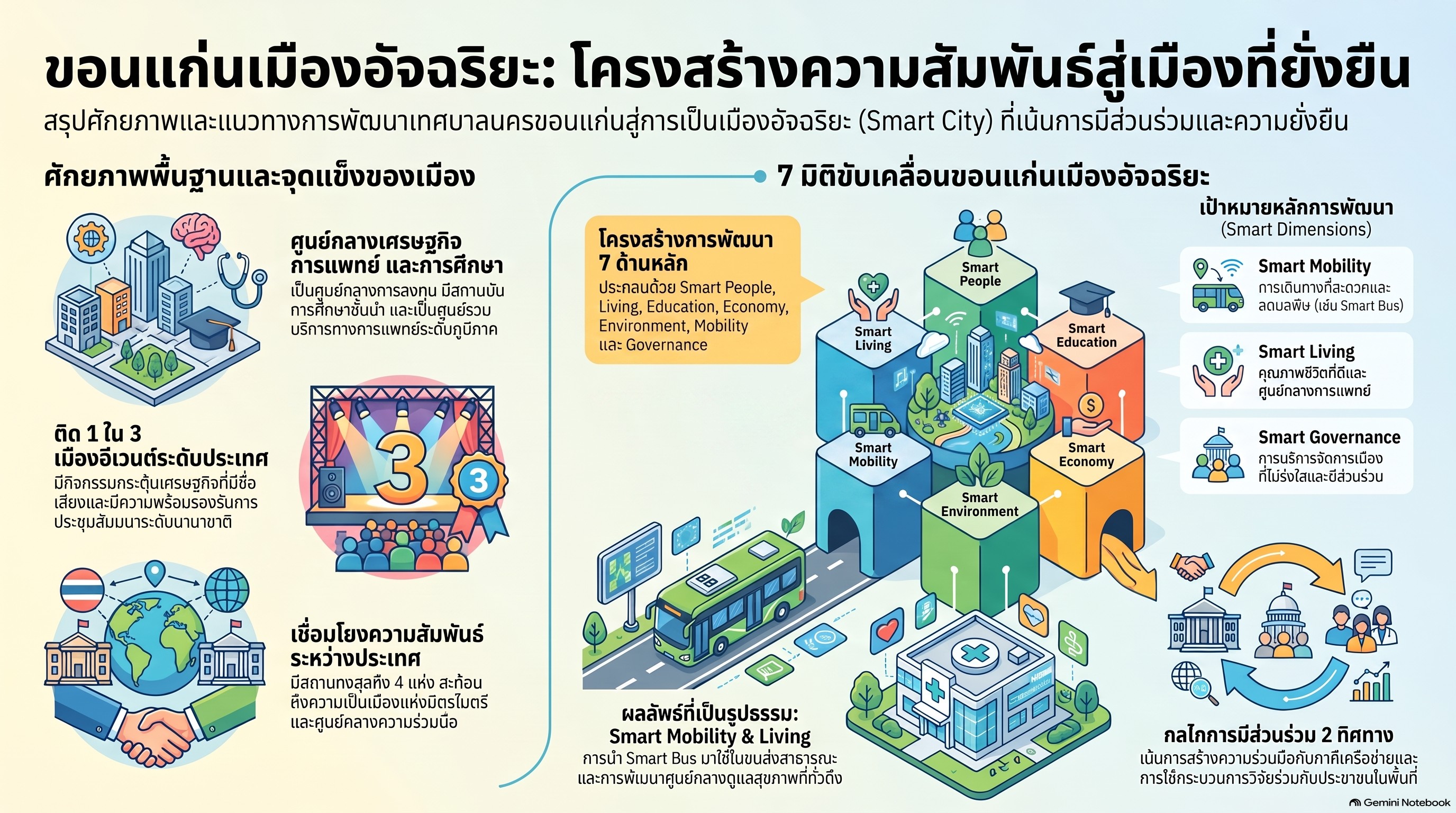
The research article on “Development of Smart City Relationship Structure for Sustainable City of Khon Kaen Municipality” aims to study the basic potential of Khon Kaen Municipality to be a smart city, study the mechanisms and policies of participation in becoming a smart city of Khon Kaen Municipality, and study the guidelines for developing smart cities in each dimension of Khon Kaen Municipality. The research methodology is mixed research, namely documentary research and qualitative research. The main informants are groups of people who play important roles and are involved in the Khon Kaen Smart City development plan, both in terms of policy and policy implementation. Analysis of the basic potential of Khon Kaen Municipality to be a smart city found that 1) it is a center of trade and investment, 2) it organizes activities that are recognized and are ranked in the top 3 in Thailand as stimulants of the city's economy, 3) it has leading public and private educational institutions, 4) it is a center for medical and public health services, 5) it has 4 consulates that are friendly cities, 6) it is a center for meetings/conferences/training, and is ready to support international meetings and seminars. Policy mechanisms, participation mechanisms for Khon Kaen Municipality to be a smart city It was found that the policy mechanisms, participation mechanisms for Khon Kaen Municipality to be a smart city led to the development of space and activity usage patterns with participation from various groups of people in the area through 2 driving mechanisms: 1) creating a mechanism for cooperation with network partners, 2) a process driving mechanism that creates a collaborative approach for research. The development guidelines for smart cities in each dimension of Khon Kaen Municipality are divided into 7 areas: 1) Smart People, 2) Smart Living, 3) Smart Education, 4) Smart Economy, 5) Smart Environment, 6) Smart Mobility, and 7) Smart Governance.
References
จารุวรรณ ประวันเน. (2563). กระบวนการเปลี่ยนแปลงสู่ความเป็นเมืองอัจฉริยะ: กรณีศึกษาเทศบาลนครขอนแก่น. วารสารการบริหารท้องถิ่น, 13(3), 267–284.
ชูศรี วงศ์รัตนะ. (2560). เทคนิคการใช้สถิติเพื่อการวิจัย (พิมพ์ครั้งที่ 13). เทพเนรมิตการพิมพ์.
ไชยวัฒน์ รุ่งเรืองศรี. (2550). ระเบียบวิธีวิจัยทางวิทยาศาสตร์สังคม. โอเดียนสโตร์.
ธีระศักดิ์ อุ่นอารมณ์เลิศ. (2549). เครื่องมือวิจัยทางการศึกษา: การสร้างและพัฒนา. มหาวิทยาลัยศิลปากร.
นรินทร์ พันธ์เขียว. (2552). เกณฑ์การคัดเลือกเครื่องมือด้านเทคโนโลยีสารสนเทศที่เหมาะสมกับการจัดการความรู้. มหาวิทยาลัยเชียงใหม่.
บุญชม ศรีสะอาด. (2553). การวิจัยเบื้องต้น (พิมพ์ครั้งที่ 8). สุวีริยาสาส์น.
พนิต ภู่จินดา, & ยศพล บุญสม. (2559). แนวคิดการพัฒนาเมืองต้นแบบ. เจ-ดี: วารสารวิชาการ การออกแบบสภาพแวดล้อม, 3(1), 21–43.
พรรณี สวนเพลง. (2552). เทคโนโลยีสารสนเทศและนวัตกรรมสำหรับการจัดการความรู้. ซีเอ็ดยูเคชั่น.
มิยากาวะ ทาดาโอะ. (2550). เศรษฐมิติเบื้องต้น. รู้แจ้ง.
เรวัตร์ ชาตรีวิศิษฏ์. (2550). ทฤษฎีกิจกรรม 5ส ให้สัมฤทธิ์ผลนั้นมาจากคน. สำนักพิมพ์ศูนย์ส่งเสริมวิชาการ.
วีรพจน์ ลือประสิทธิ์ธิกุล. (2540). TQM living handbook: An executive summary (พิมพ์ครั้งที่ 2). บีพีอาร์แอนด์ทีคิวเอ็ม คอนซัลแทนท์.
สุมน อมรวิวัฒน์. (2533). การจัดการเรียนรู้แบบเผชิญสถานการณ์. ห้างหุ้นส่วนจำกัด.
สำนักงานพัฒนาวิทยาศาสตร์และเทคโนโลยีแห่งชาติ. (2554). การสำรวจระบบสารสนเทศด้านสุขภาพของโลกสู่การพัฒนาระบบอัจฉริยะประเทศไทย พ.ศ. 2553. โปรแกรมการวิจัยและพัฒนาระบบแพทย์อัจฉริยะ ศูนย์เทคโนโลยีอิเล็กทรอนิกส์และคอมพิวเตอร์แห่งชาติ.
Downloads
Published
How to Cite
Issue
Section
License

This work is licensed under a Creative Commons Attribution-NonCommercial-NoDerivatives 4.0 International License.