Marriage without the Intention of Being a Spouse and Fairness in Claiming Compensation from a Third Party.
Keywords:
marriage, spouse, compensation, adultery, fairnessAbstract
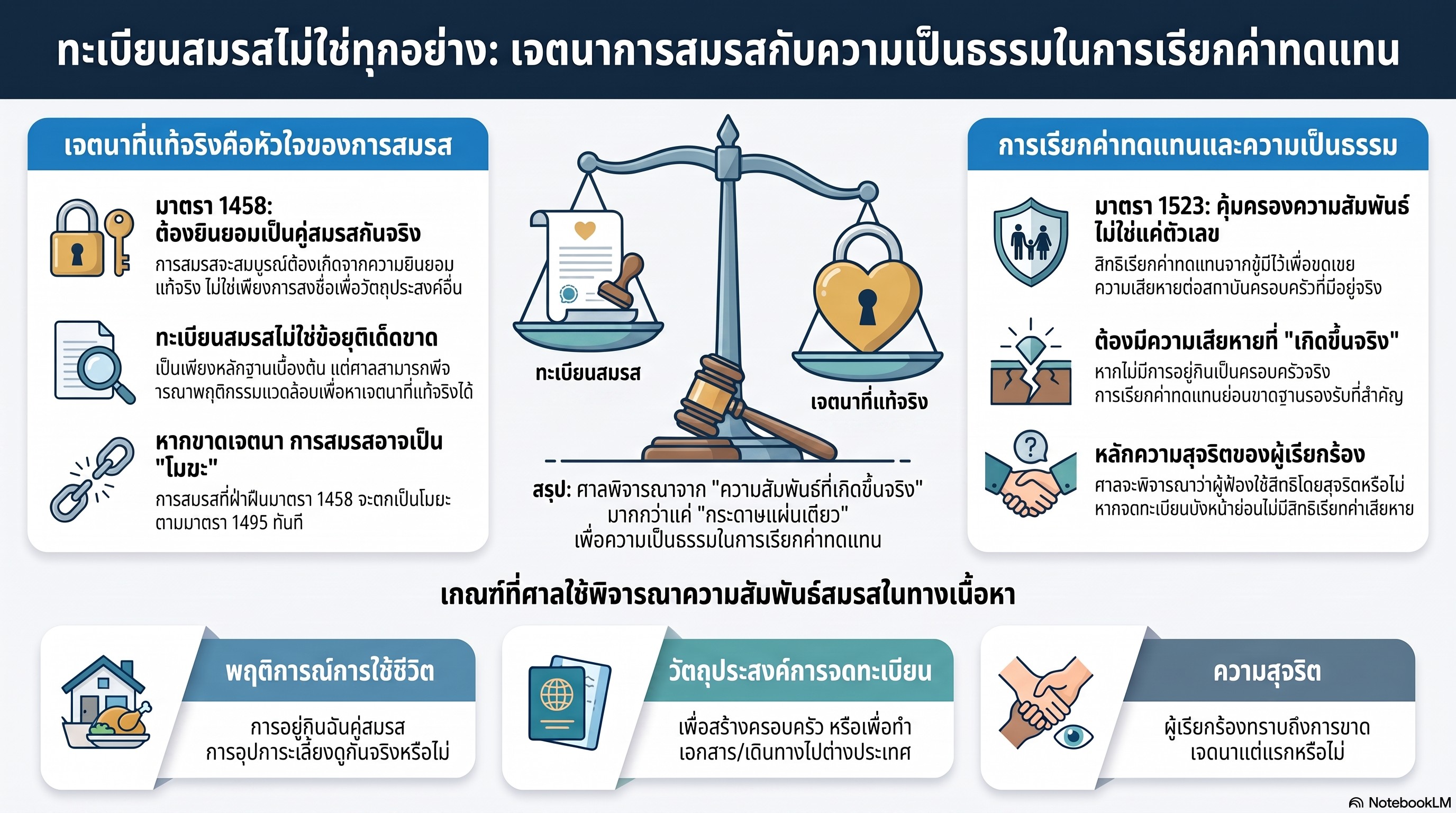
This study examined the legal principles governing marriage under the Civil and Commercial Code, with particular attention to marriages registered without a genuine intention to establish a spousal relationship and the fairness of claims for compensation against a third party. Documentary research and case analysis were conducted using statutory provisions, Supreme Court judgments, textbooks, academic articles, pleadings, witness testimony, evidence in case files, and judgments. The findings indicate that a marriage certificate is important evidence of registration but is not conclusive proof of the parties’ genuine intention to marry. Section 1458 requires the parties’ mutual consent to enter into marriage; where such consent is absent, the marriage may violate Section 1458 and be void under Section 1495. In claims for compensation under Section 1523, courts should consider not only formal registration but also the parties’ marital intent, the claimant’s good faith, the existence of an actual marital relationship, and the actual damage suffered.
References
พระราชบัญญัติแก้ไขเพิ่มเติมประมวลกฎหมายแพ่งและพาณิชย์ (ฉบับที่ 24) พ.ศ. 2567. ราชกิจจานุเบกษา
เล่ม 141 ตอนที่ 58 ก วันที่ 24 กันยายน 2567 สำนักงานคณะกรรมการกฤษฎีกา
ประมวลกฎหมายแพ่งและพาณิชย์: วิญญูชน. 2564.
ประมวลกฎหมายวิธีพิจารณาความแพ่ง: วิญญูชน. 2566.
คำพิพากษาฎีกาที่ 1067/2545. สืบค้นจากฐานข้อมูลคำพิพากษาศาลฎีกา
Downloads
Published
How to Cite
Issue
Section
License
Copyright (c) 2026 Authors

This work is licensed under a Creative Commons Attribution-NonCommercial-NoDerivatives 4.0 International License.