การประยุกต์ใช้จิตวิทยาเชิงบวกในการสร้างแรงบันดาลใจและพัฒนาประสิทธิภาพทีมงาน
คำสำคัญ:
จิตวิทยาเชิงบวก, แรงบันดาลใจ, ประสิทธิภาพทีมงาน, องค์กรไทย, PERMA Modelบทคัดย่อ
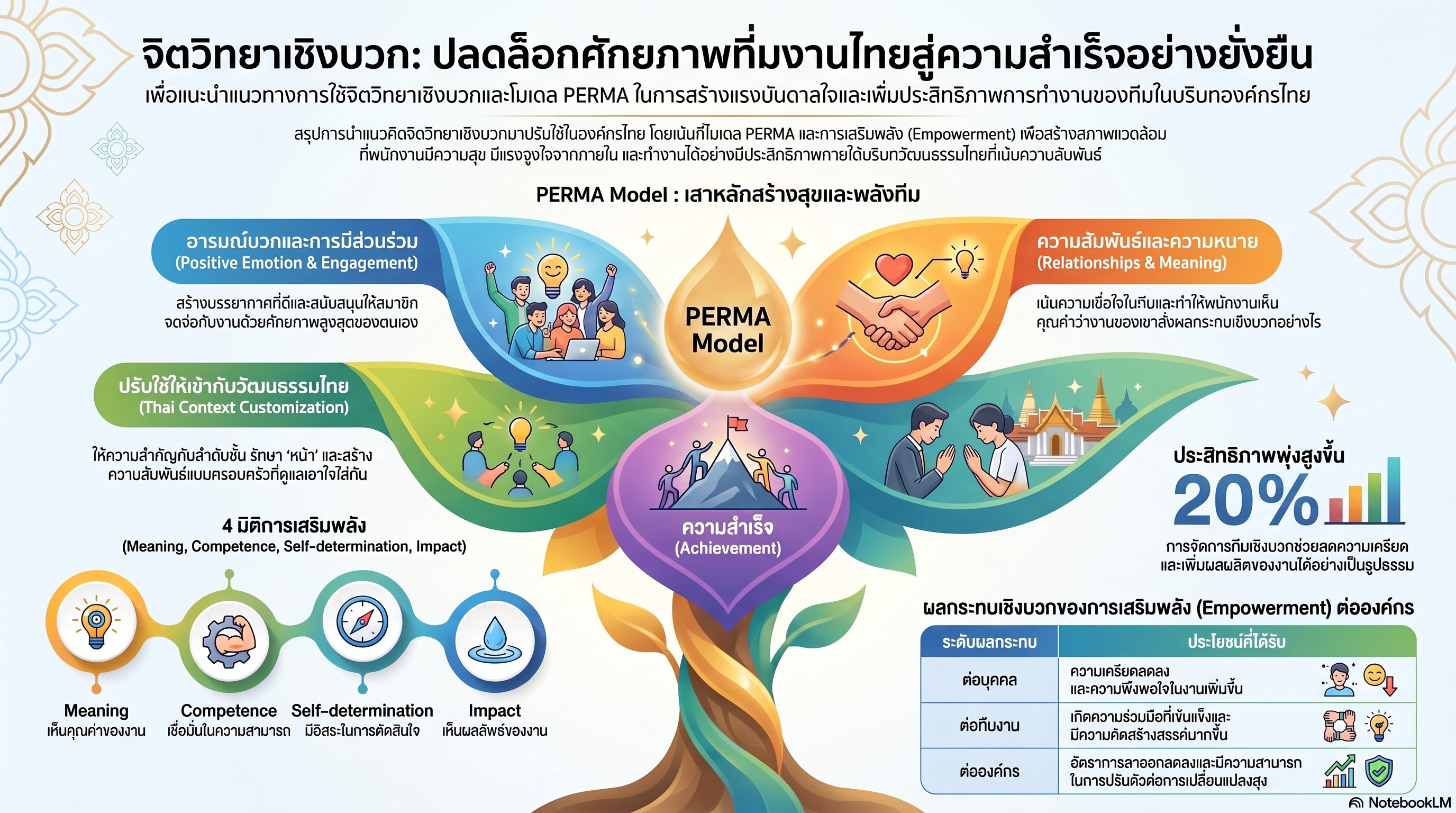
บทความวิชาการนี้นำเสนอการประยุกต์ใช้จิตวิทยาเชิงบวกในการสร้างแรงบันดาลใจและพัฒนาประสิทธิภาพทีมงานในบริบทองค์กรไทย โดยเน้นศึกษาทฤษฎีและแนวคิดของจิตวิทยาเชิงบวก อาทิ PERMA Model ของ Seligman (2011) ซึ่งประกอบด้วยองค์ประกอบสำคัญ เช่น อารมณ์บวก การมีส่วนร่วม ความสัมพันธ์ ความหมาย และความสำเร็จ ผลการศึกษาพบว่าการนำหลักจิตวิทยาเชิงบวกมาใช้กับทีมงานสามารถส่งเสริมแรงจูงใจภายใน สร้างสภาพแวดล้อมการทำงานที่มีความสุข และนำไปสู่การเพิ่มประสิทธิภาพการทำงานอย่างยั่งยืน นอกจากนี้ เทคนิคเชิงปฏิบัติ เช่น Positive Reinforcement และ Empowerment ยังช่วยเสริมสร้างความเชื่อมั่นและพลังใจให้กับสมาชิกในทีม ผลการประยุกต์ใช้ในองค์กรไทยสะท้อนให้เห็นว่าการจัดการทีมแบบเชิงบวกช่วยลดความตึงเครียด ส่งเสริมความสัมพันธ์ และพัฒนาศักยภาพบุคลากรบนพื้นฐานความเข้าใจธรรมชาติของมนุษย์อย่างรอบด้าน องค์กรที่นำแนวคิดนี้ไปใช้ควรให้ความสำคัญกับการสร้างวัฒนธรรมองค์กรที่สนับสนุนให้เกิดความสุขและการเติบโตภายในทีมอย่างต่อเนื่อง
เอกสารอ้างอิง
จุฬาลักษณ์ พินิจพงษ์. (2563). การพัฒนาทีมงานและการเสริมสร้างความสัมพันธ์ในองค์กรไทยตามแนวคิดจิตวิทยาเชิงบวก. วารสารการพัฒนาทรัพยากรมนุษย์, 10(2), 59–75.
ณัทรพร พรไพศาล, & เศรษฐวัฒน์ เลิศถาวร. (2563). จิตวิทยาเชิงบวกและการสร้างแรงบันดาลใจในองค์กรไทย. วารสารจิตวิทยาไทย, 27(2), 45–62.
รัญชา ประเสริฐสุข. (2564). จิตวิทยาเพื่อการประยุกต์ใช้ในงานบริหารบุคคล. สำนักพิมพ์แห่งจุฬาลงกรณ์มหาวิทยาลัย.
Avey, J. B., Luthans, F., & Jensen, S. M. (2009). Psychological capital: A positive resource for combating employee stress and turnover. Human Resource Management, 48(5), 677–693.
Cameron, K. S., Dutton, J. E., & Quinn, R. E. (Eds.). (2003). Positive organizational scholarship: Foundations of a new discipline. Berrett-Koehler.
Cameron, K. S., & Pierce, W. D. (1994). Reinforcement, reward, and intrinsic motivation: A meta-analysis. Review of Educational Research, 64(3), 363–423.
Cameron, K. S., & Spreitzer, G. M. (Eds.). (2012). The Oxford handbook of positive organizational scholarship. Oxford University Press.
Dutton, J. E., & Heaphy, E. D. (2003). The power of high-quality connections. In K. S. Cameron, J. E. Dutton, & R. E. Quinn (Eds.), Positive organizational scholarship: Foundations of a new discipline (pp. 263–278). Berrett-Koehler.
Dutton, J. E., & Ragins, B. R. (Eds.). (2007). Exploring positive relationships at work: Building a theoretical and research foundation. Lawrence Erlbaum Associates.
Fredrickson, B. L. (2001). The role of positive emotions in positive psychology: The broaden-and-build theory of positive emotions. American Psychologist, 56(3), 218–226.
Hackman, J. R., & Wageman, R. (2005). A theory of team coaching. Academy of Management Review, 30(2), 269–287.
Kern, M. L., Waters, L. E., Adler, A., & White, M. (2015). Assessing employee wellbeing in schools using a multifaceted approach: Associations with depression, resilience, and work-related outcomes. Psychology of Well-Being, 5(5), 1–19.
Lencioni, P. (2002). The five dysfunctions of a team: A leadership fable. Jossey-Bass.
Luthans, F., & Youssef, C. M. (2007). Emerging positive organizational behavior. Journal of Management, 33(3), 321–349.
Luthans, F., Youssef, C. M., & Avolio, B. J. (2007). Psychological capital: Developing the human competitive edge. Oxford University Press.
Meyers, M. C., van Woerkom, M., & Bakker, A. B. (2013). The added value of the positive: A literature review of positive psychology interventions in organizations. European Journal of Work and Organizational Psychology, 22(5), 618–632.
Patarapornpaisan, W., & Lertthavorn, S. (2020). Positive psychology and team motivation in Thai organizations. Thai Journal of Psychology, 27(2), 45–62.
Ryan, R. M., & Deci, E. L. (2000). Self-determination theory and the facilitation of intrinsic motivation, social development, and well-being. American Psychologist, 55(1), 68–78.
Seligman, M. E. P. (2002). Authentic happiness: Using the new positive psychology to realize your potential for lasting fulfillment. Free Press.
Seligman, M. E. P. (2011). Flourish: A visionary new understanding of happiness and well-being. Free Press.
Seligman, M. E. P., & Csikszentmihalyi, M. (2000). Positive psychology: An introduction. American Psychologist, 55(1), 5–14.
Skinner, B. F. (1953). Science and human behavior. Macmillan.
Spreitzer, G. M. (1995). Psychological empowerment in the workplace: Dimensions, measurement, and validation. Academy of Management Journal, 38(5), 1442–1465.
Spreitzer, G. M. (2008). Taking stock: A review of more than twenty years of research on empowerment at work. In J. Barling & C. L. Cooper (Eds.), The SAGE handbook of organizational behavior (Vol. 1, pp. 54–72). SAGE.
Thomas, K. W., & Velthouse, B. A. (1990). Cognitive elements of empowerment: An "interpretive" model of intrinsic task motivation. Academy of Management Review, 15(4), 666–681.
Van Knippenberg, D., & Schippers, M. C. (2007). Work group diversity. Annual Review of Psychology, 58, 515–541.
ดาวน์โหลด
เผยแพร่แล้ว
รูปแบบการอ้างอิง
ฉบับ
ประเภทบทความ
สัญญาอนุญาต
ลิขสิทธิ์ (c) 2026 Authors

อนุญาตภายใต้เงื่อนไข Creative Commons Attribution-NonCommercial-NoDerivatives 4.0 International License.