การศึกษาความสัมพันธ์ระหว่างความสามารถในการฟันฝ่าอุปสรรค (AQ) กับอัตลักษณ์ของนิสิตครู
คำสำคัญ:
ความสามารถในการฟันฝ่าอุปสรรค, อัตลักษณ์ของนิสิตครู, ความสัมพันธ์บทคัดย่อ
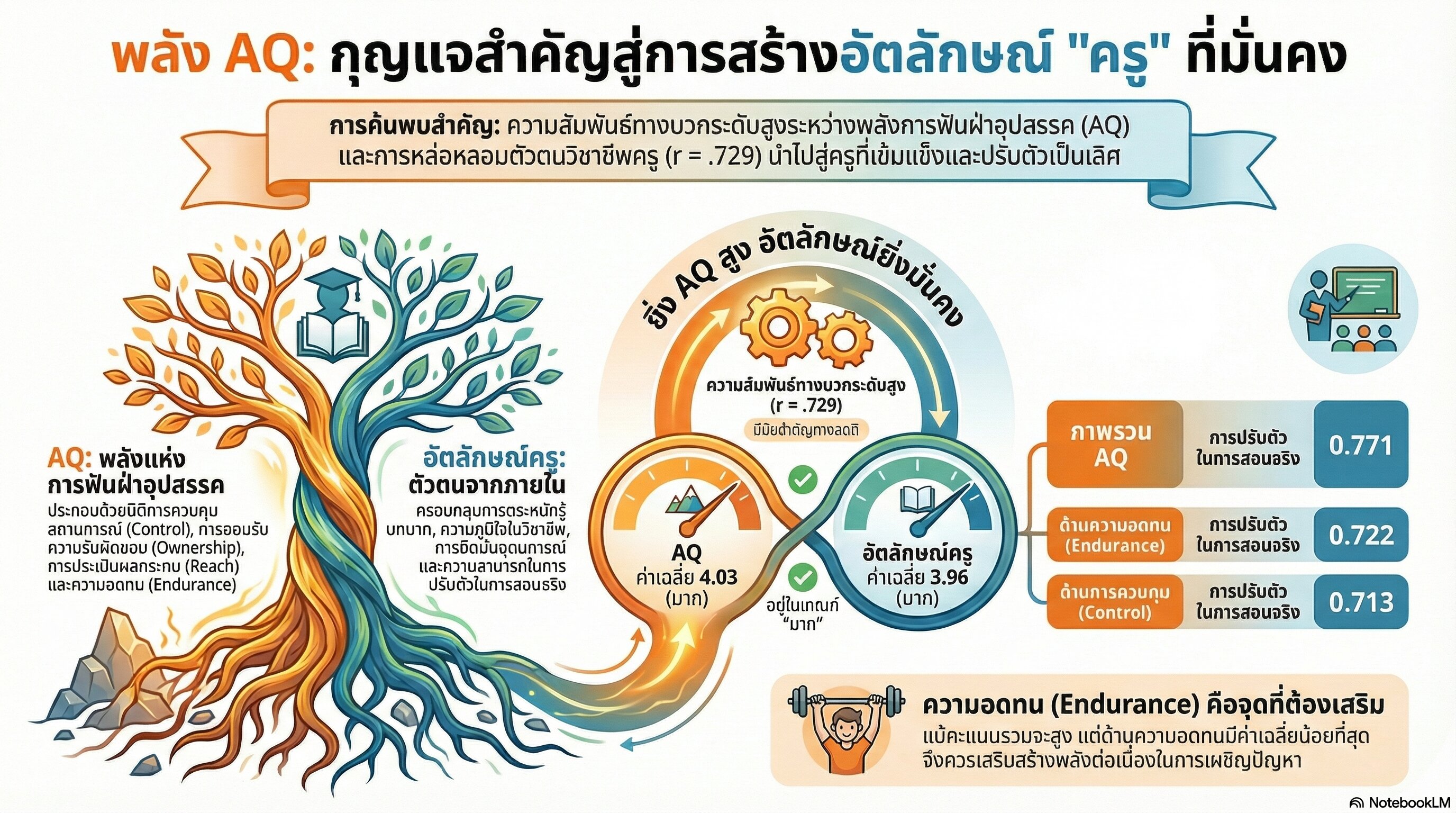
การวิจัยครั้งนี้มีวัตถุประสงค์เพื่อศึกษาความสัมพันธ์ระหว่างความสามารถในการฟันฝ่าอุปสรรค (Adversity Quotient: AQ) กับอัตลักษณ์ของนิสิตครู โดยมีวัตถุประสงค์ย่อย ได้แก่ (1) เพื่อศึกษาระดับ ความสามารถในการฟันฝ่าอุปสรรคของนิสิตครู (2) เพื่อศึกษาระดับอัตลักษณ์ของนิสิตครู และ (3) เพื่อศึกษาความสัมพันธ์ระหว่างความสามารถในการฟันฝ่าอุปสรรคกับอัตลักษณ์ของนิสิตครู กลุ่มตัวอย่าง คือ นิสิตครูระดับปริญญาตรี จำนวน 165 คน ซึ่งได้มาโดยการสุ่มอย่างง่าย เครื่องมือที่ใช้ในการเก็บรวบรวมข้อมูล คือ แบบวัดความสามารถในการฟันฝ่าอุปสรรคที่พัฒนาจากแนวคิดของ Stoltz และแบบประเมินอัตลักษณ์ของนิสิตครู ตามกรอบแนวคิดของ Beauchamp และ Thomas ผลการวิจัยพบว่าความสามารถในการฟันฝ่าอุปสรรคและอัตลักษณ์ของนิสิตครูมีความสัมพันธ์ทางบวกระหว่างกันอย่างมีนัยสำคัญทางสถิติ (r = .65, p < .01) สะท้อนให้เห็นว่า นิสิตครูที่มีความสามารถในการฟันฝ่าอุปสรรคในระดับสูง มีแนวโน้มที่จะมีอัตลักษณ์วิชาชีพที่มั่นคงมากขึ้น
เอกสารอ้างอิง
ธีระศักดิ์ กำบรรณารักษ์. (2552). AQ พลังแห่งความสำเร็จ (แปลจาก P. G. Stoltz, Adversity quotient: Turning obstacles into opportunities, 1997). บิสกิต.
ศศิธร บุญญะสุต. (2562). การพัฒนาทักษะการฟันฝ่าอุปสรรคของนักศึกษาครูเพื่อการเรียนรู้อย่างยั่งยืน. วารสารวิจัยทางการศึกษา, 12(2), 45–59.
ศิริวรรณ ธรรมโชติ. (2563). ความสามารถในการฟันฝ่าอุปสรรคกับความมั่นคงทางอารมณ์ของนิสิตในสถาบันอุดมศึกษา. วารสารครุศาสตร์ มหาวิทยาลัยราชภัฏพระนคร, 19(1), 123–140.
สำนักงานเลขาธิการสภาการศึกษา. (2562). การปฏิรูปการศึกษาในศตวรรษที่ 21: ทิศทางและยุทธศาสตร์. พริกหวานกราฟฟิค.
Bandura, A. (1997). Self-efficacy: The exercise of control. W. H. Freeman.
Beauchamp, C., & Thomas, L. (2009). Understanding teacher identity: An overview of issues in the literature and implications for teacher education. Cambridge Journal of Education, 39(2), 175–189.
Chan, D. W. (2013). Subjective well-being of Hong Kong Chinese teachers: The contribution of gratitude, forgiveness, and the orientations to happiness. Teaching and Teacher Education, 32, 22–30.
Day, C., Kington, A., Stobart, G., & Sammons, P. (2006). The personal and professional selves of teachers: Stable and unstable identities. British Educational Research Journal, 32(4), 601–616.
Erikson, E. H. (1968). Identity: Youth and crisis. Norton.
Faul, F., Erdfelder, E., Lang, A.-G., & Buchner, A. (2007). G*Power 3: A flexible statistical power analysis program for the social, behavioral, and biomedical sciences. Behavior Research Methods, 39(2), 175–191.
Fullan, M. (2001). The new meaning of educational change (3rd ed.). Teachers College Press.
Gee, J. P. (2000). Identity as an analytic lens for research in education. Review of Research in Education, 25, 99–125. https://doi.org/10.2307/1167322
Kelchtermans, G. (2009). Who I am in how I teach is the message: Self-understanding, vulnerability and reflection. Teachers and Teaching, 15(2), 257–272.
Kolb, D. A. (1984). Experiential learning: Experience as the source of learning and development. Prentice Hall.
Korthagen, F. A. J. (2004). In search of the essence of a good teacher: Towards a more holistic approach in teacher education. Teaching and Teacher Education, 20(1), 77–97.
Maslow, A. H. (1954). Motivation and personality. Harper & Row.
Rodgers, C. R., & Scott, K. H. (2008). The development of the personal self and professional identity in learning to teach. In M. Cochran-Smith, S. Feiman-Nemser, & D. J. McIntyre (Eds.), Handbook of research on teacher education: Enduring questions in changing contexts (3rd ed., pp. 732–755). Routledge.
Seligman, M. E. P. (2011). Flourish: A visionary new understanding of happiness and well-being. Free Press.
Shek, D. T. L. (2020). Promoting psychological well-being in university students: The role of adversity quotient. International Journal on Disability and Human Development, 19(3), 273–278. https://doi.org/10.1515/ijdhd-2020-2045
Stoltz, P. G. (1997). Adversity quotient: Turning obstacles into opportunities. John Wiley & Sons.
UNESCO. (2015). Rethinking education: Towards a global common good? UNESCO Publishing.
ดาวน์โหลด
เผยแพร่แล้ว
รูปแบบการอ้างอิง
ฉบับ
ประเภทบทความ
หมวดหมู่
สัญญาอนุญาต
ลิขสิทธิ์ (c) 2026 Journal of Buddhist Education and Research (JBER)

อนุญาตภายใต้เงื่อนไข Creative Commons Attribution-NonCommercial-NoDerivatives 4.0 International License.